If you claim car expenses on your Australian tax return, the ATO expects you to back up every dollar with proper records. Guessing your kilometres or relying on memory is a fast way to have your deduction reduced — or disallowed entirely — during an audit. This guide explains exactly what records you need to keep, how to keep them, and for how long.
Why record keeping matters
The ATO uses data matching, analytics, and random audits to check motor vehicle claims. Work-related car expenses are consistently one of the top areas where taxpayers make errors — or push the boundaries. Strong records protect you if the ATO questions your claim, and they also help you claim the full amount you are entitled to.
Without records, you may have to fall back on a lower deduction or, in the worst case, repay the deduction plus interest and penalties. For more detail on what the ATO looks for, see our guide to ATO car expense audit red flags.
Records for the cents per kilometre method
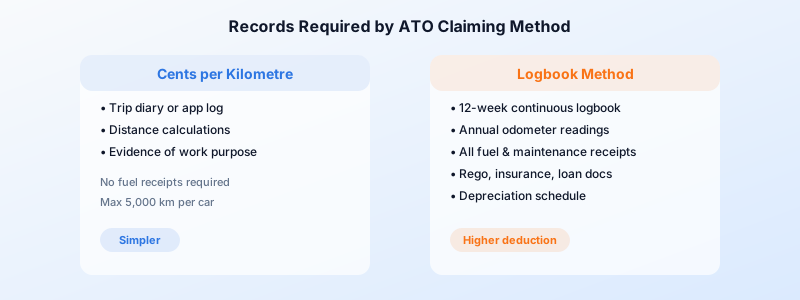
Under the cents per km method (88 cents per km for 2025–26), the ATO does not require you to keep fuel receipts or a formal logbook. However, you must be able to demonstrate how you worked out your total business kilometres.
What you need
- A record of each business trip — this can be a diary, spreadsheet, or app log showing the date, destination, purpose, and kilometres driven
- A reasonable basis for the calculation — for example, regular trips of a known distance (e.g. 22 km each way to a client site, travelled twice a week)
- Evidence that the trips were work-related — appointment records, client invoices, rosters, or emails confirming the travel
You do not need petrol receipts for this method, but you do need to be able to explain your number if the ATO asks.
Records for the logbook method
The logbook method is more powerful (no 5,000 km cap) but requires more documentation.
The 12-week logbook
Your logbook must cover a continuous 12-week period and record every trip — business and private. For each trip, you need:
- Date of the trip
- Odometer reading at the start and end of the trip
- Kilometres travelled
- Purpose of the trip (business or private)
- Business destination — the name and address of the place you visited
At the start and end of the 12-week period, record your total odometer reading. The ATO uses these figures to calculate your business-use percentage.
Annual odometer readings
After the logbook period ends, you must record your car’s odometer reading on 1 July and 30 June each year you rely on that logbook. These readings let you (and the ATO) work out total kilometres driven in the income year, which you then multiply by your business-use percentage.
Running cost records
You also need receipts and documents for every expense you claim:
- Fuel and oil — keep receipts or credit card statements
- Registration and insurance — renewal notices or payment confirmations
- Servicing, repairs, and tyres — invoices from the mechanic
- Depreciation — purchase price documentation, or a written-down value calculation
- Car loan interest — loan statements showing the interest component
- Car wash, parking, and tolls — receipts if you want to include these in your running costs
How long is a logbook valid?
A logbook is valid for five years from the end of the income year in which you completed it — provided your circumstances have not changed significantly. If you change jobs, move house, buy a new car, or your business-use percentage shifts by more than about 10 percentage points, the ATO expects you to complete a new logbook.
Digital records and the ATO
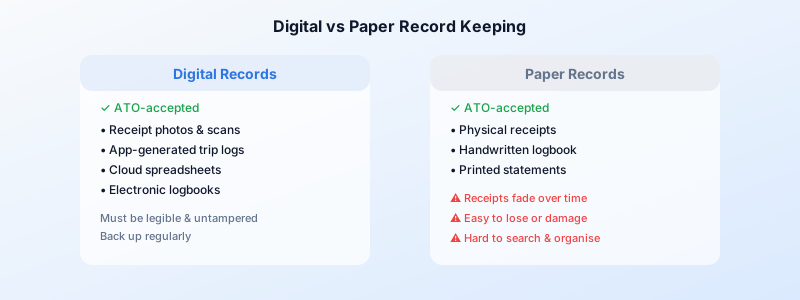
The ATO fully accepts digital records, including:
- Photos or scans of receipts — as long as they are legible and show the relevant details
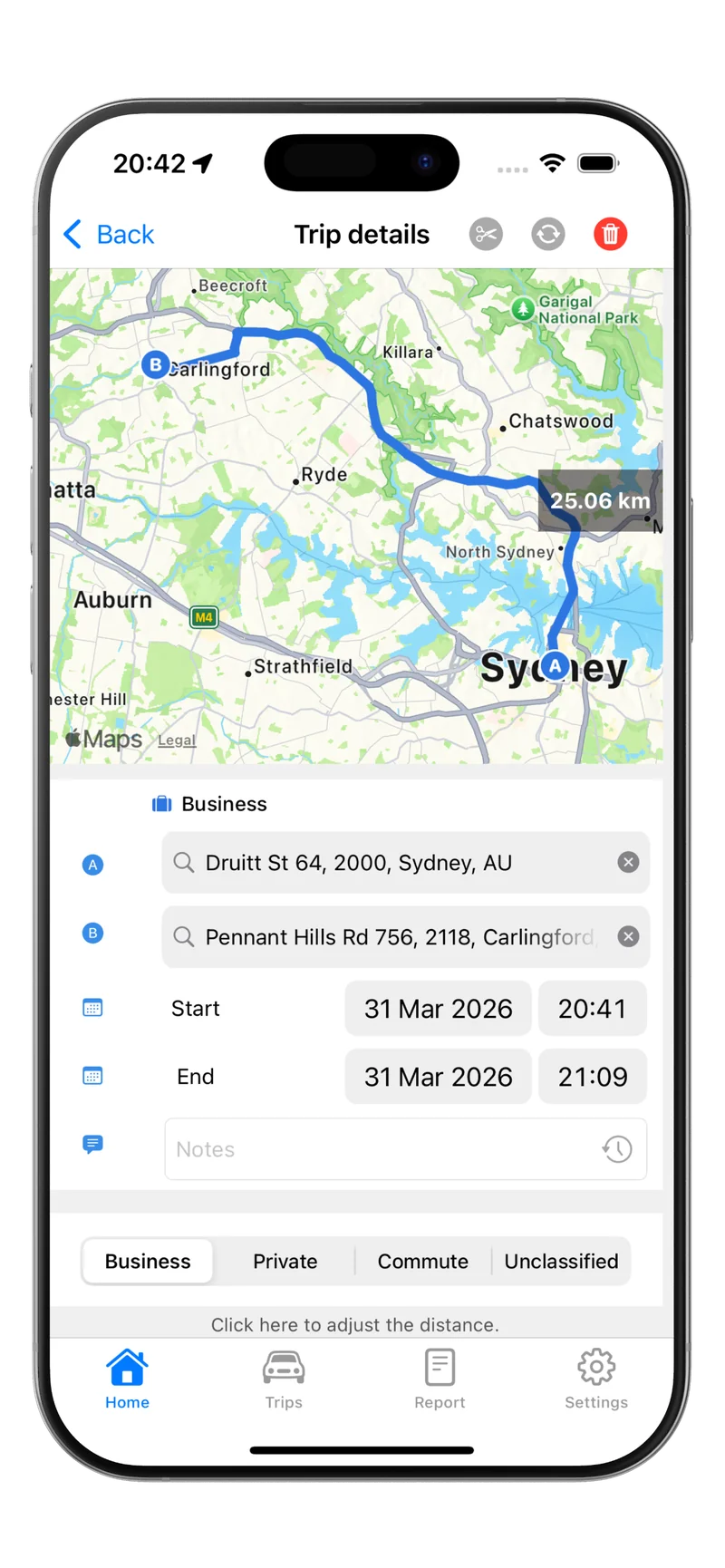
- App-generated trip logs — mileage-tracking apps that record date, distance, route, and purpose
- Cloud-stored spreadsheets — provided they have not been tampered with and are backed up
- Electronic logbooks — the ATO treats an electronic logbook the same as a paper one, as long as it meets all the same requirements
The key rule is that your digital records must be a true and clear reproduction of the original. If you photograph a receipt, make sure the date, amount, and supplier are readable.
How long to keep your records
The general rule is five years from the date you lodge your tax return (or five years from the date the return was due, if you lodge late). This applies to:
- Logbooks
- Trip diaries and kilometre logs
- Fuel and maintenance receipts
- Registration and insurance documents
- Loan statements
- Depreciation schedules
If you are involved in a dispute with the ATO, keep records until the dispute is fully resolved — even if that extends beyond five years.
Practical tip
Set a reminder each July to archive the previous year’s car expense records into a clearly labelled folder (physical or digital). This makes it easy to locate everything if the ATO sends a review letter two or three years down the track.
Common record-keeping mistakes
- Not recording trip purpose — “work” is not enough detail. Write the client name, meeting type, or specific reason.
- Relying on memory at tax time — reconstructing a year’s worth of travel in June is unreliable and the ATO knows it.
- Mixing business and private trips in the logbook — every trip must be recorded, not just the business ones.
- Letting a logbook expire — if five years have passed or your circumstances changed, you need a fresh 12-week period.
- Throwing out receipts after lodging — you need them for five years from lodgement, not five years from purchase.
For a detailed breakdown of what the ATO requires in a logbook specifically, see our ATO logbook requirements guide.
Make record keeping effortless with Tripbook
The biggest challenge with motor vehicle records is consistency — you need to log every trip, all year long. Tripbook automates this by tracking your kilometres in the background, tagging trips as business or personal, and storing everything in an ATO-friendly format. When tax time arrives, your records are already done.