BAS reporting vehicle expenses correctly is essential for any GST-registered Australian business that uses a car. Every quarter (or month), you lodge a Business Activity Statement with the ATO — and your vehicle purchases, fuel, servicing, and running costs all affect your GST credit claims. Get it right, and you recover 10% of your business car costs. Get it wrong, and you face penalties or missed credits.
This guide explains how to report vehicle-related GST on your BAS for the 2025–26 financial year, including the car cost limit, apportioning business use, and common mistakes to avoid.
GST basics for business vehicles
If your business is registered for GST (mandatory when turnover reaches $75,000, or $150,000 for non-profits), you charge GST on your sales and claim GST credits on your business purchases — including vehicle costs.
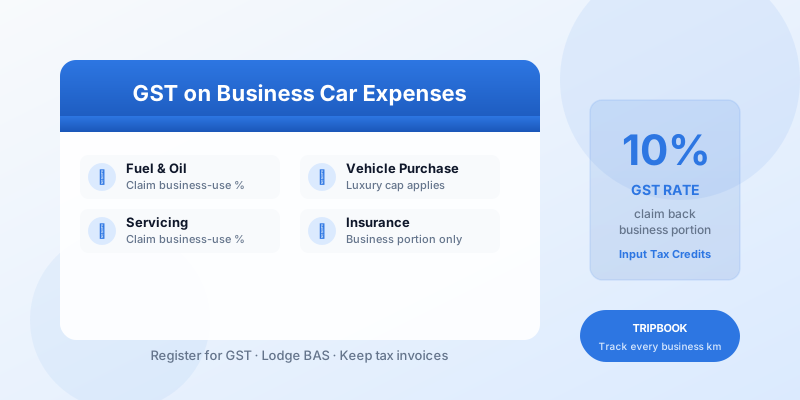
The key rule: You can only claim GST credits on the business-use portion of your vehicle expenses. If your car is 70% business and 30% personal, you claim 70% of the GST on each expense.
GST credits are reported on your BAS at label 1B (GST on purchases). You need a valid tax invoice for each claim.
Claiming GST on a vehicle purchase
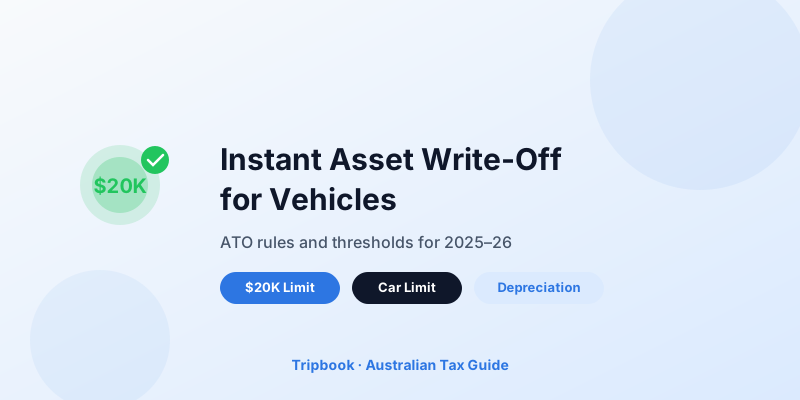
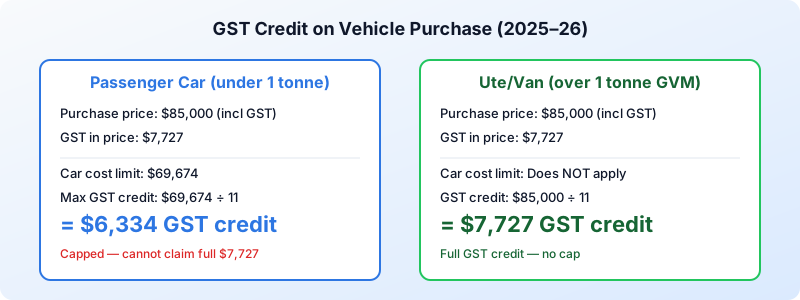
When you buy a car for business, the GST credit is capped by the ATO car cost limit. For 2025–26, this limit is $69,674.
The maximum GST credit you can claim on a car purchase is:
$69,674 ÷ 11 = $6,334
Even if you pay $100,000 for a luxury vehicle, your GST credit is limited to $6,334. This cap applies to passenger vehicles (designed to carry fewer than nine passengers and less than one tonne).
Important: If your business is GST-registered, the cost used for the instant asset write-off and depreciation is the GST-exclusive amount. If you paid $55,000 including GST, your depreciable cost is $50,000.
Vehicles over one tonne (utes, vans): The car cost limit does not apply to vehicles that are not classified as “cars” under the ATO definition. If your ute or van has a gross vehicle mass over one tonne, you can claim the full GST credit on the purchase price — no cap.
Claiming GST on running costs
Every vehicle running cost that includes GST generates a credit on your BAS:
| Expense | GST included? | Claimable on BAS? |
|---|---|---|
| Fuel | Yes | Yes (business %) |
| Servicing and repairs | Yes | Yes (business %) |
| Tyres | Yes | Yes (business %) |
| Car wash | Yes | Yes (business %) |
| Insurance | No (input-taxed) | No |
| Registration | No (government fee) | No |
| Tolls | Yes | Yes (business %) |
| Parking (not at work) | Yes | Yes (business %) |
Notice that insurance and registration do not include GST — so there is no credit to claim on these items. This is a common mistake on BAS returns.
Apportioning business vs personal use
You must apportion GST credits based on your actual business-use percentage. The ATO accepts two methods:
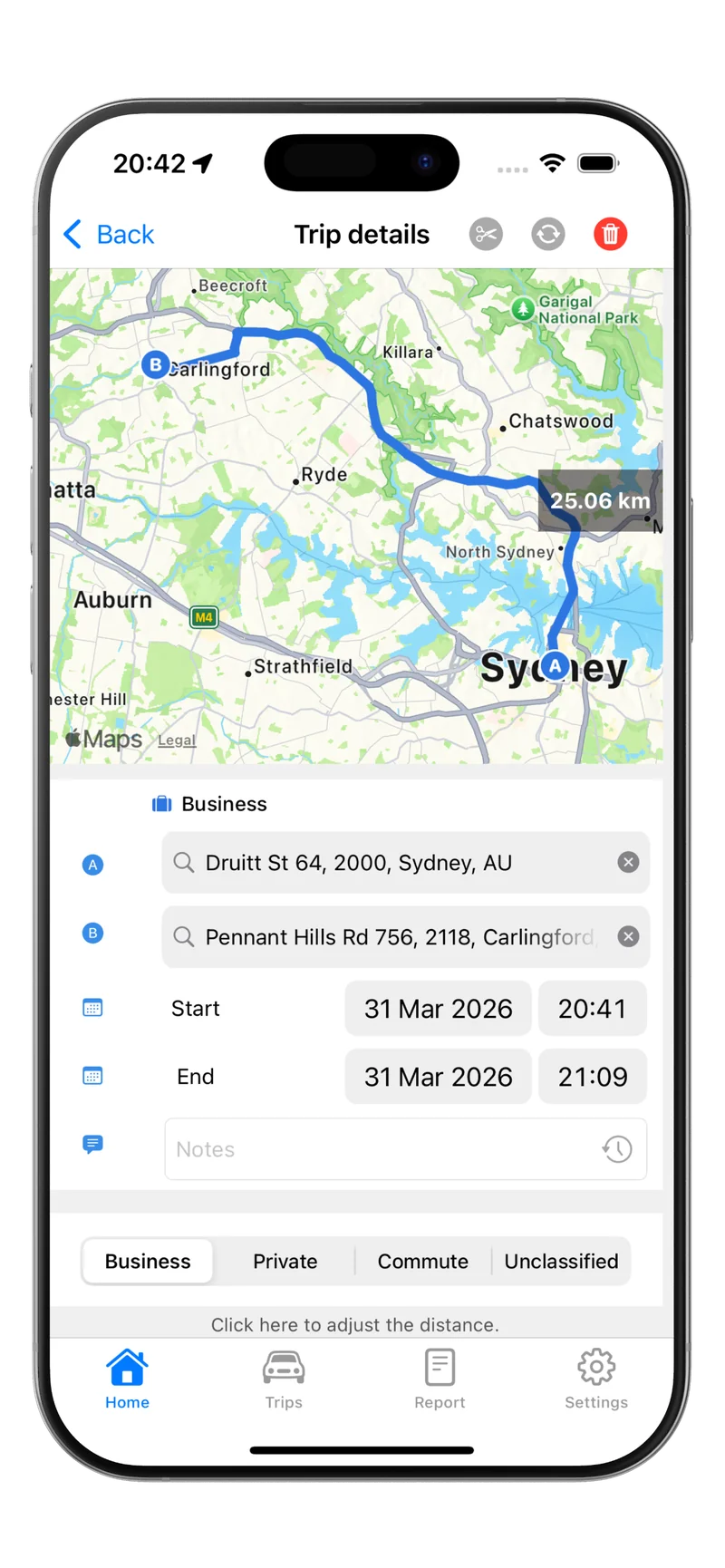
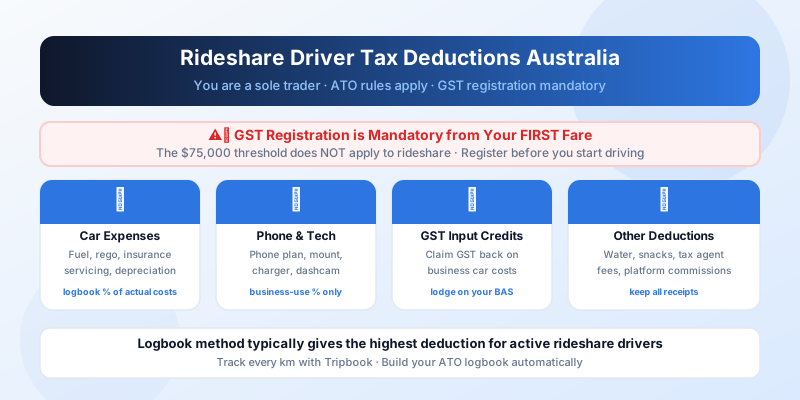
Logbook method: Keep a 12-week logbook to establish your business-use percentage. Apply that percentage to all GST claims for the year. For example, if your logbook shows 65% business use, claim 65% of the GST on each fuel receipt.
Reasonable estimate: For small claims, a reasonable estimate of business use may be acceptable — but the ATO can (and does) challenge estimates without supporting evidence.
For most businesses, the logbook method provides the strongest substantiation. For detailed logbook instructions, see ATO Logbook Requirements.
How to report vehicle GST on your BAS
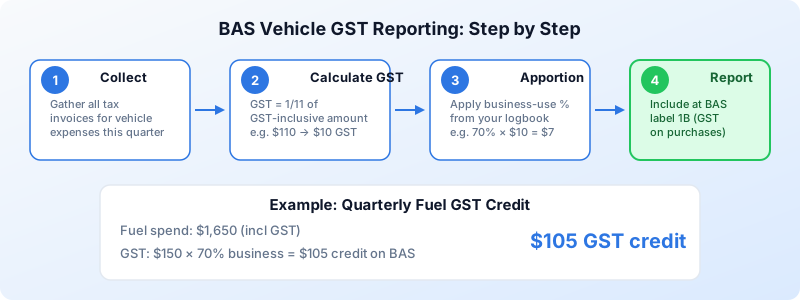
Step 1: Collect all tax invoices for vehicle expenses during the BAS period (quarterly or monthly).
Step 2: Calculate the GST component of each expense. For most expenses, this is 1/11 of the GST-inclusive amount. A $110 fuel receipt includes $10 GST.
Step 3: Apply your business-use percentage. If business use is 70%, claim $7 of the $10 GST ($10 × 70%).
Step 4: Total all vehicle-related GST credits and include them at label 1B on your BAS, along with your other purchase credits.
Step 5: Keep all tax invoices for five years. The ATO can audit BAS claims within this period.
Common BAS mistakes with vehicle expenses
Claiming GST on insurance and registration. These are not GST-inclusive items. Including them inflates your credit and triggers ATO attention.
Claiming 100% on a mixed-use vehicle. If your car is used for both business and personal purposes, you must apportion. Claiming the full GST when you only have 60% business use is incorrect.
Missing the car cost limit. Claiming a GST credit of $9,000 on a $99,000 car purchase exceeds the $6,334 cap. The ATO will adjust this on review.
No tax invoices. You need a valid tax invoice for any GST credit over $82.50 (the threshold for claiming without an invoice). Fuel receipts, service invoices, and parts receipts all count.
Using cents per km for GST claims. If you use the cents-per-km method for income tax, you cannot separately claim GST credits on car expenses. The two systems are separate, but using the logbook method allows both income tax deductions and GST credits.
Sole traders vs companies: key differences
Sole traders registered for GST claim vehicle GST credits on their individual BAS. The business-use percentage from the logbook applies to all claims.
Companies (Pty Ltd) claim GST credits through the company BAS. If the vehicle is used solely for business, 100% of GST is claimable (subject to the car cost limit). If employees use company cars privately, the GST apportionment and FBT rules apply.
For more on GST and car expenses, see GST Car Expenses Business.
Track your business use accurately
Your GST credits depend on an accurate business-use percentage. An incorrect percentage — whether too high or too low — costs you money. Too high invites ATO penalties. Too low means you leave credits on the table.
Tripbook tracks every trip with GPS, giving you a precise business-use percentage based on actual driving data. Export your trip log at BAS time to support your GST credit claims with evidence the ATO accepts.
Download Tripbook to automate your vehicle tracking and make every BAS lodgement faster and more accurate.