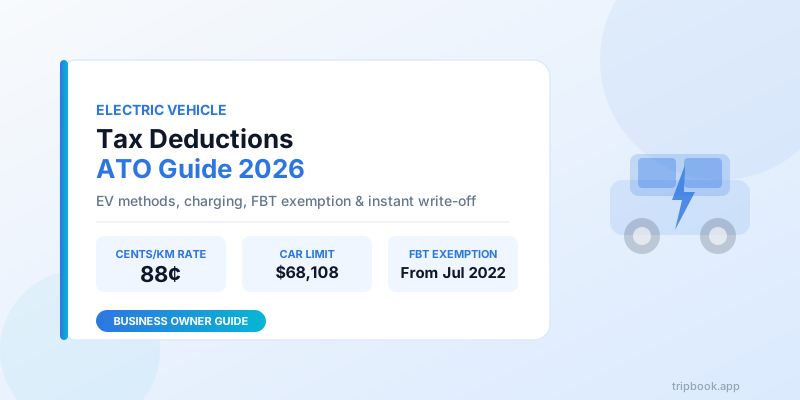
Electric vehicle tax deductions with the ATO work mostly the same way as deductions for petrol and diesel vehicles — but there are some important differences around charging costs, the FBT exemption, and the instant asset write-off rules. This guide covers everything businesses and sole traders need to know in 2026.
The ATO treats electric vehicles as cars under the same rules as petrol vehicles. You still need to choose between the cents-per-kilometre and logbook methods — and you still need records.
How the ATO treats electric vehicles for business
Under Australian tax law, an electric vehicle is a “car” for the purposes of work-related expense deductions, provided it is designed to carry fewer than nine passengers and one tonne of goods. The same rules that apply to a petrol sedan apply to a Tesla Model 3 or a BYD Atto 3.
This means:
- Two methods available: cents per kilometre, or logbook
- The 5,000 km annual cap applies to the cents-per-kilometre method
- For the logbook method, you need a 12-week logbook to establish your business use percentage
- Only the business-use portion of costs is deductible
There is one area where EVs differ: electricity is the fuel, and the ATO’s guidance on electricity costs has a few nuances worth understanding.
Claiming car expenses on an EV: the two methods
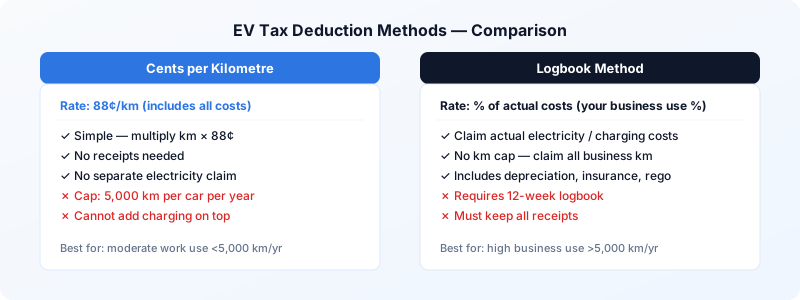
Method 1: Cents per kilometre The simplest option. Multiply your work-related kilometres by the ATO rate — 88 cents per kilometre for 2025-26. You can claim up to 5,000 km per car per year. This rate already accounts for fuel (electricity), depreciation, insurance, registration, and servicing. You cannot add electricity costs on top.
This method suits you if your work-related driving is moderate and you want a simple calculation.
Method 2: Logbook Keep a logbook for a minimum of 12 continuous weeks. This establishes your business-use percentage. You then claim that percentage of every actual vehicle expense: charging costs, registration, insurance, servicing, tyres, loan interest, and depreciation.
The logbook is valid for five years if your driving pattern remains similar. This method generally gives a larger deduction if your business use is high or your vehicle is expensive.
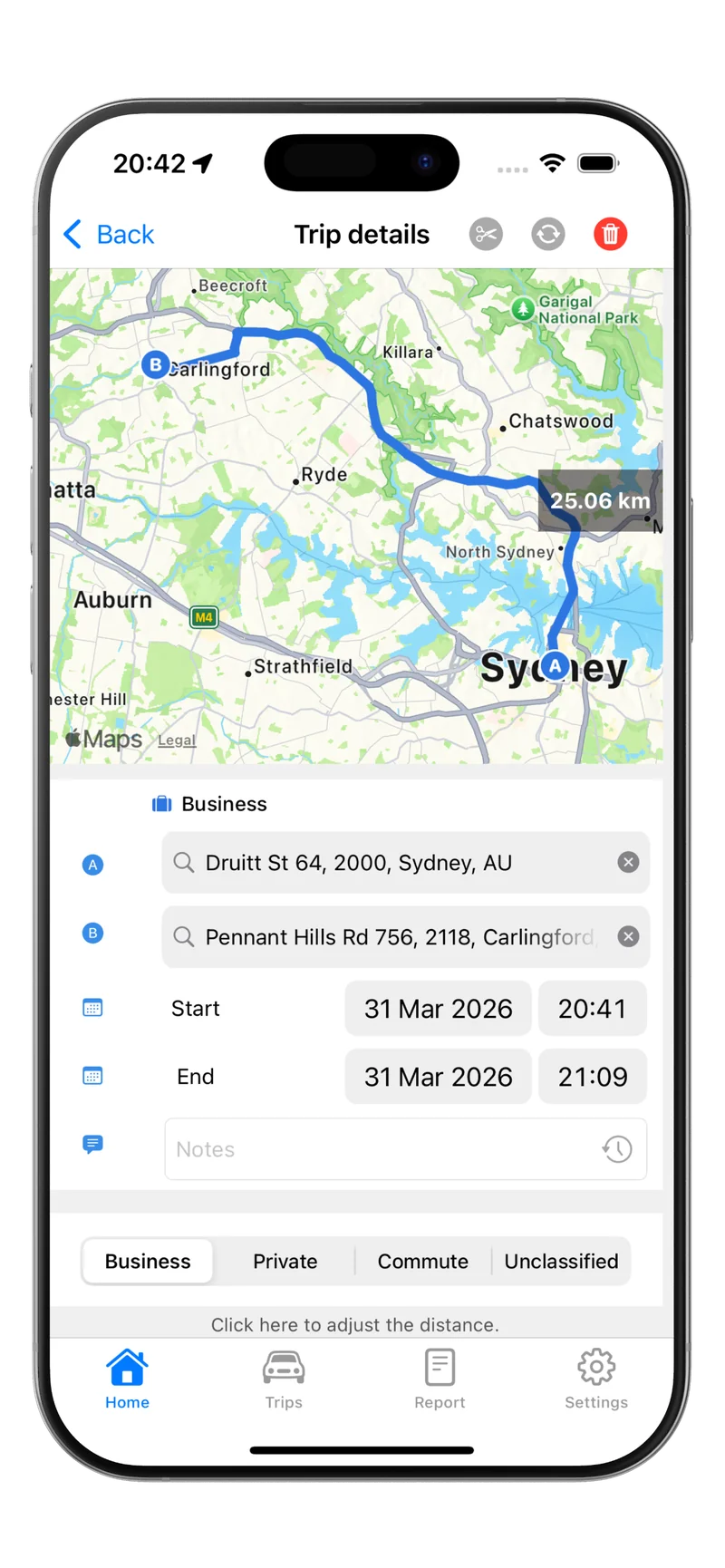
For the logbook method, tracking every trip is essential. Tripbook records your trips automatically and tags them as business or personal. At the end of your 12-week logbook period, you can export a clean report that establishes your business-use percentage.
EV charging costs: what you can deduct
This is where EVs get slightly more complex than petrol vehicles.
Home charging If you charge your EV at home using a home charger or standard powerpoint, the electricity cost is a deductible car expense under the logbook method. You need to calculate the cost per km of charging and then apply your business-use percentage.
The ATO accepts a reasonable calculation method. You can use your electricity bill, your vehicle’s rated energy consumption (e.g. 18 kWh/100 km), and the electricity tariff to work out a cost per km. Keep your electricity bills and charging records to support the claim.
Under the cents-per-kilometre method, the 88c rate already includes all fuel costs — you cannot add electricity costs separately.
Public charging Payments at public charging stations (e.g. Chargefox, Evie Networks, Tesla Supercharger) are straightforward: they are a direct fuel cost and deductible at your business-use percentage under the logbook method.
Employer-provided charging If your employer provides free charging at the workplace, there may be a fringe benefit implication. However, if you are a sole trader or business owner, this does not apply.
The EV FBT exemption: employer-provided EVs
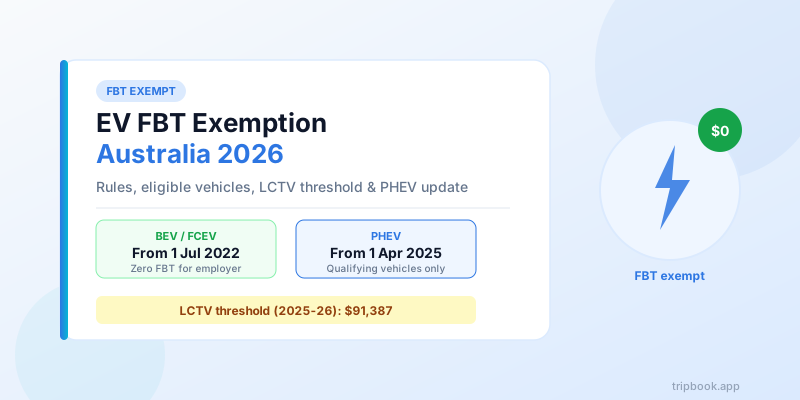
From 1 July 2022, the Australian Government introduced an FBT exemption for eligible zero and low emission vehicles provided by employers. Qualifying vehicles include:
- Battery electric vehicles (BEVs)
- Hydrogen fuel cell vehicles
- Plug-in hybrid electric vehicles (PHEVs) — eligible from 1 April 2025 for qualifying vehicles
The exemption means no FBT is payable by the employer on the car fringe benefit for eligible EVs. This makes providing an EV through a novated lease or company car arrangement significantly more tax-efficient. For full details on the exemption rules, see EV FBT Exemption Australia.
Note: even if no FBT is payable, the benefit is still reportable on the employee’s income statement, which can affect adjusted taxable income. See Reportable Fringe Benefits ATO for what that means in practice.
Instant asset write-off for electric vehicles
The instant asset write-off allows eligible businesses to deduct the business-use portion of a qualifying asset in the year it is first used or installed. Cars purchased for business use can qualify, but with an important caveat.
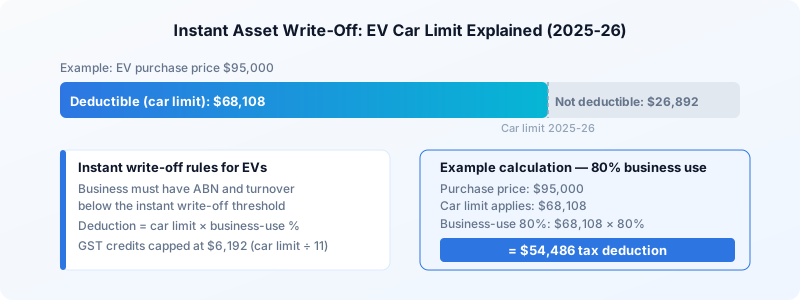
There is a car limit on the cost of a passenger vehicle that can be depreciated. For 2025-26, this limit is $68,108. Any EV purchased above this amount is capped at that cost base for depreciation purposes — you cannot deduct the excess.
For EVs priced above the car limit (which includes most popular models like the Tesla Model Y Long Range), you can still depreciate up to $68,108 in the first year if the instant asset write-off applies and the vehicle qualifies. The portion of the purchase price above $68,108 is simply not deductible.
The instant asset write-off threshold and conditions change frequently. Confirm current rules at ato.gov.au or with your tax adviser before purchase.
GST on electric vehicles for businesses
If you are registered for GST and purchase an EV for business use, you can claim a GST credit on the business-use portion of the vehicle.
For a vehicle purchased for mixed business and personal use, you claim GST credits based on your intended business-use percentage. If you have a logbook showing 70% business use, you claim 70% of the GST paid.
There is a GST car limit that mirrors the depreciation car limit: the maximum GST credit you can claim is one-eleventh of the car limit ($68,108 ÷ 11 = $6,192 in 2025-26).
For ongoing EV running costs (charging, registration, servicing), GST credits apply at your business-use percentage in the normal way.
Record-keeping for electric vehicle claims
Regardless of which method you use, the ATO requires substantiation. For EVs, that means:
- Cents per km: a diary, trip notes, or app records showing work-related trips and total km driven for work
- Logbook method: a 12-week continuous logbook with every trip (date, start/end point, purpose, km), plus receipts for all deductible expenses including charging, registration, insurance, and servicing
- Odometer readings: at 1 July and 30 June each year
- Charging records: electricity bills for home charging, receipts for public charging stations
Tripbook handles the trip-recording side automatically. You categorise trips as business or personal in real time, and the app calculates your business-use percentage across any period you choose.
Is an EV a smart business decision?
For many Australian sole traders and businesses, an EV purchased for regular business travel stacks up well:
- Lower running costs: electricity is cheaper per km than petrol for most use cases
- Servicing savings: fewer mechanical components mean lower maintenance costs
- FBT exemption: if providing an EV to employees, the FBT exemption removes a significant cost
- Instant asset write-off: the full business-use portion of the car limit is potentially deductible in year one
- Government rebates: some states (including NSW, VIC, and QLD) offer EV rebates and stamp duty concessions that reduce the acquisition cost
The key constraint is the $68,108 car limit, which means the tax deduction is capped regardless of how much you spend. For business owners considering a higher-priced EV, the fringe benefits route (novated lease or company car with the FBT exemption) may offer a better overall outcome than buying the vehicle outright and claiming depreciation.
Accurate records are the foundation of every EV tax claim. Download Tripbook to automatically log your electric vehicle trips and build a compliant business-use record from day one.