The FBT year-end checklist is something every Australian employer providing fringe benefits needs to complete before 31 March. Unlike the standard financial year (1 July to 30 June), the fringe benefits tax year runs from 1 April to 31 March — meaning your FBT obligations close well before tax time.
For the 2025–26 FBT year (1 April 2025 to 31 March 2026), the FBT rate remains at 47%. This guide provides a step-by-step checklist to help employers identify, value, and report all fringe benefits — with a focus on car benefits, which are the most common FBT item in Australia.
FBT year-end timeline
| Date | Action |
|---|---|
| 31 March 2026 | FBT year ends — all benefits assessed to this date |
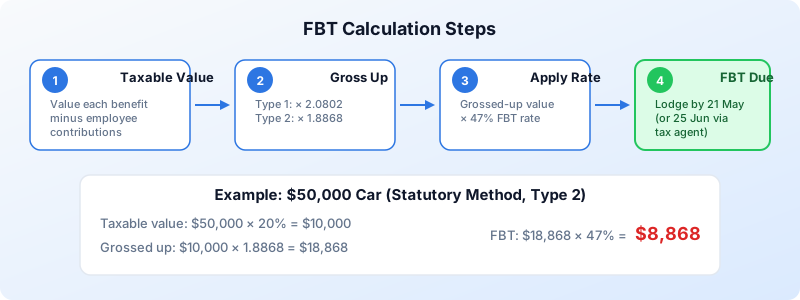
| 21 May 2026 | FBT return due (self-lodging employers) |
| 25 June 2026 | FBT return due (through a registered tax agent) |
| 21 May 2026 | FBT payment due |
Missing these deadlines incurs penalties and interest. If your total FBT liability is under $3,000 and you are not required to lodge, you still need to keep records in case the ATO requests them.
Checklist: car fringe benefits
Car benefits are the single largest category of FBT for most employers. Review each vehicle provided to employees:
1. Identify all cars provided to employees List every vehicle that was available for private use by an employee during the FBT year. “Available” means the employee could have used the car for private purposes — even if they did not actually do so. A car locked in a company garage with keys available to the employee still counts.
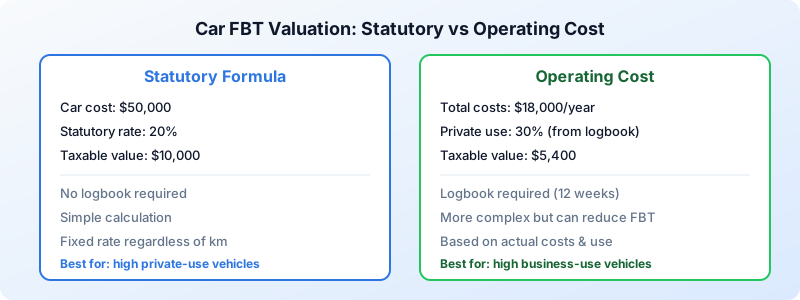
2. Check the valuation method The two methods for valuing car fringe benefits are:
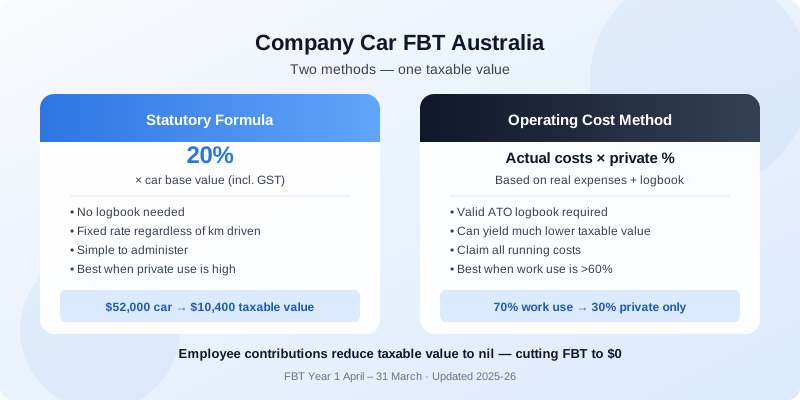
- Statutory formula method: Taxable value = car cost × 20% statutory rate. Subtract any employee contributions. This is simpler and more common.
- Operating cost method: Taxable value = total operating costs × private-use percentage. Requires a logbook showing business vs private use.
You must use the same method for the entire FBT year for each car. If you plan to switch methods, do so at the start of the next FBT year.
3. Record odometer readings Take odometer readings at 31 March for every car in the fleet. You also need the reading from 1 April (start of the FBT year). These are required for both valuation methods.
4. Calculate employee contributions Any post-tax contributions the employee makes towards the car reduce the taxable value. This includes:
- Cash payments for private use
- Fuel paid by the employee for private travel
- Maintenance costs the employee covers personally
Document these contributions with receipts or payroll records.
Checklist: electric vehicle FBT exemption
The EV FBT exemption is a significant item for the 2025–26 year. Review each electric vehicle provided to employees:
1. Confirm eligibility The vehicle must be a zero-emissions vehicle — battery electric (BEV) or hydrogen fuel cell. The car’s value must be below the luxury car tax threshold for fuel-efficient vehicles: $91,387 for 2025–26.
2. PHEV transition From 1 April 2025, plug-in hybrid electric vehicles (PHEVs) no longer qualify for the FBT exemption. If you have PHEVs in your fleet that were salary packaged under the exemption, check whether transitional rules apply (vehicles committed to before 1 April 2025).
3. Document the exemption Even though exempt EVs do not generate an FBT liability, you should still record them in your FBT records. The ATO may ask for evidence of eligibility.
For more on company car FBT, see Company Car FBT Australia.
Checklist: other common fringe benefits
Beyond cars, review these categories before year-end:
Expense payment benefits — Reimbursements or payments for employees’ private expenses (mobile phones, gym memberships, school fees).
Property benefits — Goods provided to employees at no cost or below market value (laptops, uniforms beyond what is exempt).
Residual benefits — Anything that does not fit another category (car parking at work over the threshold, entertainment, living-away-from-home allowances).
Exempt benefits — Items exempt from FBT include work-related portable electronic devices (one per FBT year), minor benefits under $300, and eligible electric vehicles.
Checklist: FBT calculation and lodgement
1. Calculate the taxable value of each benefit Apply the relevant valuation method. Subtract any employee contributions and exemptions.
2. Apply the gross-up rate
- Type 1 (GST-creditable benefits): gross-up rate of 2.0802
- Type 2 (non-GST-creditable benefits): gross-up rate of 1.8868
3. Calculate total FBT payable Total grossed-up value × 47% FBT rate = FBT payable.
4. Prepare reportable fringe benefits amounts Benefits with a total taxable value exceeding $2,000 per employee must be reported on the employee’s income statement (payment summary). The reportable amount uses the Type 2 gross-up rate.
For more on reportable amounts, see Reportable Fringe Benefits ATO.
Record-keeping requirements
The ATO requires employers to keep FBT records for five years from the date the return is lodged. Essential records include:
- Employee declarations (for exempt benefits and reductions)
- Car logbooks and odometer readings
- Receipts for employee contributions
- Lease agreements and vehicle cost documentation
- Calculation worksheets showing how you valued each benefit
- Evidence of EV eligibility (purchase contracts, vehicle specifications)
Common FBT year-end mistakes
Forgetting cars that were “available” but not used. If a company car sat in the employee’s driveway for two weeks while they were on leave, it was still available for private use — and generates an FBT liability.
Not taking odometer readings on 31 March. Without these, you cannot accurately calculate the operating cost method. Even if you use the statutory formula, odometer records support your position in an audit.
Ignoring the PHEV change. PHEVs that previously qualified for the EV exemption no longer do from 1 April 2025. Review your fleet for any affected vehicles.
Understating car cost. The car cost for statutory formula purposes includes the GST-inclusive purchase price, dealer delivery charges, and any accessories fitted at the time of purchase. Aftermarket additions increase the base.
Use Tripbook for FBT-ready records
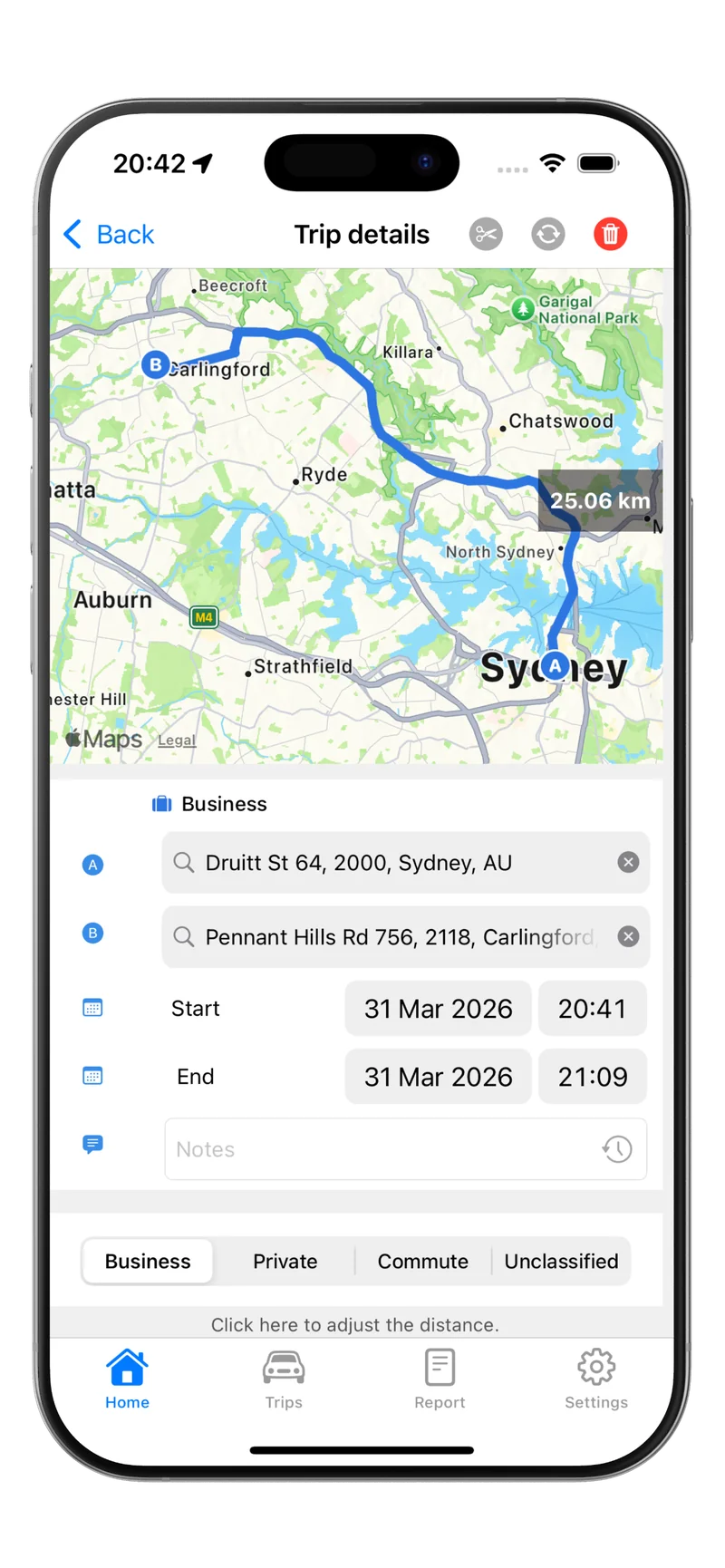
Accurate odometer readings and business-use logs are critical for FBT compliance. Tripbook captures trip data automatically — every journey is logged with GPS, including date, distance, and classification (business or personal). At FBT year-end, export a complete trip report showing total kilometres, business percentage, and odometer-equivalent records.
Download Tripbook to simplify your FBT record-keeping and ensure your car benefit calculations are based on real data — not estimates.