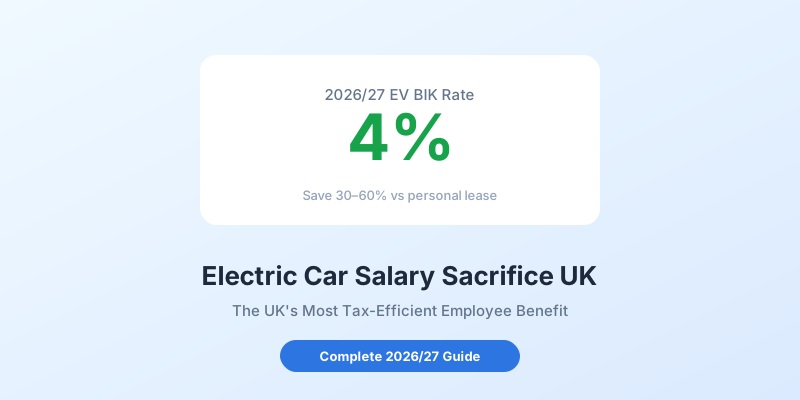
Electric car salary sacrifice is the most tax-efficient way for UK employees to drive a brand-new EV. By exchanging part of your gross salary for a fully electric company car, you dodge income tax and National Insurance on the sacrificed amount — and the benefit-in-kind charge is just 4% for 2026/27. The result is savings of 30–60% compared with leasing a car privately.
This guide covers exactly how the scheme works, who benefits most, and what the numbers look like in practice.
How Does Electric Car Salary Sacrifice Work?
In a salary sacrifice arrangement you agree with your employer to give up a portion of your gross pay in exchange for a non-cash benefit — here, a brand-new electric car supplied on an operating lease. Because the deduction happens before PAYE is calculated, the sacrificed amount is never subject to income tax or employee National Insurance contributions.
In return for using the car, HMRC treats it as a company car benefit. You pay benefit-in-kind (BIK) tax on the car’s P11D value multiplied by the BIK percentage for that vehicle’s CO₂ band. For a fully electric car in 2026/27, that percentage is just 4%.
Your employer also saves 13.8% employer NIC on every pound of salary you sacrifice — a saving many employers pass on through lower lease rates or additional perks such as home charger installation.
Why the OpRA Exemption Matters
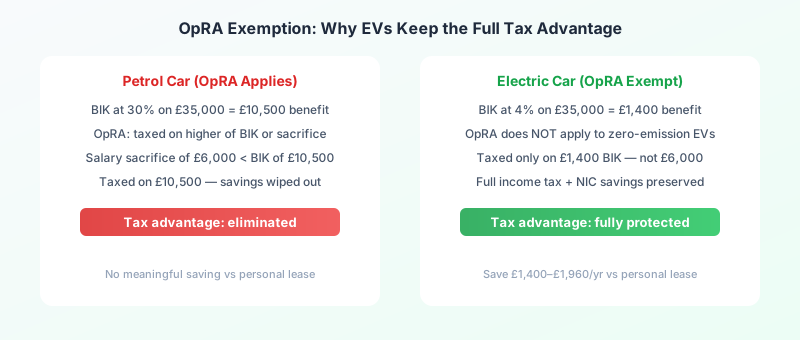
Most salary sacrifice benefits are caught by Optional Remuneration Arrangements (OpRA) rules introduced in 2017. Under OpRA, the taxable benefit is the higher of the normal BIK value or the amount of salary given up — which wipes out most of the tax advantage.
Zero-emission vehicles are specifically exempt from OpRA. That means the only tax you pay on your salary sacrifice EV is the standard company car BIK charge. For a fully electric car at 4% BIK, this is a fraction of the salary you sacrifice, so the full tax and NIC savings remain intact.
This exemption is the single biggest reason electric cars deliver dramatically better salary sacrifice savings than any petrol or diesel alternative.
Worked Example: £35,000 EV on Salary Sacrifice
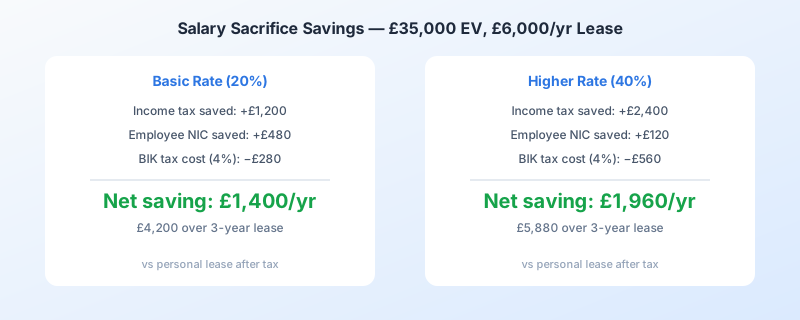
Let’s run the numbers for a popular EV with a P11D value of £35,000 and an annual lease cost of £6,000 (£500/month including maintenance, road tax, and breakdown cover).
Basic rate taxpayer (20% income tax, 8% employee NIC)
| Line item | Amount |
|---|---|
| Annual salary sacrifice | £6,000 |
| Income tax saved (20%) | £1,200 |
| Employee NIC saved (8%) | £480 |
| BIK tax due (£35,000 × 4% × 20%) | −£280 |
| Net annual saving vs personal lease | £1,400 |
Higher rate taxpayer (40% income tax, 2% employee NIC)
| Line item | Amount |
|---|---|
| Annual salary sacrifice | £6,000 |
| Income tax saved (40%) | £2,400 |
| Employee NIC saved (2%) | £120 |
| BIK tax due (£35,000 × 4% × 40%) | −£560 |
| Net annual saving vs personal lease | £1,960 |
Over a typical three-year lease, a basic rate taxpayer keeps roughly £4,200 more in their pocket, while a higher rate taxpayer keeps around £5,880 more — and that is before any employer NIC savings are passed on.
EV BIK rates through to 2029/30
The government has legislated EV BIK rates through to 2029/30, giving employees and employers certainty when signing multi-year leases:
| Tax year | EV BIK rate |
|---|---|
| 2025/26 | 3% |
| 2026/27 | 4% |
| 2027/28 | 5% |
| 2028/29 | 7% |
| 2029/30 | 9% |
Even at 9% in 2029/30, the EV rate remains a fraction of the 37% ceiling for high-emission petrol and diesel cars. The year your lease starts determines the BIK rate that applies for each year of the contract, so starting a three-year deal in April 2026 locks in rates of 4%, 5%, and 7%.
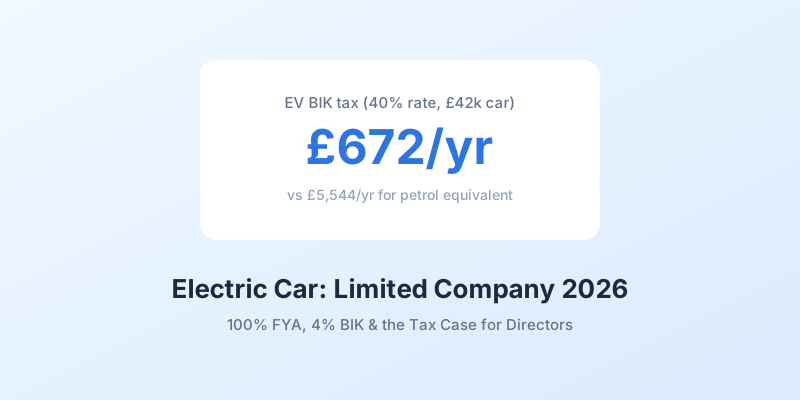
For a deeper breakdown of BIK across all emission bands, see our guide to company car tax 2026 BIK rates.
What Is Included in a Salary Sacrifice Scheme?
Most employer-run EV salary sacrifice schemes bundle several costs into the single monthly deduction:
- Vehicle lease — an operating lease for the chosen electric car
- Road tax (VED) — zero-emission VED is included
- Servicing and maintenance — routine servicing, tyres, and MOT
- Breakdown cover — roadside assistance
- Insurance — some schemes include fully comprehensive insurance; others require you to arrange your own
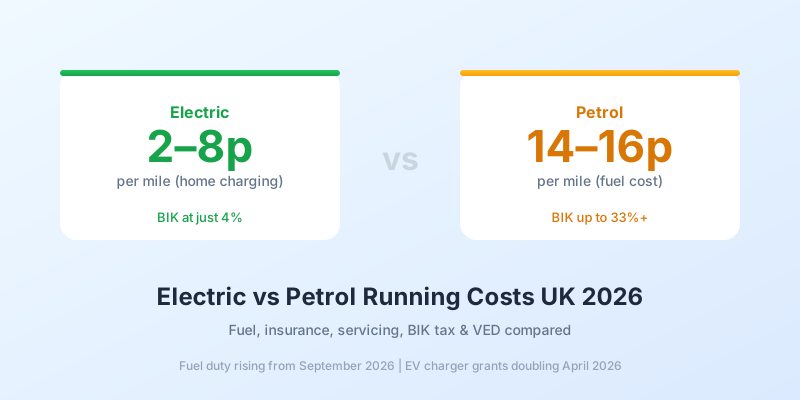
You typically pay for electricity and charging separately. If you charge at home, your employer may reimburse business miles at the advisory electricity rate (AER), currently around 7–9p per mile.
A salary sacrifice car is treated as a company car by HMRC. That means you cannot claim the 45p AMAP mileage rate — you receive the AER instead. Keeping accurate mileage records is essential to support any reimbursement. Tripbook logs every business and personal journey automatically, so your records are always HMRC-ready.
Employer Benefits: NIC Savings and Recruitment
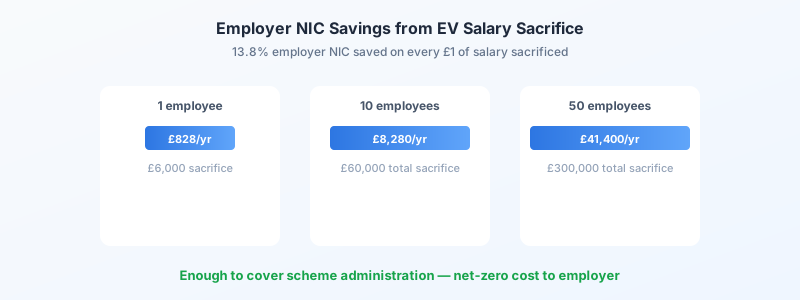
Salary sacrifice is not only good for employees. For every pound of salary an employee sacrifices, the employer saves 13.8% in employer NIC. On a £6,000 annual sacrifice, that is £828 per employee per year. Across a fleet of 50 employees, the saving approaches £41,000 annually — more than enough to cover scheme administration costs.
Offering an EV salary sacrifice scheme also strengthens recruitment and retention. Employees increasingly view green benefits as a deciding factor, and a tax-efficient route to a new electric car is a tangible, high-value perk that costs the employer nothing out of pocket.
Is Electric Car Salary Sacrifice Right for You?
Before signing up, make sure the scheme suits your circumstances:
- National Living Wage floor — your post-sacrifice cash salary cannot fall below the National Living Wage. For lower earners, this caps the maximum car value available.
- Leaving your job — salary sacrifice is contractual. If you leave, you normally return the car or take over the lease at commercial rates. Most schemes include protection for redundancy or serious illness.
- Pension impact — sacrificing salary reduces pensionable pay. Check whether your employer calculates pension contributions on pre- or post-sacrifice earnings. Note that from April 2029 pension salary sacrifice will have an NIC cap, but EV salary sacrifice is completely unaffected by this change.
- Mileage tracking — because the car is a company car, you need to separate business and personal miles. Tripbook handles this automatically with GPS-verified trip logging.
Overall, EV salary sacrifice delivers compelling savings if you plan to stay with your employer for the lease term (usually two to four years), you are a regular driver who wants a new electric car, and the sacrifice does not push you below the National Living Wage. It is less suitable if you change jobs frequently, need a specialist vehicle not offered through the scheme, or prefer to own your car outright.
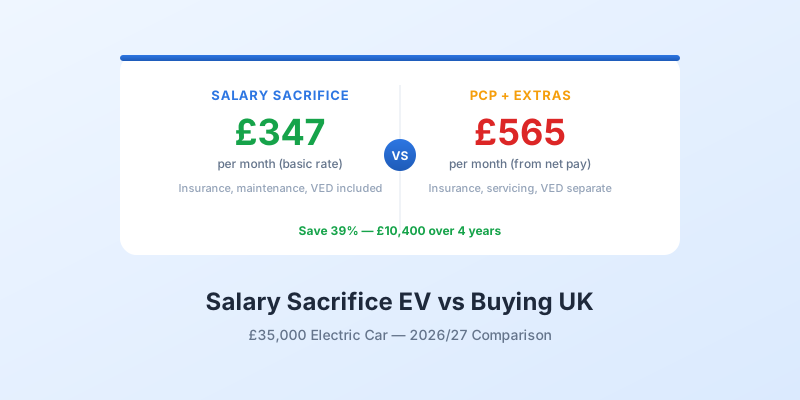
For a side-by-side comparison of salary sacrifice versus buying, see our article on salary sacrifice electric car vs buying UK. And for the broader picture on electric company car taxation, our electric company car tax UK guide covers everything you need.
Ready to start tracking mileage on your salary sacrifice EV? Download Tripbook from the App Store and keep every journey logged from day one.