Aged care workers — particularly those in home care and community care roles — spend a significant part of their day driving between clients. If you use your own car for this work-related travel, claiming an aged care worker car expenses tax deduction can make a real difference to your tax refund.
This guide explains which trips qualify, how to choose the right claiming method, and the records the ATO expects.
What travel qualifies for aged care workers
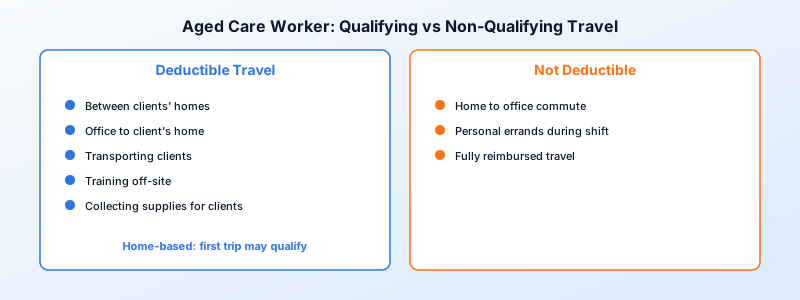
You can claim a deduction for car expenses when you use your own vehicle for work-related purposes. For aged care workers, qualifying travel typically includes:
- Travelling between clients’ homes during the same shift
- Driving from your employer’s office or care facility to a client’s home
- Transporting a client to medical appointments, shopping, or social outings using your own car
- Attending training or professional development at a location other than your normal workplace
- Collecting supplies or equipment for clients on behalf of your employer
Travel that does not qualify:
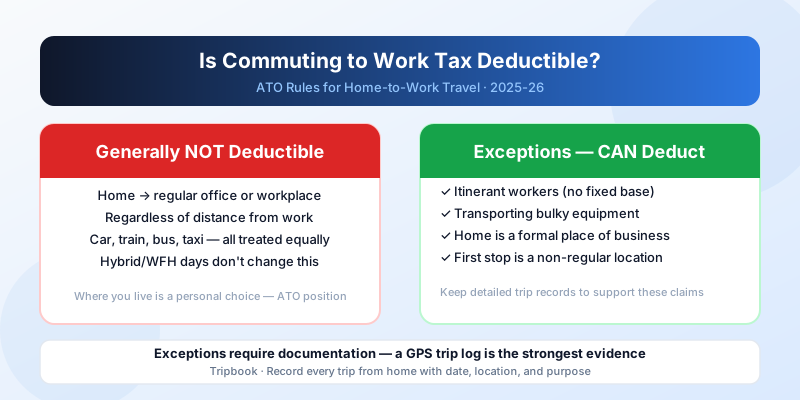
- Your regular commute from home to your employer’s office or facility
- Personal errands during your shift
- Travel your employer fully reimburses
Home-based care workers
If your employer does not require you to attend an office or facility and you travel directly from home to your first client, your home may be treated as your base of operations. In this case, the trip from home to the first client could be deductible. Check with a tax professional if you are unsure about your specific arrangement.
Choosing a claiming method
Cents per kilometre
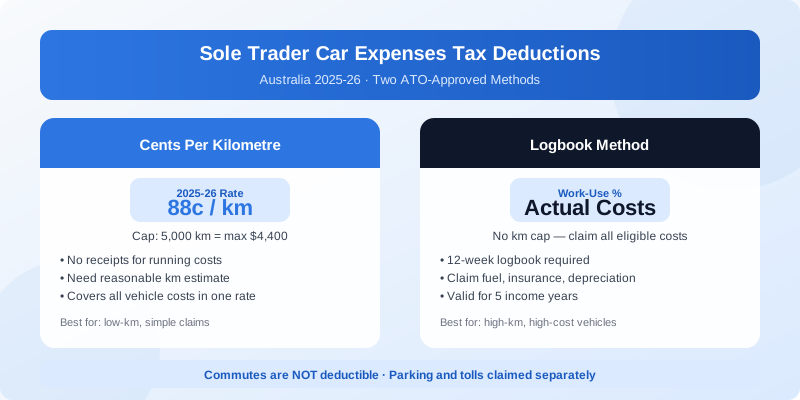
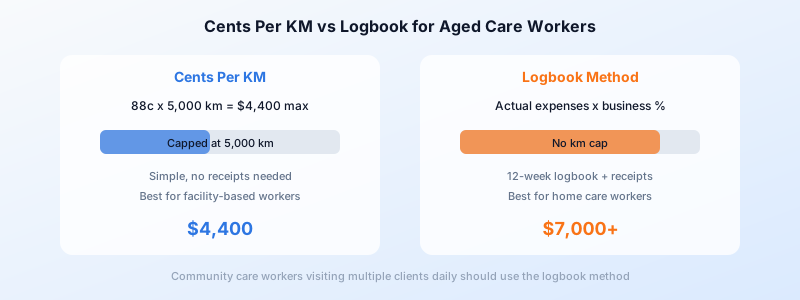
Claim 88 cents per business kilometre (2025–26 rate), capped at 5,000 km per car. Maximum deduction: $4,400. This method suits aged care workers who drive occasionally for work but spend most of their time at a single facility.
Logbook method
Complete a 12-week logbook to establish your business-use percentage. Apply that percentage to all actual car costs — fuel, registration, insurance, servicing, and depreciation. No kilometre cap.
Home care and community care workers who visit multiple clients daily will almost certainly exceed 5,000 business kilometres per year. The logbook method captures the full extent of your driving and typically produces a significantly larger deduction.
For a detailed comparison, see our logbook vs cents per km guide.
Record-keeping essentials
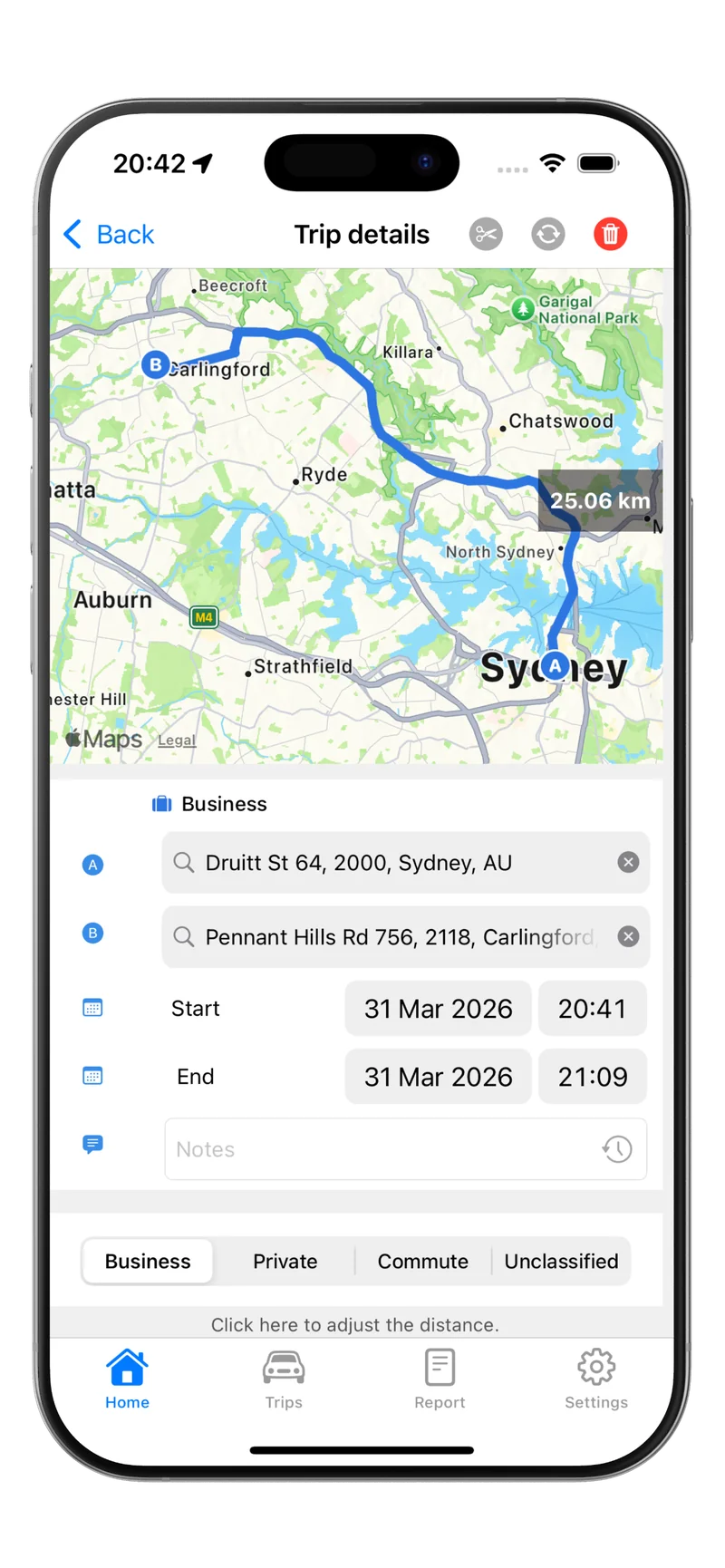
For cents per kilometre: A trip diary showing the date, distance, destination, and work purpose for each trip. Tripbook captures this automatically every time you drive, giving you an ATO-compliant log without manual paperwork.
For the logbook method: A 12-week logbook, receipts for all car expenses, and odometer readings at 1 July and 30 June each year.
Both methods: Keep all records for at least five years after lodging your return.
Other deductions for aged care workers
Beyond car expenses, aged care workers commonly claim:
- Uniforms and laundry — employer-branded clothing, scrubs, or required footwear
- PPE — gloves, masks, hand sanitiser purchased out of your own pocket
- Phone expenses — the business portion of your personal phone, used for client coordination and scheduling
- First aid courses — mandatory training paid for yourself
- Union fees — HSU, ANMF, or other relevant union memberships
- Professional registrations — if applicable to your role
For a broader overview of healthcare-related deductions, see our healthcare worker car expenses guide.
Common mistakes to avoid
Claiming the commute to your care facility. If you have a regular workplace (such as a nursing home or office), the daily drive from home is private travel and not deductible.
Not separating reimbursed and unreimbursed travel. If your employer pays a per-kilometre rate for some trips, only the unreimbursed trips can be claimed. Check your payslips and employment contract to confirm which travel is covered.
Estimating kilometres without records. The ATO uses data matching to compare your claim against what is typical for your occupation and location. Claims without supporting evidence are disallowed. Tripbook’s GPS tracking ensures accuracy.
Forgetting to start a logbook. If you know you drive more than 5,000 business kilometres per year, starting a 12-week logbook is one of the best investments you can make. It locks in your business-use percentage for five years.
How to claim on your tax return
Aged care workers who are employees claim car expenses at Item D1 — Work-Related Car Expenses. Select your method, enter the figures, and keep records on file.
If you received a car allowance, declare it as income and claim your actual expenses as a deduction — the two are reconciled through your return.
Tracking every client visit and between-home trip with Tripbook means your aged care worker car expenses tax deduction is accurate, substantiated, and ready to lodge.