If you volunteer your time for a charity, community organisation, or not-for-profit, you might be racking up significant kilometres driving to events, delivering goods, or visiting those in need. The question many volunteers ask is: can I claim those car expenses on my tax return? The answer is more nuanced than you might expect.
The general rule for volunteer car expenses
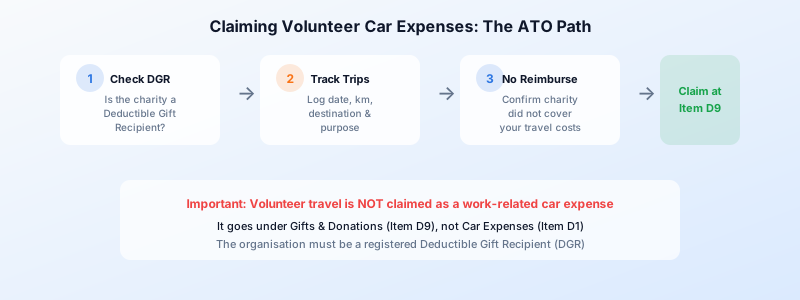
Here is the key distinction: volunteer car expenses are generally not deductible as a work-related expense. The ATO’s work-related car expense deduction (at Items D1 or D2 of your tax return) only applies to travel connected with earning assessable income — that is, your job or business.
Volunteering does not generate assessable income, so the standard car expense deduction does not apply.
However, there is another path: gifts and donations.
Claiming travel as a gift or donation
Under the ATO’s gift and donation rules, you may be able to claim the cost of travel that you incur while performing volunteer work — but only if specific conditions are met:
- The organisation is a deductible gift recipient (DGR) — not all charities qualify. The organisation must be registered as a DGR with the ATO.
- The travel is directly related to your volunteer duties — driving to and from the volunteer site, transporting goods for the charity, or visiting clients on behalf of the organisation.
- You are not reimbursed — if the charity covers your petrol or pays a travel allowance, you cannot also claim a deduction.
- You have records — the ATO expects the same standard of record keeping as for any deduction claim.
How to claim
You claim volunteer travel expenses at Item D9 (Gifts or donations) on your tax return — not at the car expenses section. The deduction reduces your taxable income just like a work-related deduction, but it falls under a different category.
What counts as a deductible gift recipient?
A DGR is an organisation that is endorsed by the ATO to receive tax-deductible donations. Most well-known charities hold DGR status — for example, the Red Cross, Salvation Army, St Vincent de Paul, Surf Life Saving clubs, rural fire services, and most registered religious organisations.
You can check whether an organisation has DGR status by searching the Australian Business Register or asking the organisation directly.
If the organisation is not a DGR, your travel costs are not deductible — even if the work is genuinely charitable.
What travel qualifies?
Qualifying volunteer travel typically includes:
- Driving to and from the volunteer location (such as a soup kitchen, op shop, or community centre)
- Transporting goods for the charity — collecting donated items, delivering food parcels, or moving equipment for an event
- Visiting people on behalf of the organisation — for example, Meals on Wheels deliveries or visiting isolated elderly residents
- Attending committee meetings for the charity (if you are a volunteer board member)
What does not qualify
- Driving to a social event hosted by the charity that is not part of your volunteer duties
- Attending a fundraiser as a donor rather than as a volunteer
- Personal errands combined with volunteer trips (only the volunteer portion counts)
How to calculate the deduction
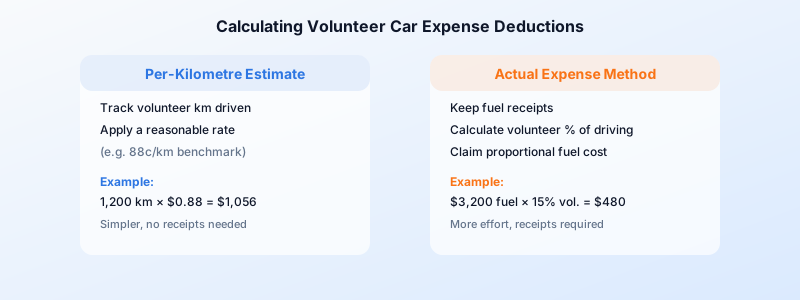
The ATO does not prescribe a specific method for volunteer travel in the same way it does for work-related car expenses. However, in practice, most people use one of two approaches:
Actual cost method
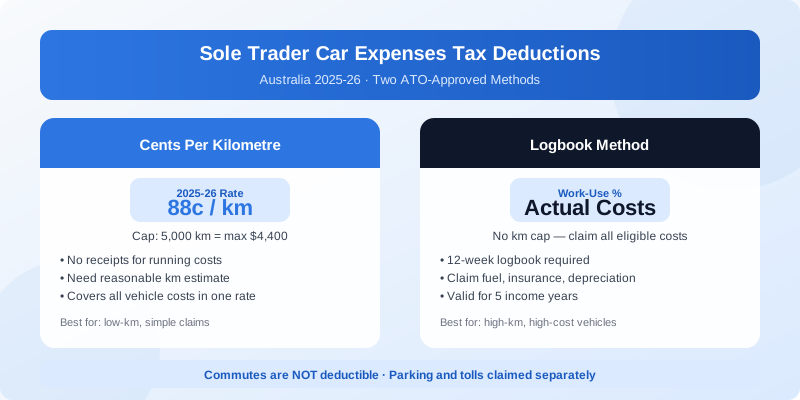
Track the actual kilometres driven for volunteer purposes and apply a reasonable per-kilometre rate. The ATO’s cents per km rate (88 cents for 2025–26) provides a defensible benchmark, though it is technically designed for work-related claims. Many tax agents use it as a reasonable estimate for volunteer travel as well.
Receipts for actual expenses
Alternatively, keep fuel receipts and calculate the proportion of driving attributable to volunteer work. This is more effort but can be useful if you drive a lot for a single charity.
Record-keeping requirements
Even though volunteer travel is claimed under gifts and donations, the ATO still expects proper records:
- A log of each trip — date, destination, purpose, and kilometres
- Evidence of your volunteer role — a letter from the organisation confirming your duties, or a volunteer ID
- Confirmation of DGR status — the charity’s ABN and DGR endorsement details
- No reimbursement — a statement or confirmation that you were not reimbursed for travel costs
Keep these records for five years from the date you lodge your tax return.
For a broader look at ATO record-keeping obligations, see our guide on ATO motor vehicle record keeping.
Volunteer firefighters and emergency service members
Volunteer firefighters (such as CFA and RFS volunteers) and State Emergency Service (SES) members have specific provisions. Travel to training, callouts, and operational activities for these organisations is generally deductible under the gift and donation rules, provided the organisation holds DGR status — which most state-based emergency services do.
These volunteers often accumulate significant kilometres, especially in rural and regional areas. Keeping a trip log is essential.
Tips for volunteers
- Check DGR status first — before claiming anything, confirm that your organisation is a DGR.
- Keep a simple trip diary — record the date, where you went, and the purpose each time you drive for the charity.
- Ask for a volunteer letter — a letter on the charity’s letterhead confirming your role and the nature of your duties strengthens your claim.
- Do not double-dip — if the charity reimburses your fuel or pays a mileage allowance, you cannot claim as well.
Tripbook helps you track every volunteer kilometre
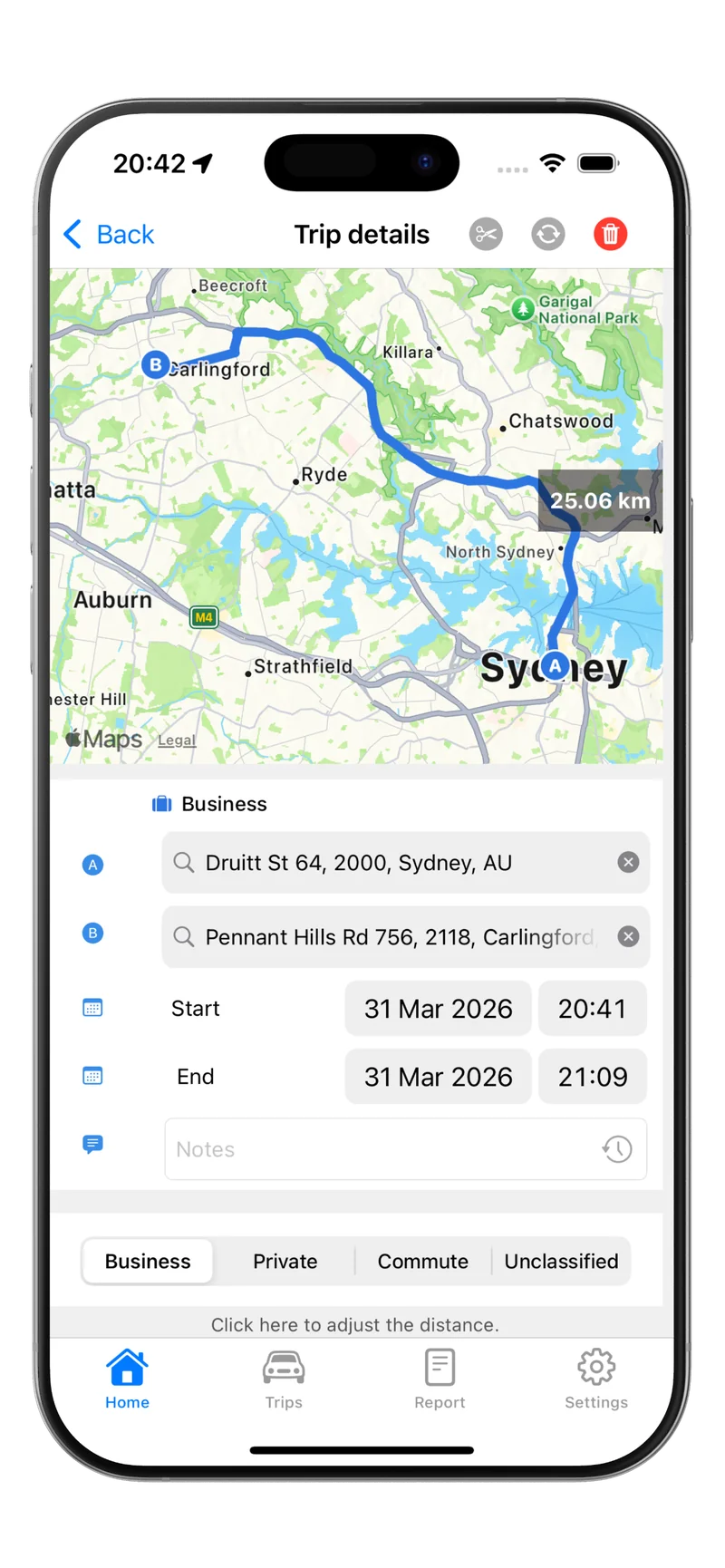
Whether you volunteer once a week or every day, Tripbook makes it easy to log your trips. Tag drives as volunteer travel, and at tax time you will have a complete, dated record of every kilometre — ready for your tax return or your accountant.