
Construction workers rarely stay in one place. Moving between job sites, picking up materials, attending safety inductions at new locations, and driving to the hardware store are all part of a typical week. If you use your own vehicle for this work-related travel, claiming a construction worker car expenses tax deduction can significantly reduce your tax bill.
This guide explains what qualifies, which method to use, and how to keep records the ATO will accept.
What travel qualifies
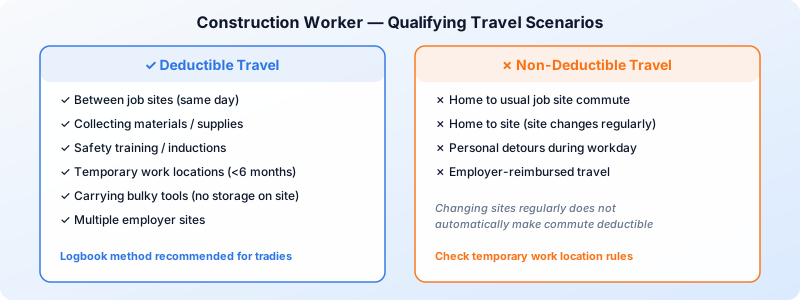
The ATO allows construction workers to claim car expenses when using their own vehicle for genuine work-related travel. This includes:
- Travelling between two or more job sites in the same day
- Driving from one employer’s site to another if you work for multiple employers
- Collecting materials or supplies from a hardware store or supplier on behalf of your employer
- Attending mandatory safety training or inductions at a location other than your normal site
- Travelling to a temporary work location — a site where you work for a limited period before moving on
Travel that does not qualify:
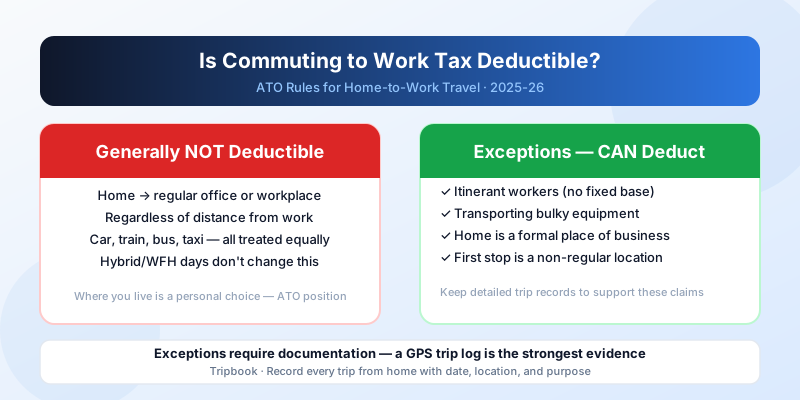
- Your regular commute from home to your usual job site
- Travel from home to work, even if the site changes regularly (unless the ATO’s temporary work location rules apply)
- Personal detours during the workday
The temporary work location exception
If you are assigned to a job site that is genuinely temporary (typically less than six months) and you maintain a regular workplace elsewhere, the ATO may allow the home-to-site travel to be deductible. This is a nuanced area — see our temporary work location guide for the full rules.
The bulky tools exception
If you carry bulky tools or equipment (such as power tools, safety barriers, or heavy tool bags) that cannot be securely stored at your work site, your home-to-work commute may qualify as a deduction. You must demonstrate that the tools are genuinely required for work and that secure storage is not available.
Choosing a claiming method
Cents per kilometre
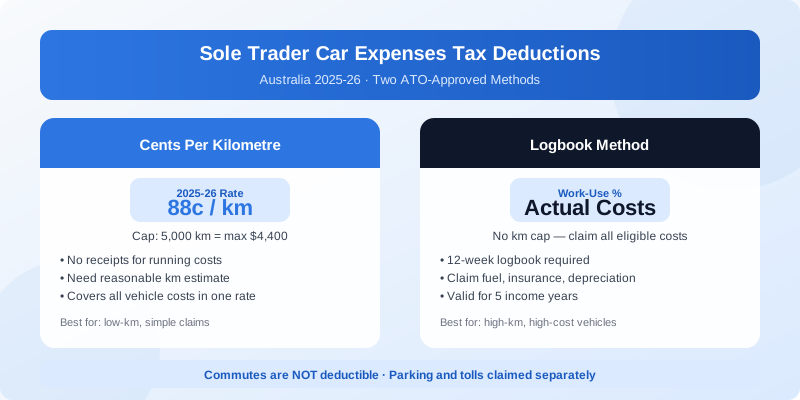
Claim 88 cents per business kilometre (2025–26 rate), capped at 5,000 km. Maximum deduction: $4,400. This method is quick but rarely captures the full extent of a construction worker’s driving.
Logbook method
Complete a 12-week logbook to establish your business-use percentage. Apply that percentage to all actual car costs — fuel, registration, insurance, servicing, tyres, and depreciation. No kilometre cap.
For construction workers who drive to multiple sites weekly, the logbook method will nearly always produce a larger deduction. One 12-week effort covers you for five years.
For a comparison of both methods, see our logbook vs cents per km guide.
What records to keep
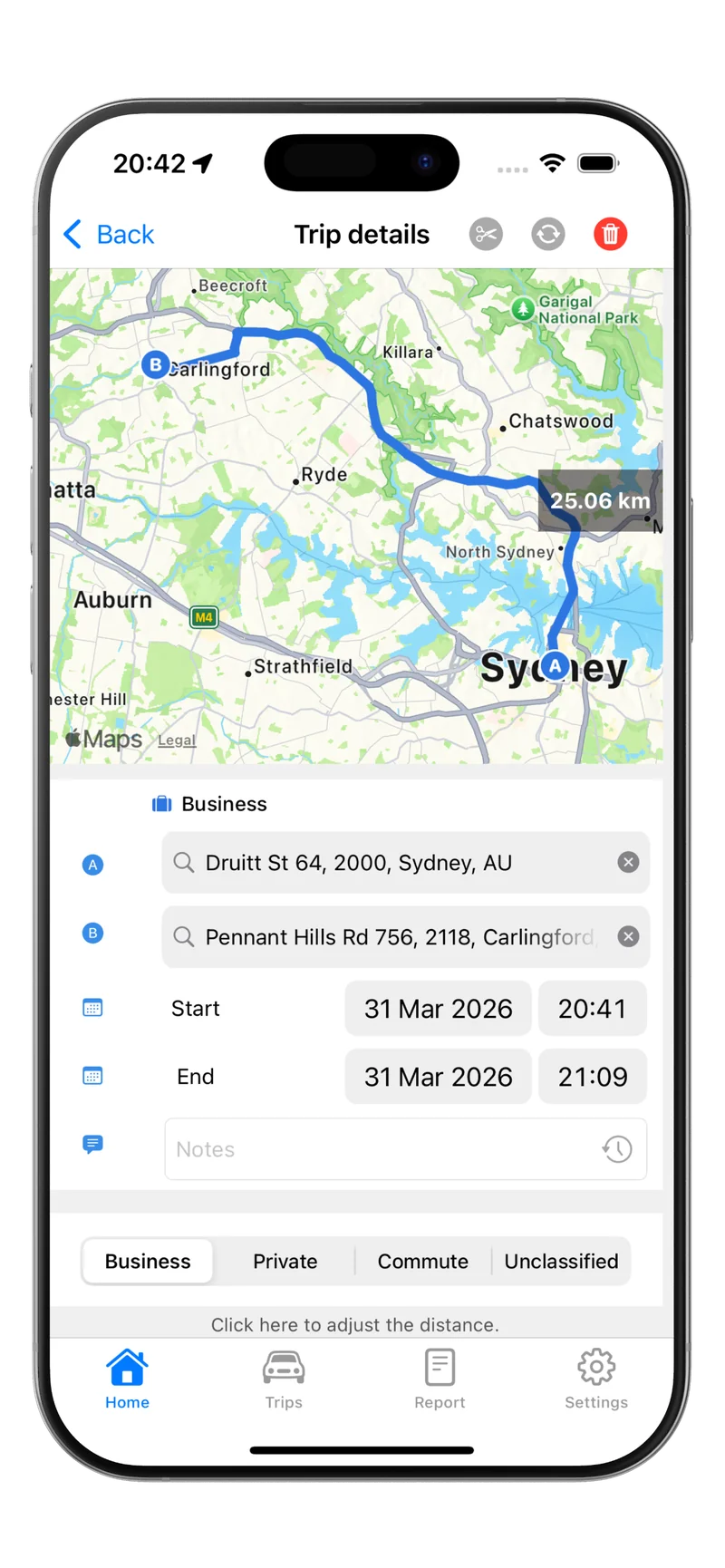
For cents per kilometre: A trip log with the date, distance, destination, and purpose of each work trip. Tripbook records this automatically, creating GPS-verified entries every time you drive.
For the logbook method: A 12-week logbook, receipts for all car expenses, and odometer readings at 1 July and 30 June.
For both methods: Keep records for five years after lodging. Digital records and app-generated logs are accepted by the ATO.
Other deductions for construction workers
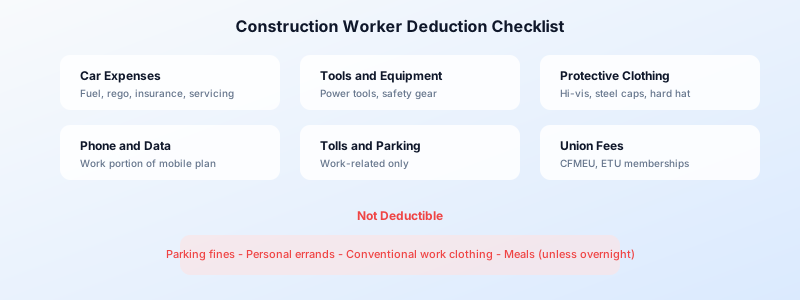
Beyond car expenses, construction workers commonly claim:
- Tools and equipment — items under $300 are claimed immediately; items $300 and over are depreciated
- Protective clothing and PPE — hard hats, steel-cap boots, hi-vis, safety glasses
- Sun protection — sunscreen, hats, and sunglasses if you work outdoors
- Union fees
- Phone expenses — the work-related portion of your personal phone bill
For a broader overview of trade-related vehicle claims, see our tradesperson vehicle deductions guide.
Common mistakes to avoid
Claiming the regular commute. Even if your site changes every few months, the daily commute from home to your current site is generally not deductible unless the temporary work location rules apply.
Not keeping a logbook for high-mileage driving. If you drive between sites every day, capping at 5,000 km under cents per kilometre costs you hundreds or thousands of dollars in lost deductions.
Guessing distances. The ATO cross-checks claims against mapping data and toll records. Use Tripbook to capture accurate GPS distances for every trip.
Claiming tools your employer provides. If your employer supplies tools or reimburses you for their cost, there is no deduction to claim. Only unreimbursed, self-funded expenses qualify.
How to claim on your tax return
Construction workers who are employees claim car expenses at Item D1 — Work-Related Car Expenses. Choose cents per kilometre or logbook, enter the relevant figures, and keep records on file.
Sole trader construction contractors claim through their business schedule instead.
Accurate tracking of every site visit and supply run with Tripbook means your construction worker car expenses tax deduction is ready when tax time arrives.