Nurses and midwives are among Australia’s most mobile health professionals. Community nurses visit patients at home, midwives attend births across multiple hospitals, and agency nurses travel between facilities — often in the same week. If you use your own car for this work-related travel, claiming a nurse car expenses tax deduction can return a meaningful amount at tax time.
This guide covers what travel qualifies, which claiming method suits different nursing roles, and the records the ATO expects.
What travel qualifies for nurses and midwives
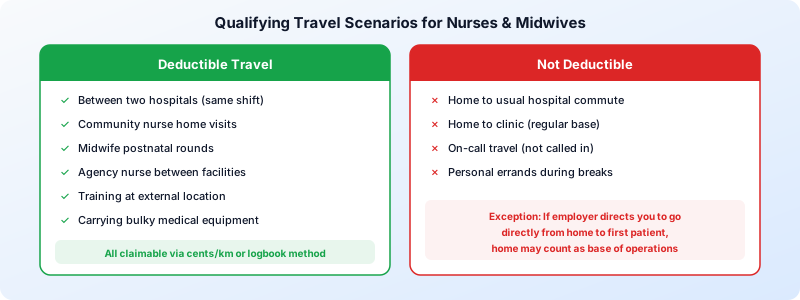
The ATO allows deductions for car expenses when you use your own vehicle for genuine work-related purposes. For nurses and midwives, this includes:
- Travelling between two workplaces — such as driving from one hospital to another during the same shift
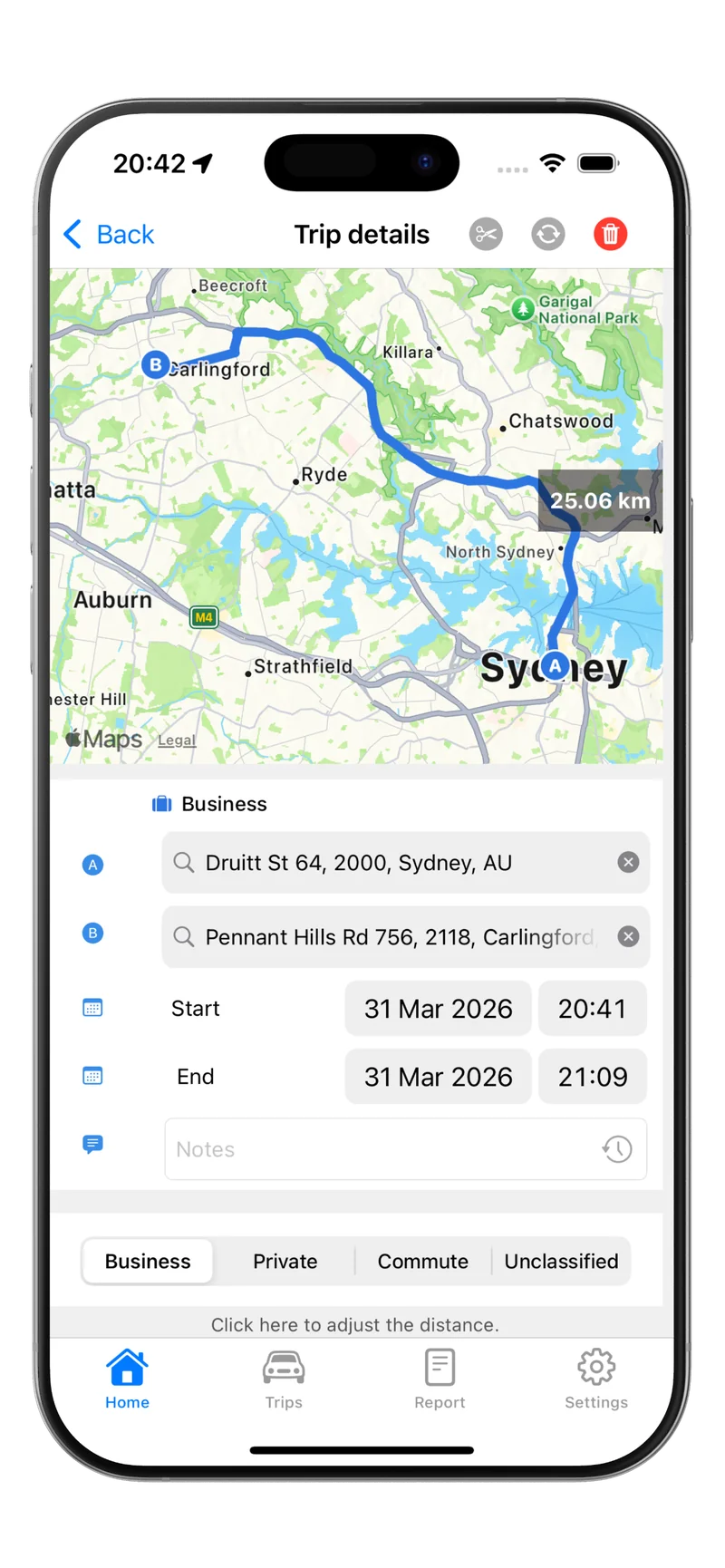
- Community nurse home visits — driving from a health centre to patients’ homes and between patients
- Midwife home visits — postnatal checks, home births, or community midwifery rounds
- Attending training or professional development at a location other than your normal workplace
- Agency or pool nurses — travelling between different facilities during the same day
- Carrying bulky medical equipment when no secure storage is available at your workplace
Travel that does not qualify:
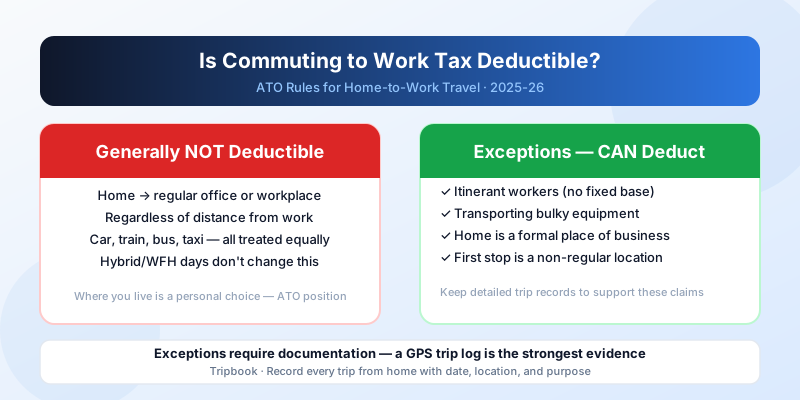
- Your regular commute from home to your usual hospital, clinic, or health centre
- Travel from home to work when you are on call (unless actually called in for an unscheduled shift)
- Personal errands during your break
Community nurses — a special case
If you are a community nurse who starts and ends your rounds from a health centre, the trips between patients’ homes are deductible, but the commute from home to the health centre is not. However, if your employer requires you to travel directly from home to your first patient (with no requirement to attend a base first), your home may be treated as your base of operations, making that first leg deductible.
Choosing a claiming method
Cents per kilometre
Claim 88 cents per business kilometre (2025–26 rate), capped at 5,000 km per car. Maximum deduction: $4,400. This may suit hospital-based nurses who only occasionally drive for work.
Logbook method
Complete a 12-week logbook to establish your business-use percentage. Apply that percentage to all actual car costs. No kilometre cap.
Community nurses, midwives doing home visits, and agency nurses who drive daily should strongly consider the logbook method — the deduction will almost certainly exceed $4,400.
For a detailed comparison, see our logbook vs cents per km guide.
What records to keep
For cents per kilometre: A trip log with dates, distances, destinations, and work purposes. Tripbook automates this, creating an ATO-compliant record for every trip.
For the logbook method: A 12-week logbook, receipts for all car expenses (fuel, insurance, registration, servicing), and odometer readings at the start and end of the financial year.
Both methods: Keep records for five years after lodging. The ATO can request evidence at any time during this period.
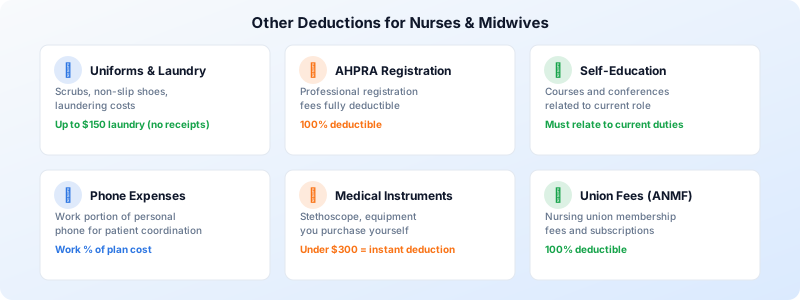
Other deductions for nurses and midwives
- Uniforms and laundry — if you purchase or launder your own scrubs, uniforms, or non-slip shoes
- Professional registration — AHPRA registration fees
- Union fees — ANMF or other nursing union memberships
- Self-education — courses and conferences directly related to your current role
- Phone expenses — the work-related portion if you use your personal phone for patient coordination or shift management
- Stethoscope and medical instruments — items under $300 claimed immediately; over $300, depreciated
For a broader overview of healthcare travel deductions, see our healthcare worker car expenses guide.
Common mistakes to avoid
Claiming the hospital commute. Your regular drive from home to your base hospital is private travel, even if you start early or finish late.
Not tracking community visits. Community nurses often make the mistake of estimating total kilometres at year-end rather than recording each trip as it happens. The ATO prefers contemporaneous records.
Overlooking the logbook method. Many nurses default to cents per kilometre because it seems simpler, but if you drive more than 5,000 business kilometres, you are leaving money behind.
Double-claiming reimbursed travel. If your employer pays a per-kilometre rate for home visits, you cannot also claim those trips as a deduction. Only unreimbursed travel qualifies.
Claiming on your tax return
Nurses and midwives who are employees claim car expenses at Item D1 — Work-Related Car Expenses. Select your method, enter the figures, and ensure any car allowance is also declared as income.
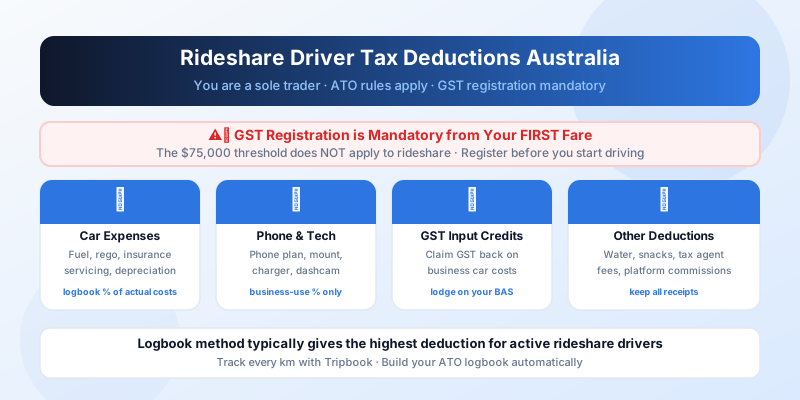
Agency nurses operating as sole traders claim through their business schedule.
Recording every patient visit and between-facility trip in Tripbook means your nurse car expenses tax deduction is calculated accurately and backed by the records the ATO expects.