If you are a teacher in Australia, you probably drive more for work than people realise. Excursions, professional development sessions, trips between campuses, and supply runs all add up. The good news is that a teacher car expenses tax deduction can put real money back in your pocket at tax time — as long as you know the rules and keep proper records.
This guide covers what travel qualifies, which claiming method to choose, and the records the ATO expects from educators.
When teachers can claim car expenses
The ATO allows you to claim a deduction for car expenses when you use your own vehicle for work-related purposes. For teachers, this typically includes:
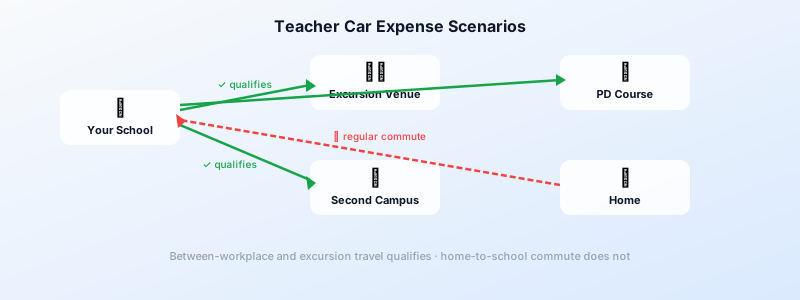
- Travelling between two workplaces — for example, from one campus to another during the same day
- Driving to an excursion venue or sporting event that is not your normal school
- Attending professional development courses, workshops, or conferences off-site
- Visiting students’ homes for required home visits or tutoring (if part of your employment duties)
- Picking up supplies or resources that your school has asked you to collect
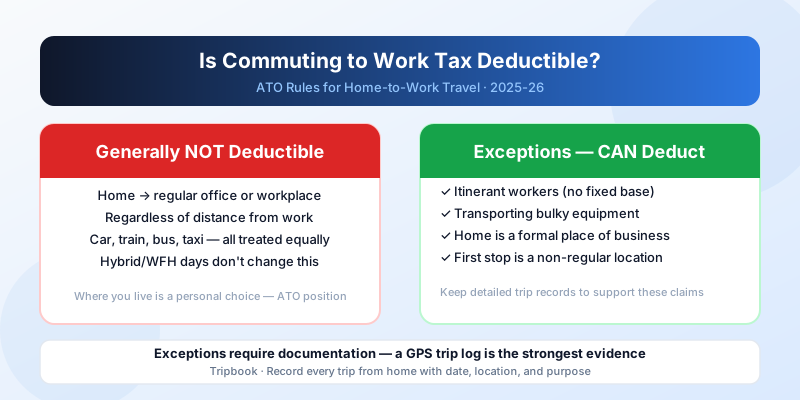
Travel that does not qualify includes your regular commute from home to school and back. Even if you live far from your school or carry a laptop bag home each night, the ATO treats this as private travel.
The exception is the bulky equipment rule. If you regularly transport items that are bulky or awkward (such as large display boards, musical instruments, or sporting equipment) and there is no secure storage at your school, the ATO may allow your home-to-work trip to qualify. You need to demonstrate that the requirement is genuine and ongoing.
Choosing a claiming method
Teachers use the same two ATO-approved methods as all individual taxpayers.
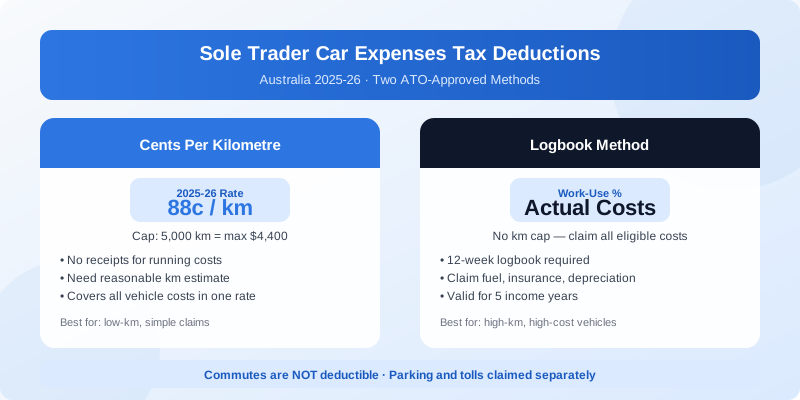
Cents per kilometre method
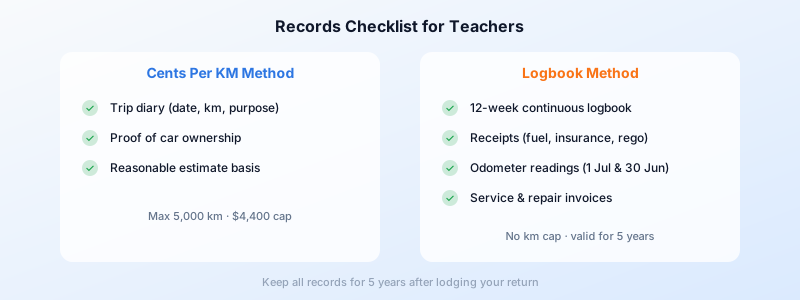
Claim 88 cents per business kilometre (2025–26 rate), capped at 5,000 kilometres per car. The maximum deduction is $4,400. You do not need fuel receipts, but you must be able to show how you calculated the distance for each trip.
This method suits teachers who drive moderate distances for work — occasional PD days, a few excursions per term, and the odd supply run.
Logbook method
Keep a continuous 12-week logbook to establish your business-use percentage, then apply that percentage to your total car expenses for the year (fuel, registration, insurance, servicing, depreciation). There is no kilometre cap.
If you drive between campuses daily or regularly travel to off-site programs, the logbook method will almost certainly produce a larger deduction. A valid logbook stays current for five years, so the 12-week effort pays off over time.
For a full breakdown of what each logbook entry must include, see our ATO logbook requirements guide.
What records teachers need to keep
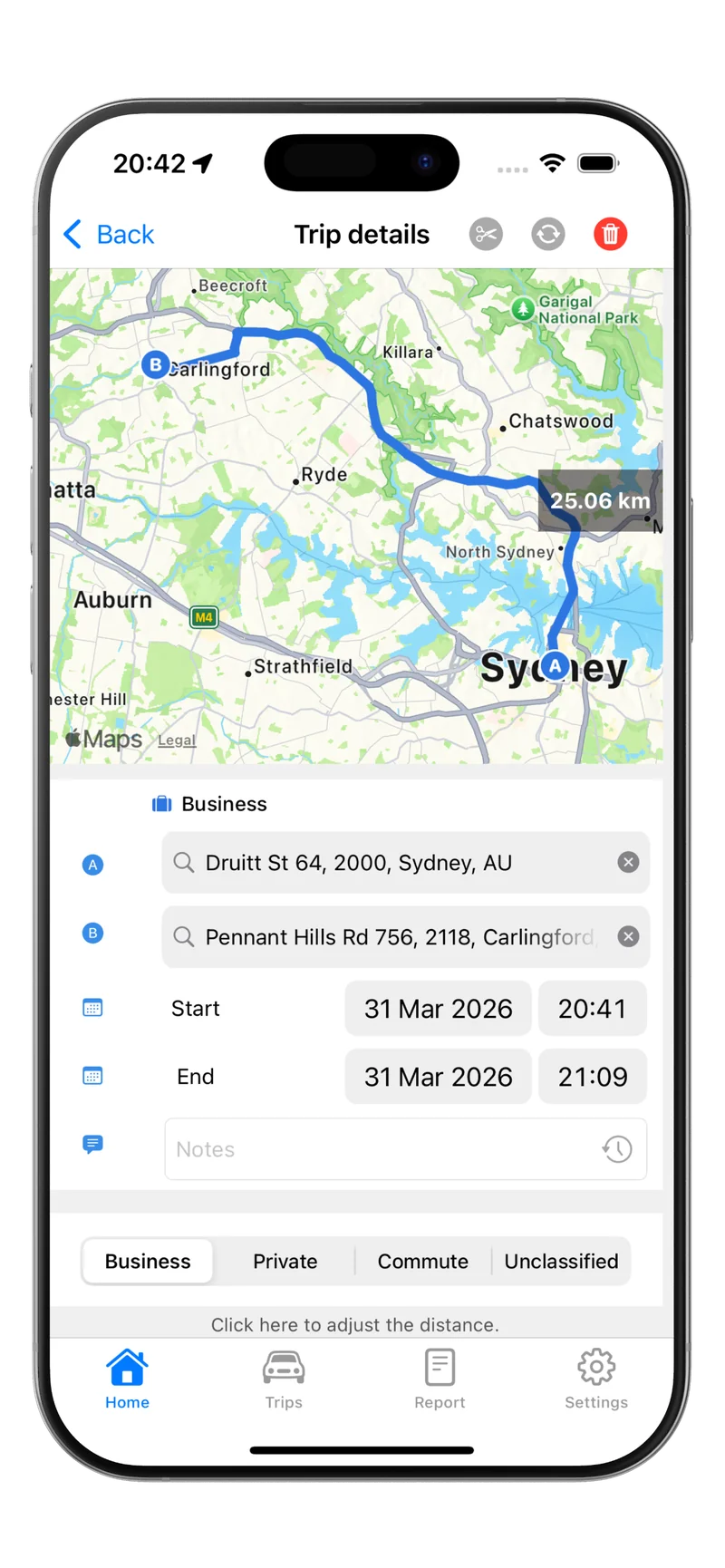
For cents per kilometre: A trip diary showing the date, destination, kilometres driven, and the work purpose for each journey. An app like Tripbook records this automatically each time you drive, so there is nothing to remember at the end of the year.
For the logbook method: A completed 12-week logbook, plus receipts for every car expense (fuel, servicing, insurance, registration) and odometer readings at 1 July and 30 June.
For both methods: Keep records for at least five years after lodging your return. If the ATO reviews your claim and you cannot produce supporting documents, the deduction will be disallowed.
Common mistakes teachers make
Claiming the home-to-school commute. This is the most frequent error. Unless the bulky equipment exception applies, your regular commute is never deductible.
Rounding up kilometres. Estimating “about 50 km” for every excursion without checking the actual distance is a red flag. Use a mapping app or Tripbook’s automatic tracking to capture accurate distances.
Double-counting reimbursed travel. If your school reimburses you for a particular trip (for example, paying a per-kilometre rate for an excursion), you cannot also claim that trip as a deduction. Only unreimbursed travel qualifies.
Forgetting to choose one method per car. You must use either cents per kilometre or the logbook method for each vehicle in a given income year — not a mix of both.
Other deductions teachers should know about
While this guide focuses on car expenses, teachers can often claim additional work-related deductions, including:
- Teaching resources and classroom supplies you paid for yourself
- Professional association memberships
- Working-from-home expenses for lesson planning and marking
- Self-education expenses for courses directly related to your current role
Make sure you also review the ATO’s guidance on work-related travel deductions for overnight trips, flights, and accommodation related to conferences or regional placements.
How to claim teacher car expenses on your tax return
Teacher car expenses are claimed at Item D1 — Work-Related Car Expenses on your individual tax return. Select your method (cents per km or logbook), enter the relevant figures, and keep your records on file in case the ATO asks for them.
If you received a car allowance from your school (uncommon but not unheard of), the allowance is assessable income and appears on your income statement. You claim your actual expenses as a deduction at D1.
Tracking every work trip in Tripbook throughout the year means your teacher car expenses tax deduction is already calculated and backed by solid data when tax time arrives.