
The mileage deduction for W-2 employees is no longer available on your federal tax return. If you use your personal car for work and your employer does not reimburse you, you cannot deduct those miles. This is not a temporary rule. The elimination is permanent under federal law, and it applies starting with the 2026 tax year and every year after.
This guide explains exactly what changed, who is affected, the narrow exceptions that still exist, and the concrete steps you can take to recover the cost of driving for work.
Why W-2 Employees Lost the Mileage Deduction
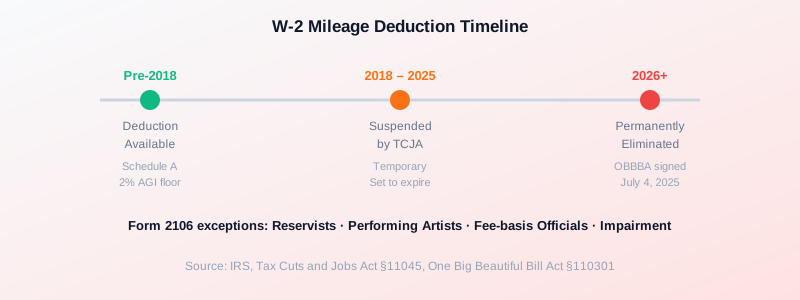
Before 2018, employees could deduct unreimbursed business expenses, including mileage, as a miscellaneous itemized deduction on Schedule A. The deduction was subject to a 2% adjusted gross income (AGI) floor, meaning only the amount exceeding 2% of your AGI counted.
The Tax Cuts and Jobs Act (TCJA) of 2017 suspended all miscellaneous itemized deductions subject to the 2% floor for tax years 2018 through 2025. Many taxpayers assumed the deduction would return in 2026 once those provisions expired.
That did not happen. The One Big Beautiful Bill Act (OBBBA), signed into law on July 4, 2025, made the elimination permanent. The entire category of miscellaneous itemized deductions is gone for good. W-2 employees will not be able to deduct unreimbursed mileage on their federal return in 2026 or any future year.
For a deeper look at the timeline and legislative details, see our guide on TCJA mileage deduction changes.
Who Is Affected
The permanent elimination applies to every W-2 employee who previously claimed unreimbursed work-related vehicle expenses. This includes:
- Outside sales representatives driving to client meetings
- Nurses and healthcare workers traveling between patient locations
- Teachers purchasing supplies and driving between schools
- Construction workers commuting to rotating job sites
- Real estate agents on W-2 payroll showing properties
If your employer does not reimburse your business driving, those costs come entirely out of your own pocket with no federal tax relief.
The Four Form 2106 Exceptions
A small group of employees can still deduct unreimbursed business expenses, including mileage, using IRS Form 2106. These deductions flow to Schedule 1 as adjustments to income, not Schedule A, so they are available even if you take the standard deduction.
The four categories are:
- Armed Forces reservists — members of a reserve component who travel more than 100 miles from home for reserve duties
- Qualified performing artists — individuals who performed services in the performing arts for at least two employers, earned at least $200 from each, and had related expenses exceeding 10% of gross income from performing arts
- Fee-basis state or local government officials — officials paid entirely by fees rather than a salary
- Employees with impairment-related work expenses — individuals with physical or mental disabilities who incur necessary workplace expenses
If you do not fall into one of these four groups, Form 2106 is not available to you.
Educator Expense Deduction: Still Available
Teachers and other eligible educators have a separate above-the-line deduction that was not eliminated. For 2026, qualified educators can deduct up to $350 for unreimbursed expenses including classroom supplies, books, and professional development courses. This deduction is claimed directly on your return and does not require you to itemize.
The OBBBA also created a new uncapped itemized deduction for educator expenses that exceed $350, though this only benefits educators whose total itemized deductions surpass the standard deduction.
To qualify, you must be a K-12 teacher, instructor, counselor, principal, or aide who works at least 900 hours during the school year.
What You Can Do Instead
Since the federal deduction is gone, the most effective strategy for W-2 employees is to shift the cost back to the employer. Here are your options.
Ask Your Employer for an Accountable Plan
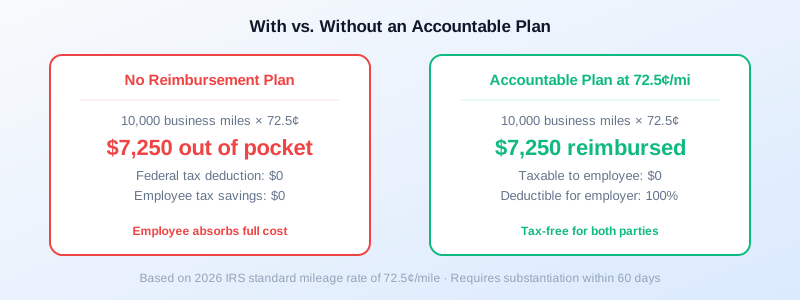
An accountable plan is an IRS-approved arrangement that lets your employer reimburse business mileage tax-free. When structured correctly, the reimbursement is not taxable income for you and is fully deductible for your employer. It is a straightforward win for both sides.
To meet IRS requirements, the plan must satisfy three rules:
- Business connection — each expense must have a clear work-related purpose
- Substantiation — you must submit a mileage log within 60 days documenting the date, destination, business purpose, and miles driven
- Return of excess — any reimbursement exceeding actual expenses must be returned within 120 days
When your employer reimburses at or below the IRS standard mileage rate of 72.5 cents per mile (the 2026 rate), the full amount is tax-free. If the reimbursement exceeds the IRS rate, only the excess is treated as taxable wages.
For a full breakdown of how reimbursement programs work, see our guide on mileage reimbursement for employees.
Negotiate a Mileage Reimbursement Policy
If your company does not have a reimbursement plan, bring the idea to your manager or HR department. Many employers are willing to set one up because the reimbursements reduce the company’s payroll tax obligations. Present it as a cost-neutral benefit: the employer gets a deduction, and you get tax-free compensation for a real expense.
Check Your State Tax Return
Several states still allow a deduction for unreimbursed employee business expenses on the state return, even though the federal deduction is gone. States with this provision include California, New York, Pennsylvania, and others. The rules and thresholds vary by state, so check your state tax authority or consult a tax professional.
Keep a Mileage Log Regardless
Even though you cannot claim a federal deduction, keeping an accurate mileage log protects you in multiple scenarios:
- Your employer adds a reimbursement plan and needs historical records
- You change to self-employment or independent contractor status and need documentation habits in place
- Your state allows the deduction and requires a log as substantiation
- You fall into one of the four Form 2106 exception categories
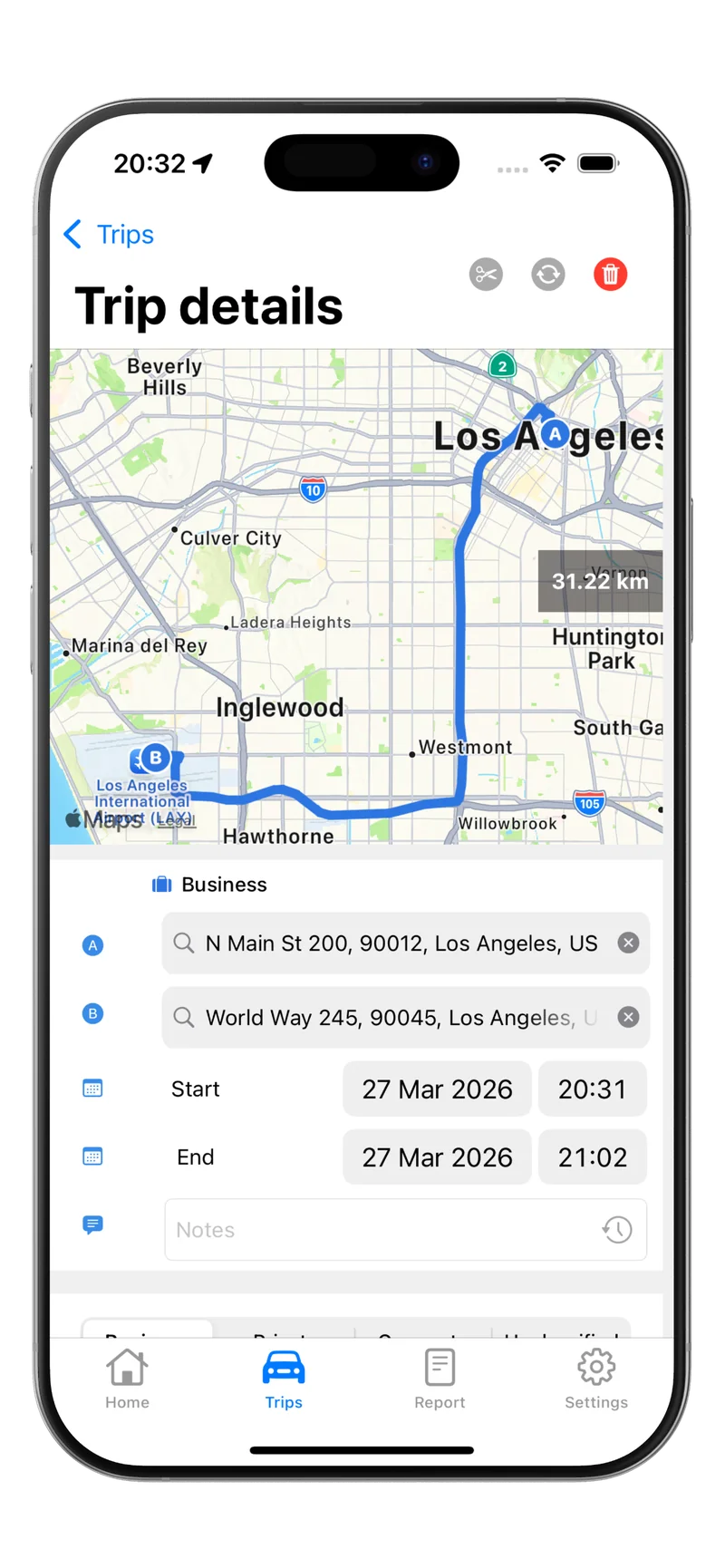
A mileage tracking app automates the entire process and ensures your records meet IRS standards. Download Tripbook to start logging every business trip with GPS-verified data, so your records are ready whenever you need them.
Mileage Deduction for W-2 Employees: Key Takeaways
The mileage deduction for W-2 employees is permanently eliminated at the federal level. The TCJA suspended it, and the OBBBA made the change irreversible. Unless you qualify for one of the four narrow Form 2106 exceptions, the most practical path forward is employer reimbursement through an accountable plan at the 2026 IRS rate of 72.5 cents per mile.
For a comprehensive look at all the expenses W-2 employees used to deduct and what remains available, read our guide on unreimbursed employee expenses in 2026.