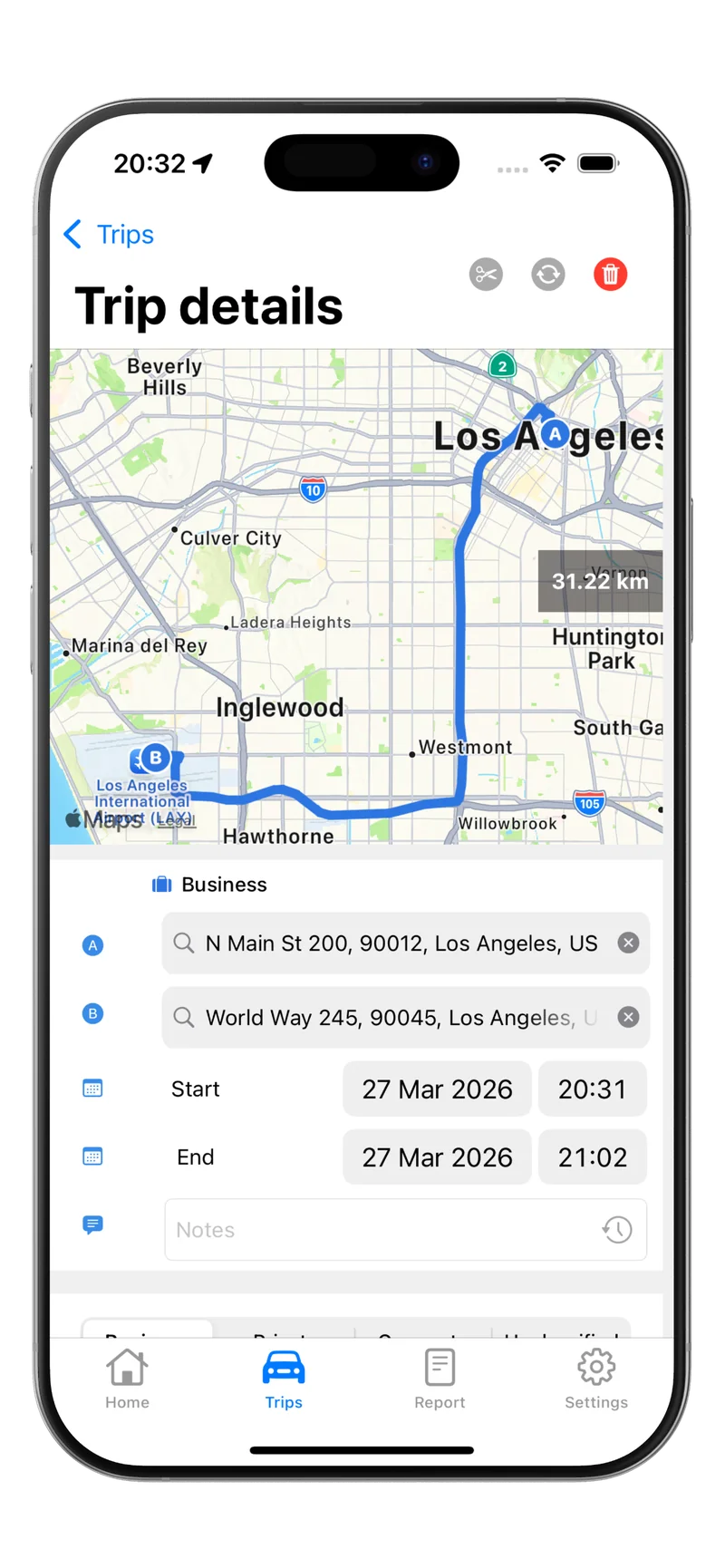

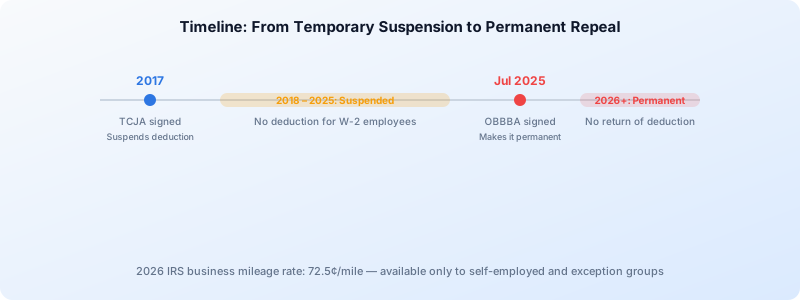
The TCJA mileage deduction changes that first took effect in 2018 are no longer temporary. When Congress passed the One Big Beautiful Bill Act (OBBBA) in 2025, it made the suspension of unreimbursed employee expense deductions permanent. If you are a W-2 employee who drives for work, this directly affects your federal tax return for 2026 and every year going forward.
This guide explains exactly what the Tax Cuts and Jobs Act changed, how the OBBBA sealed those changes into permanent law, who is still eligible to deduct mileage, and what steps you should take now.
How the TCJA Changed the Mileage Deduction
Before 2018, W-2 employees could deduct unreimbursed business expenses on Schedule A as miscellaneous itemized deductions. This included mileage driven for work in a personal vehicle. The deduction applied to expenses that exceeded 2 percent of your adjusted gross income (AGI).
The Tax Cuts and Jobs Act of 2017 suspended all miscellaneous itemized deductions subject to that 2 percent AGI floor. The suspension covered tax years 2018 through 2025 and was designed as a temporary measure. Many employees and tax professionals expected the deduction to return in 2026 when the TCJA provisions were set to expire.
That did not happen.
The OBBBA Made the TCJA Mileage Deduction Changes Permanent
The OBBBA, signed into law on July 4, 2025, converted the temporary suspension into a permanent repeal. Section 70110 of the OBBBA permanently disallows all miscellaneous itemized deductions subject to the 2 percent AGI floor under IRC Section 67. This includes unreimbursed employee travel expenses and mileage.
The IRS confirmed this in Notice 2026-10, stating that the business standard mileage rate of 72.5 cents per mile cannot be used to claim an itemized deduction for unreimbursed employee travel expenses.
For the millions of W-2 employees who drive personal vehicles for work without reimbursement, this is a significant and lasting change. An employee driving 12,000 unreimbursed business miles in a year loses access to a potential deduction worth $8,700 at the current IRS rate.
Who Lost the Mileage Deduction
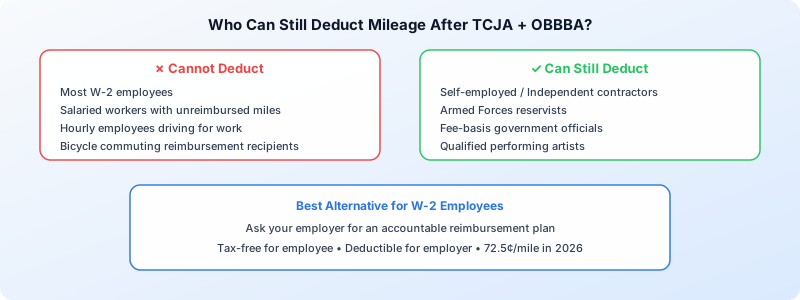
The permanent elimination applies to most W-2 employees. If you receive a W-2 from your employer, you generally cannot deduct unreimbursed mileage on your federal tax return. This includes outside sales representatives, nurses traveling between facilities, employees visiting client sites, and anyone else driving for work duties without employer reimbursement.
The deduction loss also extends to other unreimbursed employee expenses that previously qualified as miscellaneous itemized deductions, such as work-related tools, uniforms, and professional dues.
For a deeper look at this topic, see our guide on whether W-2 employees can deduct mileage.
Who Can Still Deduct Mileage After the TCJA Changes
Despite the permanent elimination for most employees, several groups retain full access to the mileage deduction.
Self-employed individuals and independent contractors can still deduct business mileage on Schedule C. The TCJA and OBBBA changes only affected miscellaneous itemized deductions, not above-the-line business deductions. If you file a Schedule C, you can claim the standard mileage rate of 72.5 cents per mile or use the actual expense method.
Certain W-2 employees can still use Form 2106 to deduct unreimbursed expenses as an adjustment to income. These narrow exceptions include Armed Forces reservists traveling to reserve duties, qualified performing artists meeting specific income thresholds, fee-basis state or local government officials, and employees with impairment-related work expenses.
Eligible educators received a new benefit under the OBBBA. K-12 teachers can deduct unreimbursed expenses through an increased above-the-line deduction of $350, plus a new itemized deduction for educator expenses with no dollar cap and no 2 percent AGI floor.
What W-2 Employees Should Do Now
If you are a W-2 employee who drives for work, waiting for the deduction to come back is no longer a viable strategy. Here are practical steps to take.
Ask Your Employer for a Reimbursement Plan
The most effective solution is employer mileage reimbursement under an accountable plan. When structured correctly, reimbursements at or below the IRS standard rate are tax-free to the employee and fully deductible by the employer. It benefits both sides. See our guide on mileage reimbursement for employees for details on how to approach this conversation with your employer.
Track Every Business Mile
Whether you are self-employed, an exception-eligible employee, or building a case for employer reimbursement, accurate mileage records are essential. The IRS requires contemporaneous records that include the date, destination, business purpose, and miles driven for each trip.
A mileage tracking app automates this process and creates the documentation you need. Download Tripbook to start logging trips automatically with GPS tracking.
Understand Your Deduction Method Options
If you do qualify to deduct mileage, you need to choose between the standard mileage rate and the actual expense method. The standard rate of 72.5 cents per mile is simpler and works well for most drivers. The actual expense method requires tracking every vehicle cost but may yield a larger deduction for expensive vehicles. Our comparison of the standard mileage rate vs. actual expenses breaks down when each method makes sense.
Check Your State Tax Rules
The federal deduction is gone, but some states still allow unreimbursed employee business expenses on state returns. California, New York, Pennsylvania, and several others have historically permitted these deductions. Check your state tax code, as you may still recover some tax benefit at the state level.
Other TCJA Provisions the OBBBA Made Permanent
The mileage deduction is not the only change that stuck. The OBBBA also permanently eliminated the deduction for moving expenses (except for active-duty military and certain intelligence community members), the exclusion for qualified bicycle commuting reimbursements, and the tax-home deduction for state legislators.
These were all originally temporary TCJA suspensions through 2025 that are now permanent features of the tax code.
The Bottom Line on TCJA Mileage Deduction Changes
The TCJA mileage deduction changes are permanent. The OBBBA closed the door on the return of miscellaneous itemized deductions for unreimbursed employee expenses. W-2 employees who drive for work need to pursue employer reimbursement, and self-employed individuals should continue tracking every mile to maximize their deduction.
No matter your situation, accurate mileage records protect your tax position. Download Tripbook to automate your mileage tracking and keep IRS-compliant logs for every business trip.