Teachers drive more for work than most people realize. Traveling between schools, buying classroom supplies, attending conferences, and visiting students for home-based services all put miles on your car. The teacher mileage deduction landscape changed significantly in 2026 thanks to the One Big Beautiful Bill Act, which created new opportunities for educators to deduct unreimbursed expenses, including mileage.
Understanding these changes is critical because they affect every K-12 teacher, instructor, counselor, principal, aide, and coach in the country.
The New Educator Expense Rules for 2026
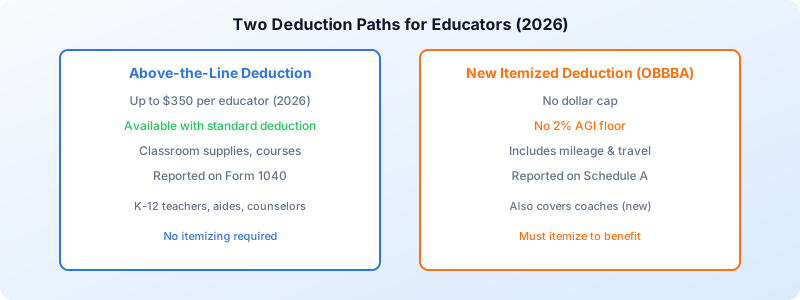
The OBBBA created two distinct paths for teachers to deduct unreimbursed expenses in 2026.
Above-the-line deduction. The existing educator expense deduction continues, now increased to $350 per educator for 2026 (up from $300). This deduction is available even if you take the standard deduction. It applies to qualifying classroom supplies, professional development courses, and other eligible expenses. This is an adjustment to gross income on your Form 1040.
New itemized deduction for educator expenses. The OBBBA created a new miscellaneous itemized deduction specifically for educators that is not subject to the 2 percent AGI floor and has no dollar cap. This means a teacher with $2,000 in unreimbursed expenses could claim $350 as the above-the-line deduction and the remaining $1,650 as an itemized deduction, provided their total itemized deductions exceed the standard deduction.
This new provision is significant because it means educators are the only group of W-2 employees who can now deduct unreimbursed travel expenses, including mileage, on their federal return. For how this differs from other employees, see our guide on whether W-2 employees can deduct mileage.
Who Qualifies as an Eligible Educator
To claim the educator expense deduction, you must be a kindergarten through grade 12 teacher, instructor, counselor, principal, or aide. You must work at least 900 hours during the school year in a school that provides elementary or secondary education as determined by state law.
Starting in 2026, the definition expands to include interscholastic sports administrators and coaches, broadening the pool of eligible educators.
Both public and private school educators qualify, as long as the school provides K-12 education recognized by the state.
What Driving Qualifies for Teacher Mileage Deductions
Teachers rack up business miles in several common scenarios.
Travel between schools. If you teach at multiple buildings, the miles driven between them during the workday are business miles. This is common for music teachers, special education specialists, and counselors who serve multiple schools.
Supply and material runs. Trips to the store to purchase classroom supplies with your own money are deductible business travel. The supplies themselves are also deductible under the educator expense deduction.
Professional development. Driving to workshops, conferences, college courses, and training sessions related to your teaching qualifies as business travel.
Home visits. Special education teachers, early intervention specialists, and school social workers who visit students at home log deductible business miles for every trip.
After-school activities. Coaches and activity sponsors who drive to sporting events, competitions, or field trips can count those miles as business travel.
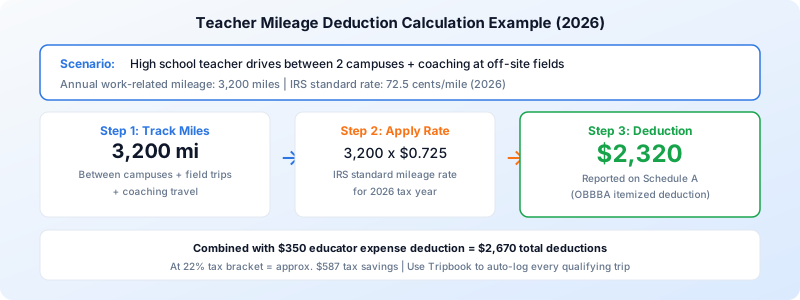
The IRS mileage rate for 2026 is 72.5 cents per mile. A teacher driving between two schools daily (20 miles round trip, 180 school days) would accumulate 3,600 business miles worth $2,610 in deductions.
How to Track and Claim the Deduction
To claim mileage as part of your educator expense deduction, keep a log of every qualifying trip. Record the date, starting point, destination, business purpose, and miles driven. The IRS requires contemporaneous records, meaning you should track trips as they happen.
For the above-the-line deduction of up to $350, you do not need to itemize. Simply report the amount on your Form 1040. For amounts above $350, you must itemize on Schedule A, which only benefits you if your total itemized deductions exceed the standard deduction.
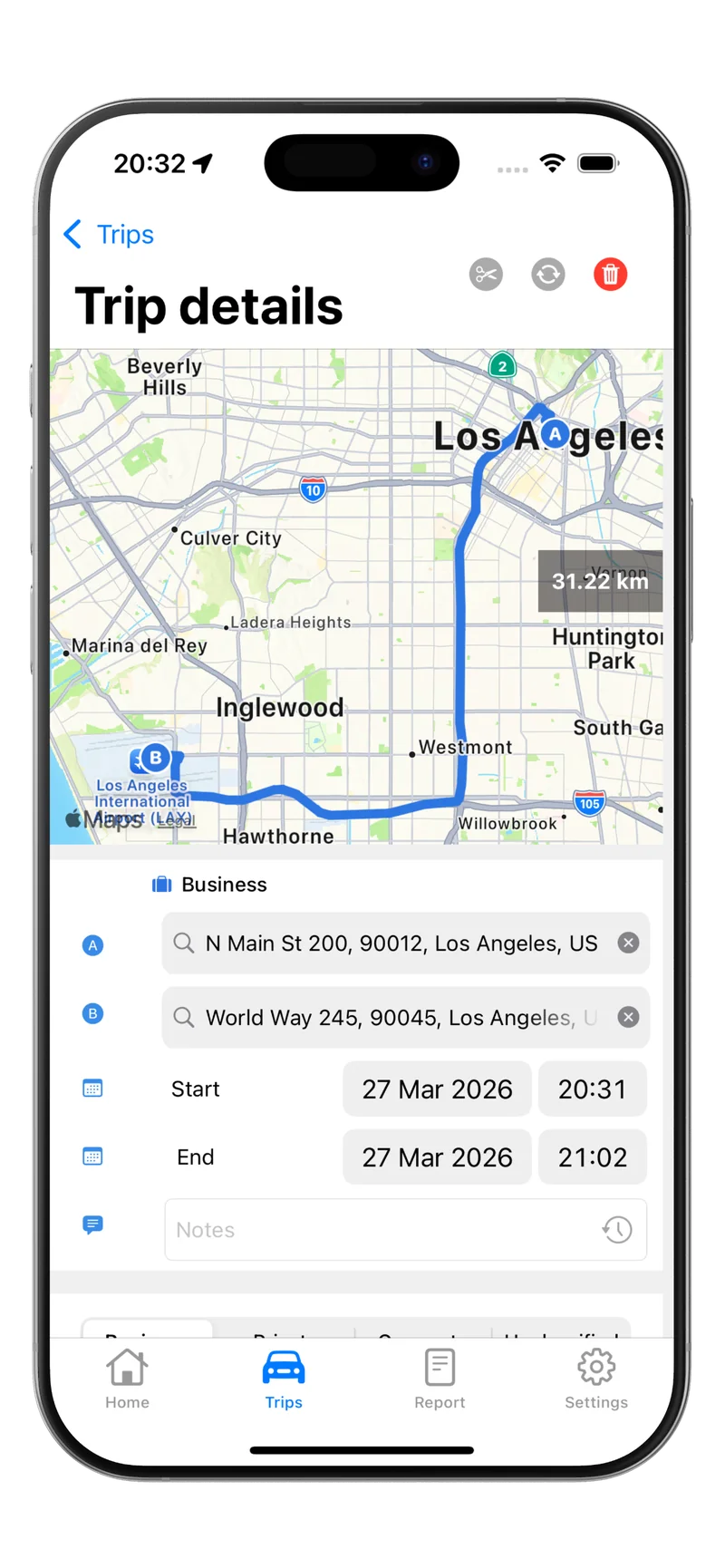
Tripbook automates the tracking process with GPS-based trip recording. Every trip is captured automatically, and you can categorize school-related travel with a swipe. At tax time, export a complete mileage report that meets IRS documentation standards.
Reimbursement From Your School District
Some school districts reimburse teachers for work-related mileage, particularly for travel between buildings or to conferences. If your district reimburses you, you cannot also deduct those reimbursed miles on your tax return.
However, if your district reimburses at a rate below the IRS standard of 72.5 cents per mile, or only reimburses certain types of travel, you may be able to deduct the unreimbursed portion. Keep records of both your total business miles and any reimbursements received to calculate the difference.
If your district does not reimburse mileage, check whether your state requires it. Only three states mandate employer mileage reimbursement: California, Illinois, and Massachusetts. For teachers in other states, the new educator expense deduction is the primary way to recover driving costs. See our guide on mileage reimbursement for employees for strategies to request reimbursement from your employer.
Other Deductible Educator Expenses
Beyond mileage, teachers can deduct numerous out-of-pocket expenses. Classroom supplies including books, materials, and technology qualify. Professional development courses and workshops are deductible. Computer equipment and software used for teaching can be claimed. Subscriptions to educational publications and resources count as eligible expenses.
The key is that expenses must be unreimbursed and directly related to your teaching duties. Keep receipts for everything and track your total spending throughout the year.
Every Mile to School Matters
Teachers invest their own time and money into their students every day. The updated educator expense deduction in 2026 finally recognizes a broader range of those costs, including mileage. Track every qualifying trip, keep detailed records, and claim the deductions you have earned.
Download Tripbook and automate your mileage tracking so you can focus on teaching instead of paperwork.