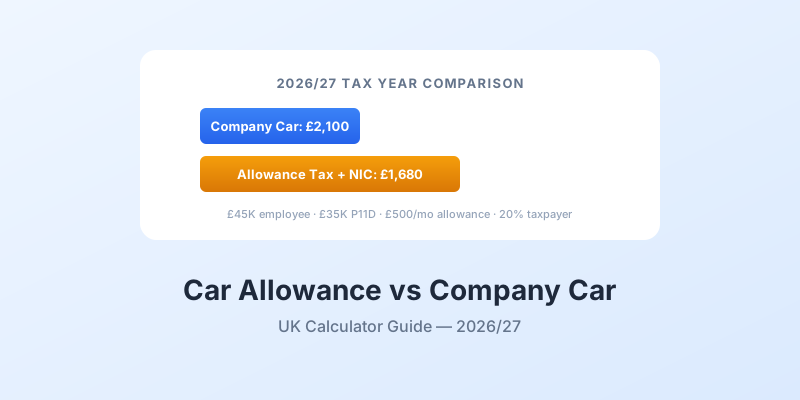
Choosing between a car allowance and a company car is one of the biggest financial decisions UK employees face. The wrong choice can cost you thousands of pounds each year in unnecessary tax. This car allowance vs company car calculator guide uses real 2026/27 tax rates and a detailed worked example to help you see exactly what each option puts in your pocket — and what it takes out.
How Each Option Is Taxed
The tax treatment is fundamentally different for each route, and that difference is where most of the money is won or lost.
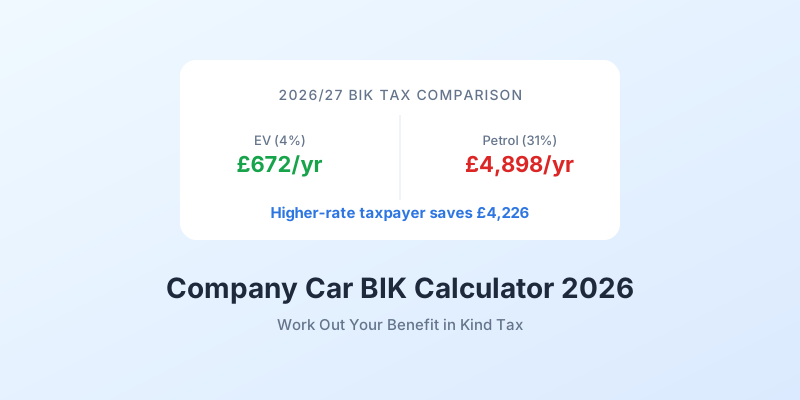
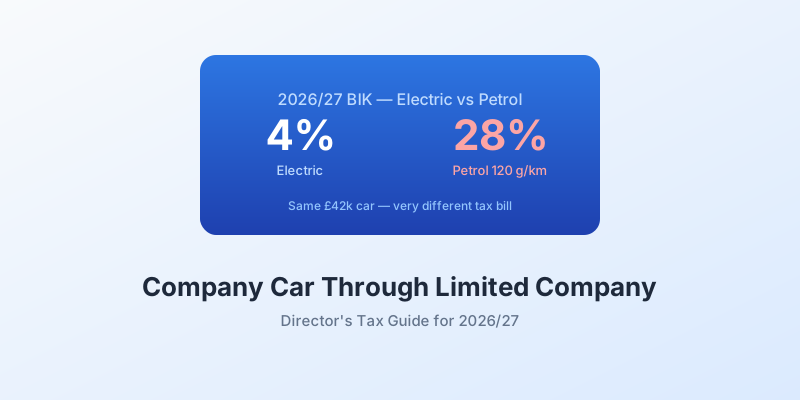
Company car — Your employer provides the vehicle. You pay Benefit in Kind (BIK) tax based on the car’s P11D value multiplied by a BIK percentage set by HMRC according to CO2 emissions. For 2026/27, BIK percentages range from 4% for pure electric vehicles up to 37% for high-emission petrol and diesel models. You pay income tax on the BIK amount at your marginal rate (20%, 40%, or 45%). There is no employee NIC on BIK. Your employer pays Class 1A NIC at 15% on the BIK value.
Car allowance — Your employer pays you a cash sum each month, typically £300–£700. This is treated identically to salary: you pay income tax at your marginal rate and employee Class 1 NIC at 8% (or 2% above the Upper Earnings Limit). Your employer also pays 15% employer NIC. There is no favourable tax treatment whatsoever — it is simply extra wages.
The critical distinction: a company car attracts BIK tax but no employee NIC, whereas a car allowance attracts both income tax and NIC.
Worked Example: £45K Salary, Petrol Company Car vs £500/Month Allowance
Let us put real numbers on this. Our employee earns £45,000 per year, is a basic-rate (20%) taxpayer, and the employer offers two choices:
- Option A: A company petrol car with a P11D value of £35,000 and CO2 of 130g/km, giving a BIK rate of approximately 30% for 2026/27
- Option B: A car allowance of £500 per month (£6,000 per year)
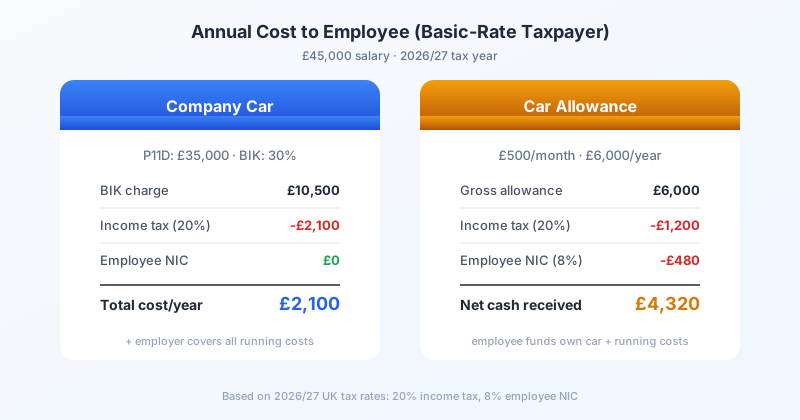
Option A — Company Car
| Line item | Amount |
|---|---|
| BIK charge: £35,000 × 30% | £10,500 |
| Income tax at 20% | £2,100/year |
| Employee NIC | £0 |
| Total annual cost to employee | £2,100 |
The employer covers insurance, servicing, tyres, and road tax. The employee’s only out-of-pocket cost is the £2,100 tax bill — equivalent to £175 per month.
Option B — Car Allowance
| Line item | Amount |
|---|---|
| Gross allowance | £6,000/year |
| Income tax at 20% | −£1,200 |
| Employee NIC at 8% | −£480 |
| Net cash received | £4,320 |
The employee keeps £4,320 but must fund their own vehicle purchase or lease, insurance, servicing, road tax, and fuel from that amount. A typical mid-range car costs £250–£400 per month to lease alone, before running costs.
The Verdict for This Scenario
With the company car, the employee pays £2,100 in tax but has no vehicle costs. With the allowance, the employee receives £4,320 net but faces total motoring costs that will usually exceed that figure for a comparable vehicle. For a petrol car at this P11D value, the company car is the better deal in most cases — unless the employee already owns a cheap, reliable car or drives very few private miles.
When a Car Allowance Wins
The car allowance route tends to come out ahead in specific circumstances:
- You already own a suitable car and do not need to fund a new one from the allowance
- The company car on offer has high BIK — a diesel without RDE2 compliance facing the 4% diesel supplement pushes BIK percentages close to the 37% cap
- You drive high business mileage — with the allowance route you can claim 45p per mile tax-free from HMRC for business journeys (first 10,000 miles, then 25p), which adds significant untaxed income
- The allowance is generous relative to the car’s P11D value
For example, an employee doing 12,000 business miles per year on the allowance route claims 10,000 × 45p + 2,000 × 25p = £5,000 tax-free. Combined with the £4,320 net allowance, that is £9,320 in total — a strong position if motoring costs are kept low.
When a Company Car Wins
The company car tends to win in these situations:
- The car is electric — at just 4% BIK for 2026/27, an EV with a P11D of £35,000 creates a BIK charge of only £1,400, costing a basic-rate taxpayer just £280 per year. This is dramatically cheaper than funding an equivalent EV privately from a taxed allowance
- The employer covers all running costs — insurance, servicing, breakdown cover, and tyres are all included at no extra charge to the employee
- The P11D value is high relative to the allowance — a £40,000 car offered against a £5,000 allowance nearly always favours the company car
- You want hassle-free motoring — no MOT worries, no insurance renewals, no depreciation risk
For a deeper look at BIK rates across all emission bands, see our full guide.
NIC: The Hidden Cost of Car Allowances
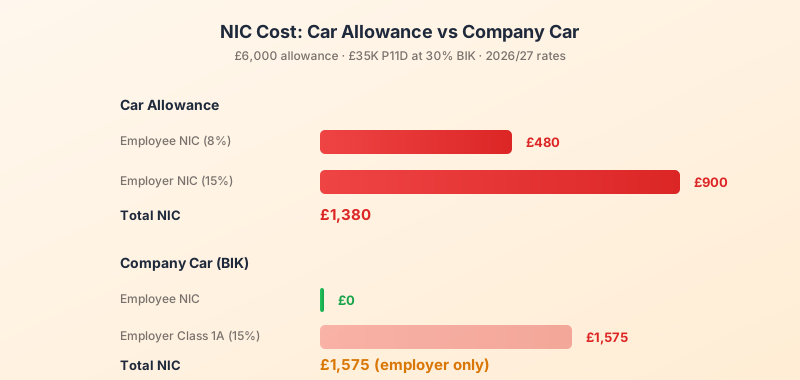
National Insurance is often overlooked in the car allowance vs company car calculation, but it is a significant factor for both employee and employer.
On a £6,000 car allowance, the employee loses £480 (8%) and the employer pays an additional £900 (15%) in NIC. That is £1,380 in NIC alone — money that simply does not exist with the company car route, because BIK is exempt from employee NIC and employer Class 1A NIC on BIK is often lower than Class 1 NIC on the equivalent cash.
It is also worth noting a recent development: following the Laing O’Rourke and Willmott Dixon Upper Tribunal decisions, employers who reimburse business mileage at less than 45p per mile may be able to offset part of the car allowance as “relevant motoring expenditure,” reducing the NIC liability. If your employer pays you a car allowance and reimburses mileage at, say, 15p per mile, the difference up to 45p can be offset against the allowance for NIC purposes. Ask your payroll department whether they are applying this relief.
Electric Company Cars: The Clear Winner for 2026/27
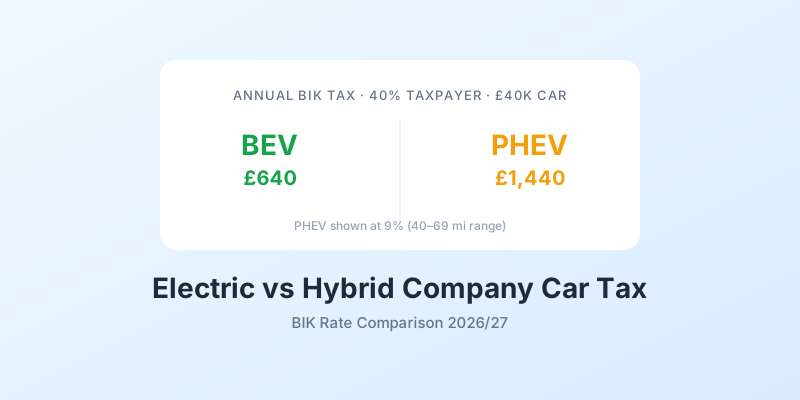
The 2026/27 BIK rate for zero-emission vehicles is 4%, rising to 5% in 2027/28 and 7% in 2028/29. These rates make electric company cars extraordinarily tax-efficient.
Consider the same £45,000 employee offered an electric company car worth £35,000:
| Line item | Amount |
|---|---|
| BIK charge: £35,000 × 4% | £1,400 |
| Income tax at 20% | £280/year |
| Employee NIC | £0 |
| Total annual cost | £280 |
Compare that to the £6,000 allowance netting £4,320 after tax and NIC — from which the employee must fund an equivalent EV costing upwards of £300 per month to lease. The electric company car wins by a wide margin. For more detail on EV-specific tax advantages, see our electric company car tax guide.
If your employer offers a salary sacrifice scheme for electric cars, the savings can be even greater, as the salary sacrifice reduces your gross pay before tax and NIC are calculated.
Tracking Mileage on the Car Allowance Route
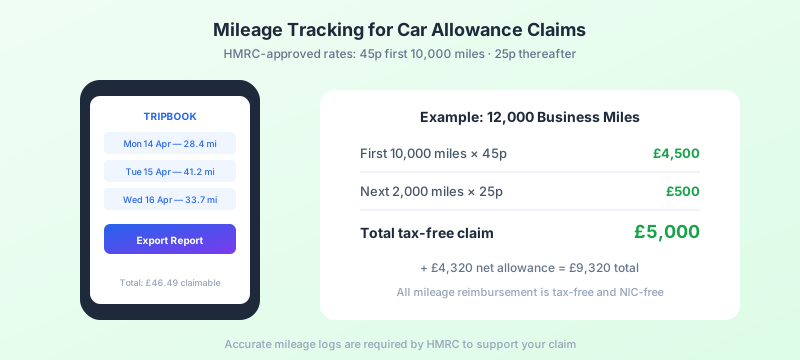
If you take the car allowance, accurate mileage records are essential. You need them to claim the 45p/25p rate from your employer for business journeys, and if your employer pays less than the HMRC approved rate, you can claim Mileage Allowance Relief on the shortfall through your Self Assessment or a P87 form.
Tripbook makes this straightforward. The app automatically logs every business journey using GPS, calculates your HMRC mileage claim, and produces reports that satisfy both your employer and HMRC. No more scribbling in notebooks or guessing distances after the fact.
Whether you choose the company car or the allowance route, Tripbook helps you stay on top of your business mileage. For car allowance drivers in particular, the mileage reimbursement is a major part of the financial equation — and keeping clean records with Tripbook ensures you never leave money on the table.
Download Tripbook from the App Store and start tracking your business miles today.