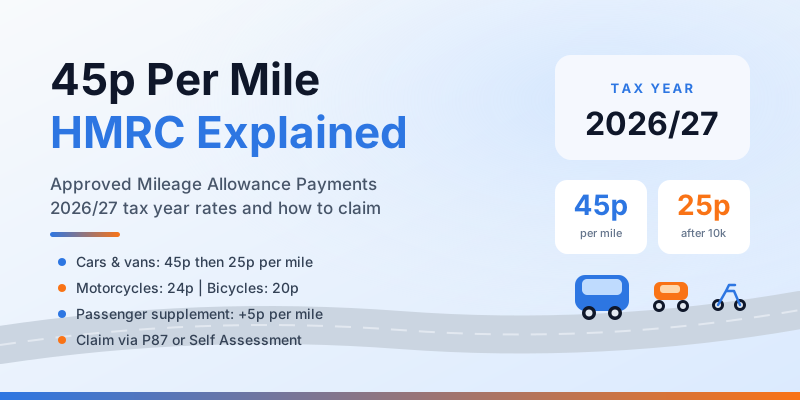
If you use your own car for work in the UK, the 45p per mile HMRC rate is the single most important number you need to know. It determines exactly how much you can claim back in tax relief — whether you are an employee, a sole trader, or a company director.
This guide breaks down everything about the 45p per mile HMRC approved mileage allowance, including who qualifies, how the two-tier rate system works, and exactly how to make your claim for the 2026/27 tax year.
What Is the 45p Per Mile HMRC Rate?
The 45p per mile rate is part of HMRC’s Approved Mileage Allowance Payments (AMAP) system. It is the flat rate that covers all running costs when you use your own vehicle for business travel — fuel, insurance, road tax, servicing, tyres, depreciation, and breakdown cover, all rolled into one figure.
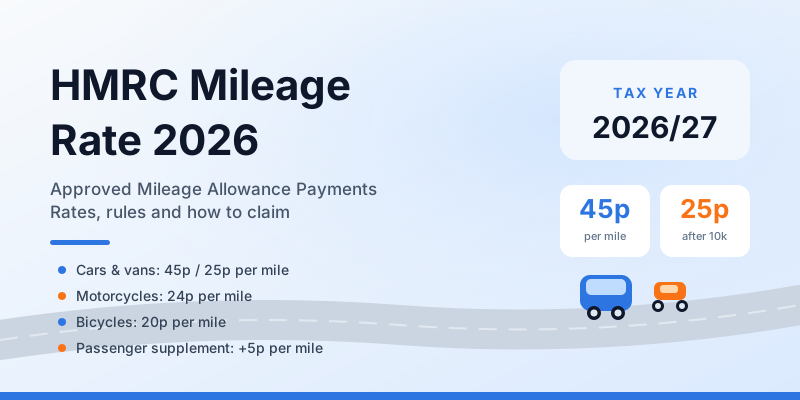
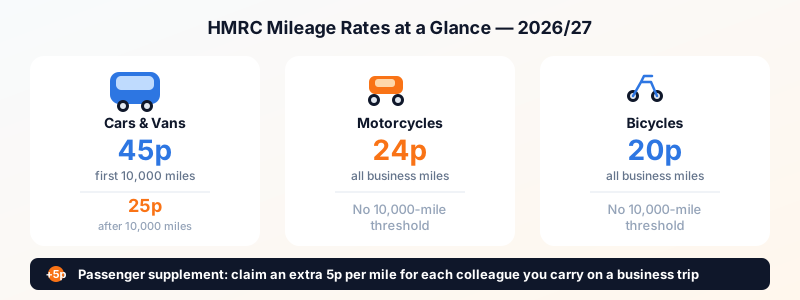
Here are the current AMAP rates for the 2026/27 tax year (6 April 2026 to 5 April 2027):
| Vehicle | First 10,000 miles | After 10,000 miles |
|---|---|---|
| Cars and vans | 45p per mile | 25p per mile |
| Motorcycles | 24p per mile | 24p per mile |
| Bicycles | 20p per mile | 20p per mile |
These rates have remained unchanged since 2011. Because 45p is an all-in rate, you do not need to keep individual fuel receipts or maintenance invoices. You simply need an accurate log of your business miles.
There is also a passenger supplement of 5p per mile for each fellow employee or business associate you carry on a work journey. This is frequently overlooked but can add up over a year.
Who Qualifies for the 45p Per Mile Rate?
The 45p per mile HMRC rate is available to several groups, though how you claim it differs depending on your employment status.
Employees (PAYE)
If you use your own car for business journeys — visiting clients, travelling between offices, or attending meetings away from your normal workplace — your employer can reimburse you at up to 45p per mile completely tax-free. If your employer pays you less than 45p (or nothing at all), you can claim Mileage Allowance Relief (MAR) on the shortfall. For a detailed walkthrough, see our guide to Mileage Allowance Relief and Form P87.
Self-Employed Sole Traders
If you are self-employed, you can use the 45p/25p rate through HMRC’s simplified expenses method. Rather than tracking every individual vehicle cost, you simply multiply your business miles by the flat rate and enter the total on your Self Assessment return. Once you choose simplified expenses for a vehicle, you must stick with it for as long as you use that vehicle in your business. For more detail, read our guide to simplified expenses for mileage.
Limited Company Directors
Directors who use their personal vehicle for company business can be reimbursed by their company at the 45p/25p rate. The payment is tax-free for the director, and the company can deduct it as a business expense against corporation tax. Our guide on limited company mileage claims at 45p covers this in full.
Business Partners
Partners in a business partnership (excluding LLPs with corporate members) can also use simplified expenses at the 45p/25p rate.
Important: ordinary commuting — your journey from home to your regular, permanent workplace — does not count as business mileage. Only journeys to temporary workplaces, client sites, or between work locations qualify.
How the 10,000-Mile Threshold Works
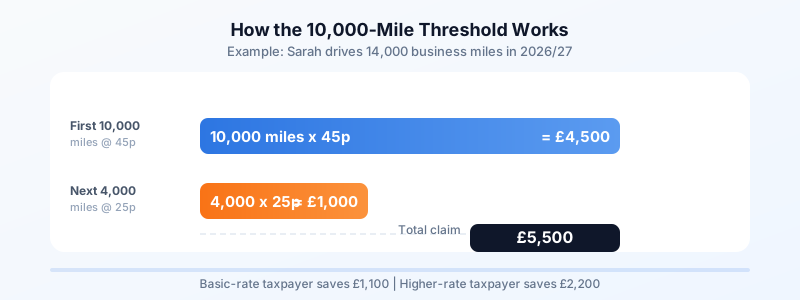
The two-tier system is straightforward but catches people out if they are not paying attention. You receive 45p for the first 10,000 business miles in each tax year, then the rate drops to 25p for every mile after that. The threshold resets on 6 April each year.
A real example: Sarah is a self-employed estate agent who drove 14,000 business miles in the 2026/27 tax year.
- First 10,000 miles at 45p = £4,500
- Remaining 4,000 miles at 25p = £1,000
- Total deduction: £5,500
If Sarah mistakenly applied 45p to all 14,000 miles, she would claim £6,300 — an overclaim of £800 that HMRC could query. Equally, if she stopped logging miles after hitting 10,000, she would miss out on £1,000 of legitimate deductions.
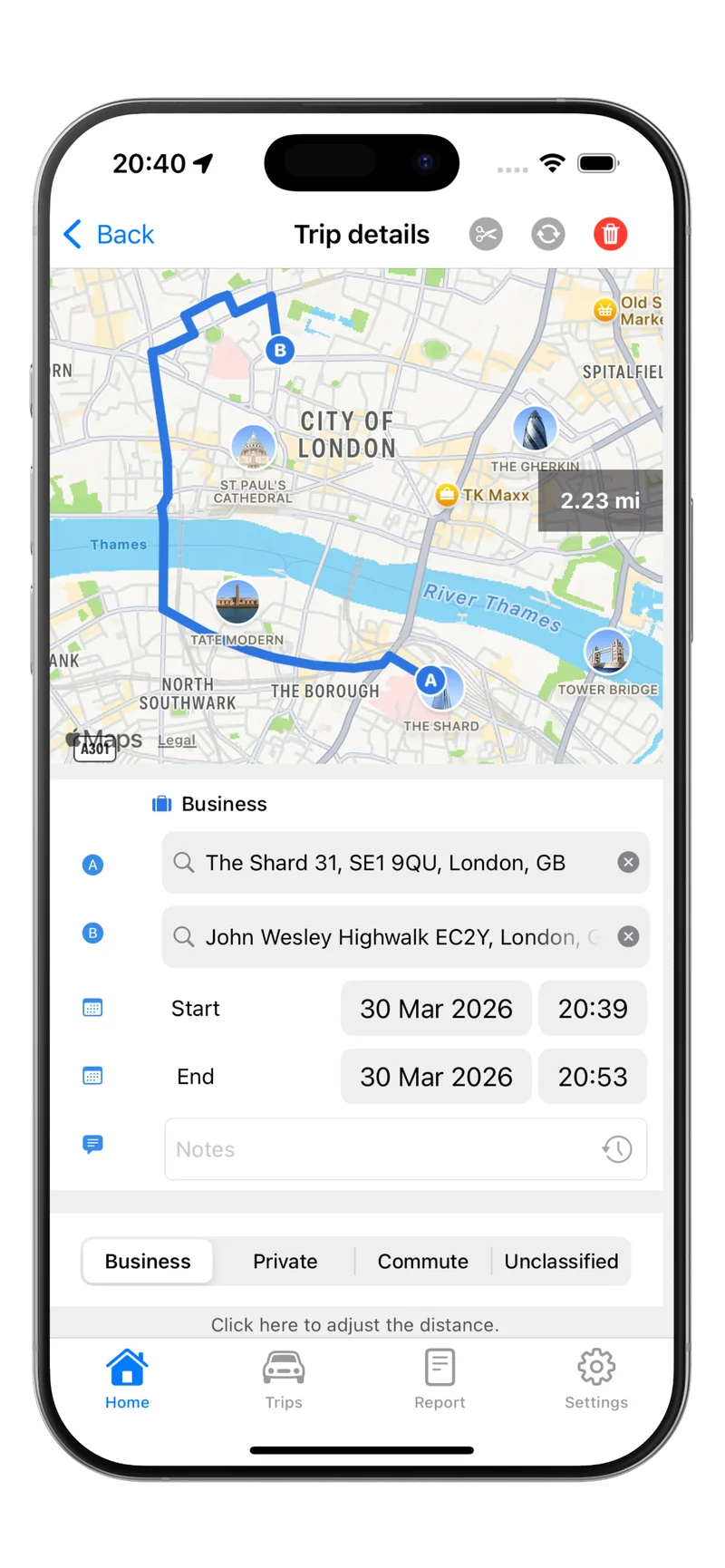
Tripbook tracks your running mileage total automatically, so you always know exactly where you stand against the 10,000-mile threshold — no spreadsheets needed.
How to Claim: P87 vs Self Assessment
The route you take to claim depends on your situation.
Claiming via Form P87 (Employees)
If you are an employee and your total expense claim is £2,500 or less, you can use HMRC’s Form P87. Since October 2024, HMRC requires supporting evidence with P87 claims for mileage — specifically a mileage log showing the date, start and end postcodes, purpose, and miles for each journey. You can submit the form online through your HMRC Personal Tax Account or by post.
If your claim exceeds £2,500, you will need to file a Self Assessment tax return instead. For step-by-step guidance, see our P87 form guide for employees.
Claiming via Self Assessment (Self-Employed)
Sole traders and business partners enter their mileage deduction on the self-employment pages of their tax return. If you use simplified expenses, you enter the flat-rate amount rather than itemised vehicle costs. You still need a mileage log to support your figures — HMRC does not accept estimates.
How Much Tax Relief Do You Actually Get?
Your tax saving depends on your marginal rate. If Sarah from our earlier example is a basic-rate taxpayer (20%), her £5,500 mileage deduction saves her £1,100 in tax. A higher-rate taxpayer (40%) claiming the same amount would save £2,200.
Time Limits
You have four years from the end of the tax year to submit a claim. For the 2026/27 tax year, the deadline would be 5 April 2031. If you have unclaimed mileage from previous years, you may still be able to reclaim it.
Motorcycles, Bicycles, and the Passenger Supplement
Not everyone drives a car. HMRC sets separate flat rates for other vehicles:
- Motorcycles: 24p per mile for all business miles (no 10,000-mile threshold)
- Bicycles: 20p per mile for all business miles (no threshold)
The 5p passenger supplement applies on top of your standard rate when you carry a colleague or business associate on a work trip. For instance, if you drive 100 business miles with two colleagues in the car, you claim:
- Standard: 100 x 45p = £45
- Passengers: 100 x 5p x 2 = £10
- Total: £55
This supplement is available to both employees and self-employed individuals, and it is one of the most commonly missed parts of a mileage claim.
Keeping a Mileage Log That Satisfies HMRC
Whether you are claiming via P87, Self Assessment, or receiving reimbursement from your company, HMRC expects you to maintain a contemporaneous mileage log. That means recording each trip at the time — not reconstructing it from memory at year end.
Your log must include:
- Date of the journey
- Start and end locations (postcodes for P87 claims)
- Business purpose of the trip
- Miles driven
HMRC can request your records during an enquiry, and you should keep them for at least five years after the submission deadline. Estimates and round numbers are red flags.
Tripbook records every business journey automatically via GPS, capturing the date, route, distance, and purpose in real time. When it comes to filing your claim, you can export a complete HMRC-ready report directly from the app.
Download Tripbook from the App Store to start building your mileage log today — so you never leave money on the table at tax time.