If you drive a non-compliant vehicle through a Clean Air Zone for business, the daily charge is almost certainly tax-deductible. With seven cities now operating charged zones across England, understanding how to claim clean air zone charges as a business expense is essential for drivers who regularly enter these areas.
Which UK Cities Have a Clean Air Zone in 2026?
Seven English cities currently operate charged Clean Air Zones. Each council chooses a zone class (A through D) that determines which vehicle types are charged. Class A covers only buses, coaches and taxis, whilst Class D is the broadest and includes private cars.
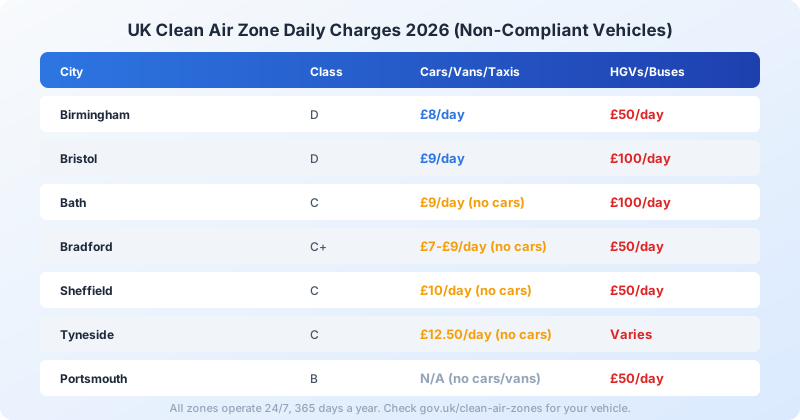
Birmingham operates a Class D zone covering the area within the A4540 Middleway ring road. Non-compliant cars, vans and taxis pay £8 per day, whilst HGVs, buses and coaches pay £50 per day. Because Birmingham is Class D, private cars that fail the emission standard are charged.
Bristol also runs a Class D zone. Cars, vans and taxis pay £9 per day, with HGVs, buses and coaches facing £100 per day. Motorcycles are exempt.
Bath has a Class C zone, meaning private cars are not charged. Taxis, vans, minibuses and LGVs pay £9 per day, and HGVs, buses and coaches pay £100 per day.
Bradford operates a Class C+ zone. Taxis and private hire vehicles pay £7 per day, LGVs and minibuses pay £9 per day, and HGVs, buses and coaches pay £50 per day. Private cars are not charged.
Sheffield runs a Class C zone covering the inner ring road and central business district. LGVs and vans pay £10 per day, and HGVs, buses and coaches pay £50 per day.
Tyneside (Newcastle and Gateshead) operates a Class C zone across Newcastle city centre and the Tyne bridges. Vans and LGVs pay £12.50 per day.
Portsmouth has a Class B zone that charges only buses, coaches, taxis, private hire vehicles and HGVs at £50 per day.
All zones operate 24 hours a day, 365 days a year. London’s Ultra Low Emission Zone (ULEZ) is a separate scheme charging £12.50 per day across Greater London for non-compliant vehicles, though the tax treatment for business journeys is identical.
Are Clean Air Zone Charges Tax-Deductible?
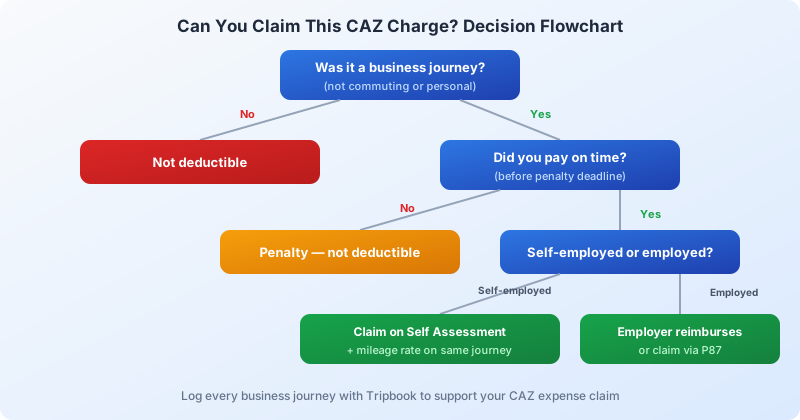
Yes. HMRC treats clean air zone charges in the same way as toll charges and the London Congestion Charge. A CAZ daily charge is an allowable business expense provided:
- The journey that triggered the charge was a qualifying business journey
- The expense was incurred wholly and exclusively for trade purposes (self-employed) or wholly, exclusively and necessarily in the performance of employment duties (employees)
A client visit in Birmingham where your van triggers the CAZ charge is deductible. Driving through Bristol’s zone on a personal errand is not. Ordinary commuting to a permanent workplace does not qualify either, even if the route passes through a Clean Air Zone.
One important distinction: the charge must be paid on time. If you miss the payment window and receive a penalty charge notice, that fine is not deductible for tax purposes. CAZ penalties range from £60 to £180 depending on the city, so prompt payment matters for both your wallet and your tax return.
Self-Employed Drivers: How to Claim CAZ Charges
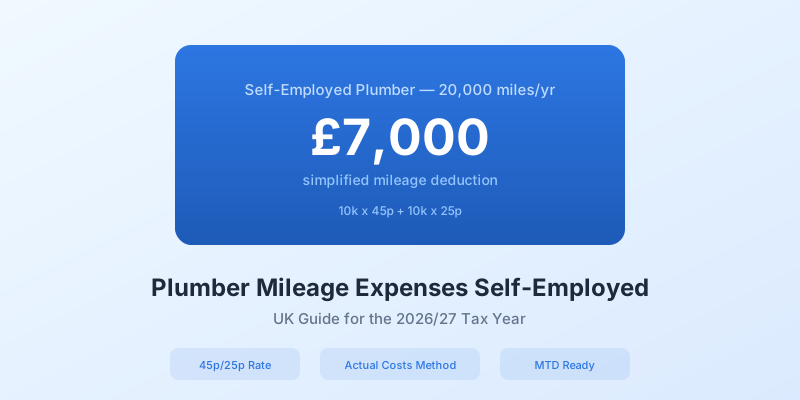
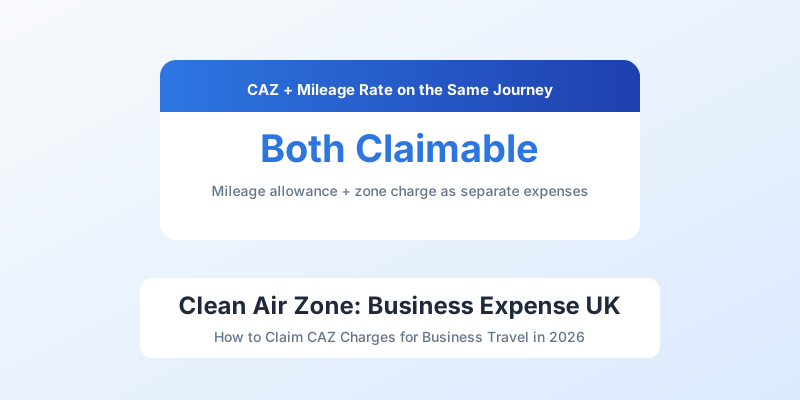
For sole traders and self-employed drivers, the clean air zone charge is an allowable business expense that you claim on your Self Assessment return. Crucially, the CAZ charge is separate from your mileage claim. The HMRC approved mileage rate (45p per mile for the first 10,000 miles, 25p thereafter) covers fuel and running costs but does not include tolls, parking or zone charges.
This means you can claim both on the same journey:
- The mileage allowance for the business miles driven
- The CAZ daily charge as an additional business expense
This applies whether you use the simplified expenses (mileage) method or the actual costs method. If you use actual costs, the CAZ charge simply forms part of your total vehicle expenses for the year.
For a detailed comparison of these two methods, see our guide on actual costs vs mileage rate for self-employed drivers.
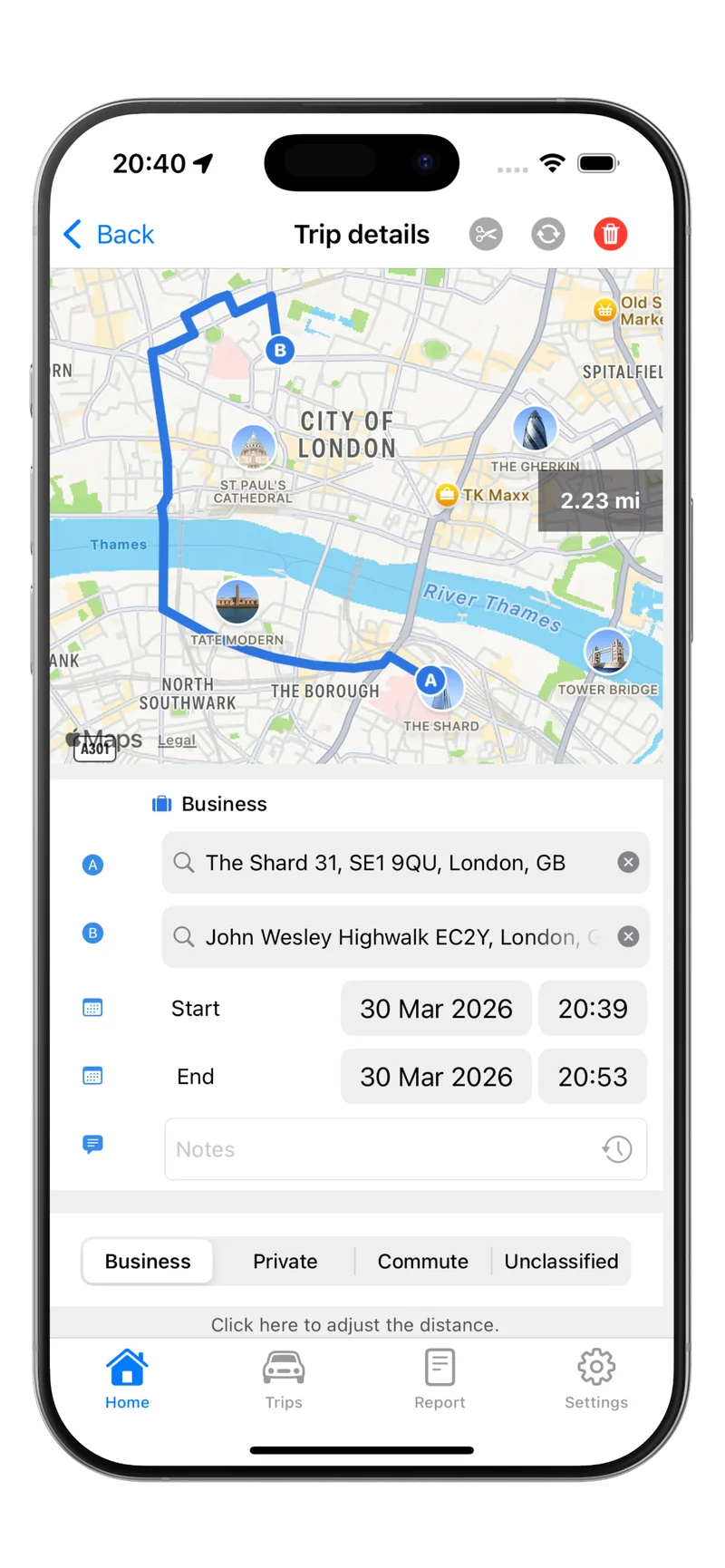
With Making Tax Digital for Income Tax Self Assessment launching from April 2026 for businesses with turnover above £50,000, your CAZ expense records will need to be kept digitally. Tripbook automatically logs your business journeys with GPS evidence, making it straightforward to match CAZ charges against specific trips at tax time.
Employees: Reimbursement and Tax Relief
For employed drivers, the approach depends on whether your employer reimburses the charge.
If your employer reimburses you, the reimbursement is tax-free. The CAZ charge is treated as an allowable business expense for the company, and there is no taxable benefit to you as the employee. Your employer can reimburse the exact amount of the charge alongside any mileage payment.
If your employer does not reimburse you, you can claim tax relief on the cost yourself. You do this through Self Assessment or by submitting form P87 to HMRC. The charge must meet the stricter employment expense test of being incurred wholly, exclusively and necessarily in the performance of your duties.
For limited company directors who drive their own vehicle on business, the company can reimburse the exact CAZ charge paid. This reimbursement is tax-free to the director and deductible against the company’s taxable profits. If the company owns the vehicle, the CAZ charge is simply a company expense claimed in the normal way.
For more on the 45p mileage rate and what qualifies as a business journey, see our HMRC mileage rate 2026 guide.
Record-Keeping: What HMRC Expects
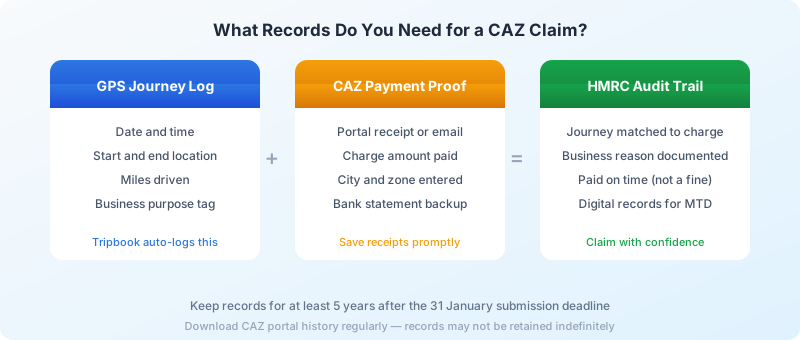
To claim any clean air zone charge as a business expense, you need two pieces of evidence:
- Proof of payment — a receipt or confirmation from the city’s CAZ payment portal, your online account history, or a bank statement showing the charge
- Evidence of business purpose — a mileage log or journey record showing the date, destination, business reason and miles driven
Your GPS mileage log provides the journey evidence; the CAZ portal provides the charge record. Together, these create the audit trail HMRC would expect in an enquiry. Download your CAZ payment history regularly, as portal records may not be retained indefinitely.
Tripbook pairs each logged journey with a business purpose tag, so if HMRC queries a CAZ claim, you have a timestamped GPS record showing exactly where you drove and why.
For a complete overview of what records to keep, see our guide on business mileage record-keeping for HMRC.
Compliant Vehicles and How to Check
If your vehicle meets the emission standard for a particular zone, no charge applies and there is nothing to claim. The compliance standards are consistent across all UK Clean Air Zones:
- Petrol vehicles: Euro 4 or later (generally registered from 2006 onwards)
- Diesel vehicles: Euro 6 or later (generally registered from September 2015 onwards)
- HGVs, buses and coaches: Euro VI (generally registered from January 2013 onwards)
- Electric and hydrogen vehicles: always exempt
You can check your vehicle against any zone using the government’s vehicle checker at gov.uk/clean-air-zones. Simply enter your registration number to see whether you would be charged in each city.
Upgrading to a compliant or zero-emission vehicle eliminates CAZ charges entirely. Beyond avoiding daily charges, electric vehicles benefit from lower benefit-in-kind tax rates, making them an increasingly attractive option for business drivers.
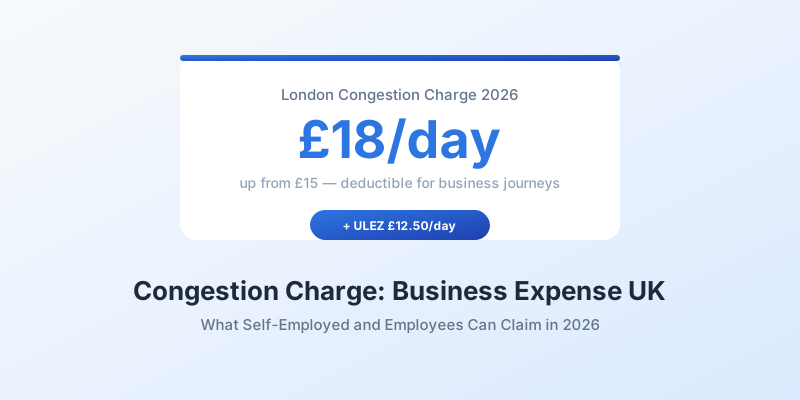
Note that Clean Air Zone charges are distinct from the London Congestion Charge (currently £15 per day), which applies to all vehicles regardless of emissions. If you drive a non-compliant vehicle into central London, you could face both the ULEZ charge (£12.50) and the Congestion Charge (£15) on the same day. Both are separately claimable as business expenses for qualifying journeys. For the full Congestion Charge rules, see our guide on the congestion charge as a business expense.
Claim Your CAZ Charges With Confidence
Clean Air Zone charges are a straightforward business deduction when the journey is genuinely for business. Pay the charge on time, log the journey, keep the receipt, and claim it on your tax return. Remember that you can claim both the HMRC mileage rate and the CAZ charge on the same trip — they cover different costs.
With zones expanding and new cities considering charges for 2026 and beyond, tracking these expenses properly will only become more important. Download Tripbook from the App Store to automatically record every business journey through a Clean Air Zone, so you never miss a claimable expense.