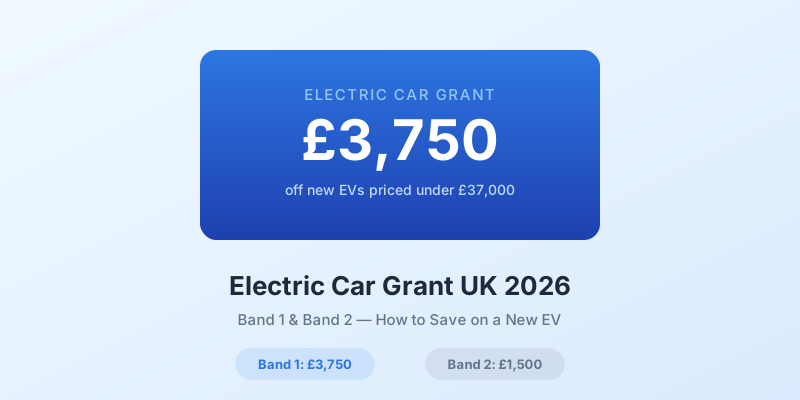
The UK government launched the Electric Car Grant (ECG) in July 2025, giving buyers up to £3,750 off a new battery-electric vehicle priced at or below £37,000. Backed by an initial £650 million and extended with an additional £1.3 billion in the Autumn Budget, the scheme is now funded through to 2029/30 — making it the largest direct EV purchase incentive the UK has ever offered.
Whether you are buying your first electric car privately or adding one to a business fleet, this guide covers the grant amounts, eligible vehicles, how to claim, and the wider financial picture for EV ownership in 2026.
How the Electric Car Grant Works
The ECG is a point-of-sale discount. You do not need to fill in an application form or claim money back after purchase. When you buy an eligible vehicle from a participating dealer, the grant is deducted automatically from the price you pay. The dealer then reclaims the discount from the Office for Zero Emission Vehicles (OZEV).
The grant uses a two-band structure based on the manufacturer’s sustainability credentials:
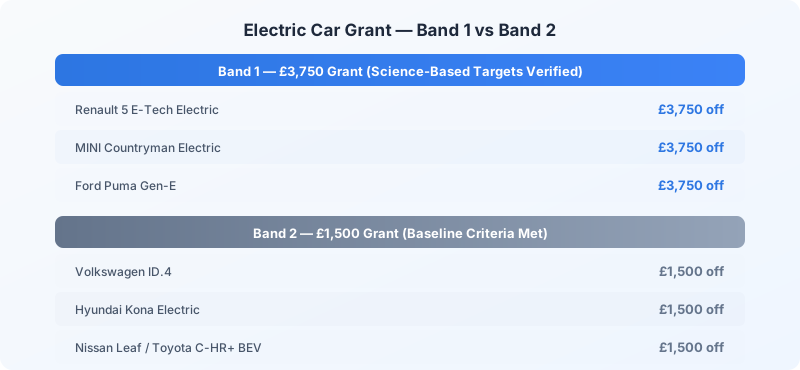
- Band 1 — £3,750 off: Vehicles from manufacturers with verified Science-Based Targets (SBTs) and low embodied-carbon scores. These carmakers have committed to cutting operational emissions by at least 42% by 2030 and have a verified pathway to net zero across their supply chain.
- Band 2 — £1,500 off: Vehicles from manufacturers that meet baseline environmental criteria but have not yet achieved full SBT verification.
Both bands apply only to new, unused battery-electric passenger cars with a recommended retail price (including VAT) of £37,000 or less, a minimum range of 100 miles, and a battery warranty of at least 8 years or 100,000 miles.
Eligible Vehicles in 2026
The list of qualifying models has grown steadily since launch. Following a December 2025 expansion and further additions in early 2026, roughly 44 models now qualify across both bands.
Band 1 examples (£3,750 grant):
- Renault 5 E-Tech Electric
- Renault 4 E-Tech Electric
- Alpine A290
- MINI Countryman Electric
- Ford Puma Gen-E
Band 2 examples (£1,500 grant):
- Volkswagen ID.4 (multiple trims)
- Hyundai Kona Electric
- Nissan Leaf
- Toyota C-HR+ BEV
- Kia and Skoda models under £37,000
Manufacturers in Band 2 — including Volkswagen, Hyundai, BYD, and Peugeot — are actively pursuing SBT certification and may move up to Band 1 during 2026 or 2027, which would increase the grant available on their vehicles. Some brands, notably Tesla and Polestar, produce only electric vehicles but are not currently enrolled in the SBTi framework and therefore do not qualify for either band.
You can check the full, up-to-date list of eligible vehicles on the GOV.UK plug-in vehicle grants page.
How to Claim the Grant at a Dealer
Claiming is straightforward because the process is handled entirely at the dealership:
- Choose an eligible EV from the OZEV-approved list, ensuring the on-the-road price is at or below £37,000.
- Visit a participating dealer and confirm the vehicle qualifies under Band 1 or Band 2.
- Place your order. The dealer applies the grant discount automatically at the point of sale — £3,750 for Band 1, £1,500 for Band 2.
- Pay the reduced price. The dealer claims the grant back from OZEV on your behalf.
There is no separate consumer application, no voucher code, and no post-purchase rebate. The discount appears on your invoice.
Grant History and Future Funding
The UK’s relationship with EV purchase grants has changed significantly over the past decade:
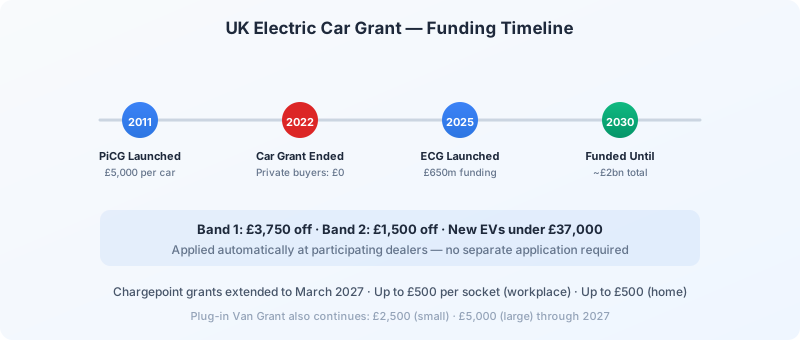
- 2011–2022: The original Plug-in Car Grant launched at £5,000 per vehicle and was gradually reduced before being scrapped entirely for private car buyers in June 2022.
- July 2025: The Electric Car Grant launched with £650 million in funding, introducing the Band 1/Band 2 structure tied to Science-Based Targets.
- Autumn Budget 2025: The government committed an additional £1.3 billion, bringing total ECG funding to just under £2 billion and extending the scheme through the 2029/30 financial year.
- Ongoing review: The scheme remains subject to amendment or early closure if funds run out, so it is worth acting sooner rather than later.
Alongside the car grant, the Plug-in Van Grant continues through at least 2027, offering up to £2,500 for small electric vans and £5,000 for large vans. The Workplace Charging Scheme has also been extended to March 2027, with grants of up to £500 per socket (up from £350) covering 75% of installation costs.
Wheelchair Accessible Vehicle Grant
The Plug-in Wheelchair Accessible Vehicle Grant (PiWG) remains available alongside the ECG. This grant offers up to £2,500 off a new zero- or low-emission wheelchair accessible vehicle, provided the base vehicle has an RRP of £50,000 or less (excluding conversion costs).
Key details for 2026:
- 200 grants are allocated each financial year (April to March). Once they are gone, you must wait until the next allocation.
- The conversion must be carried out by an OZEV-approved converter.
- Like the ECG, the discount is applied at the point of sale — there is no separate application for buyers.
- You can check remaining availability by emailing PluginGrants@dft.gov.uk.
For drivers or passengers who rely on a wheelchair accessible vehicle, combining the PiWG with other support — such as the Motability scheme — can reduce the upfront cost substantially.
Wider EV Tax Benefits to Stack With the Grant
The ECG is just one part of the financial case for going electric. In 2026, several other incentives compound the savings:
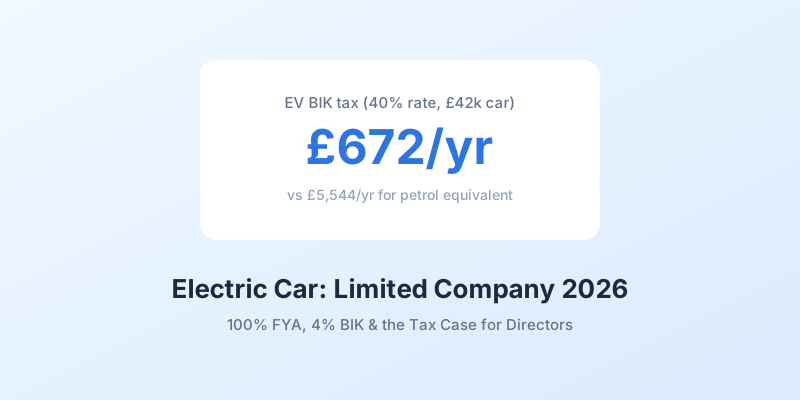
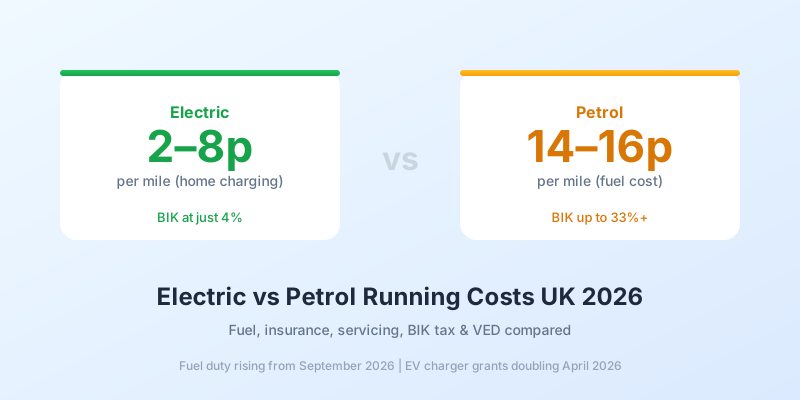
Company car tax (BIK): Electric cars attract a Benefit-in-Kind rate of just 3% in 2025/26, rising gradually to 9% by 2029/30. Even at 9%, that is dramatically lower than the 25–37% rates applied to most petrol and diesel cars. See our full breakdown of electric company car tax in the UK.
Salary sacrifice: Employees can access a new EV through a salary sacrifice scheme at savings of 30–50% compared with buying outright, because payments come from pre-tax salary. Our guide on electric car salary sacrifice in the UK explains how these schemes work alongside the grant.
Road tax: Zero-emission cars registered from April 2025 pay a first-year VED rate of just £10, moving to the standard rate in subsequent years. Full details are in our electric car road tax 2026 guide.
Capital allowances: Businesses purchasing an EV outright can claim 100% First-Year Allowance, deducting the full cost from taxable profits in year one.
Chargepoint grants: From April 2026, renters and flat owners can claim up to £500 towards a home charger (up from £350), and the Workplace Charging Scheme offers up to £500 per socket for businesses.
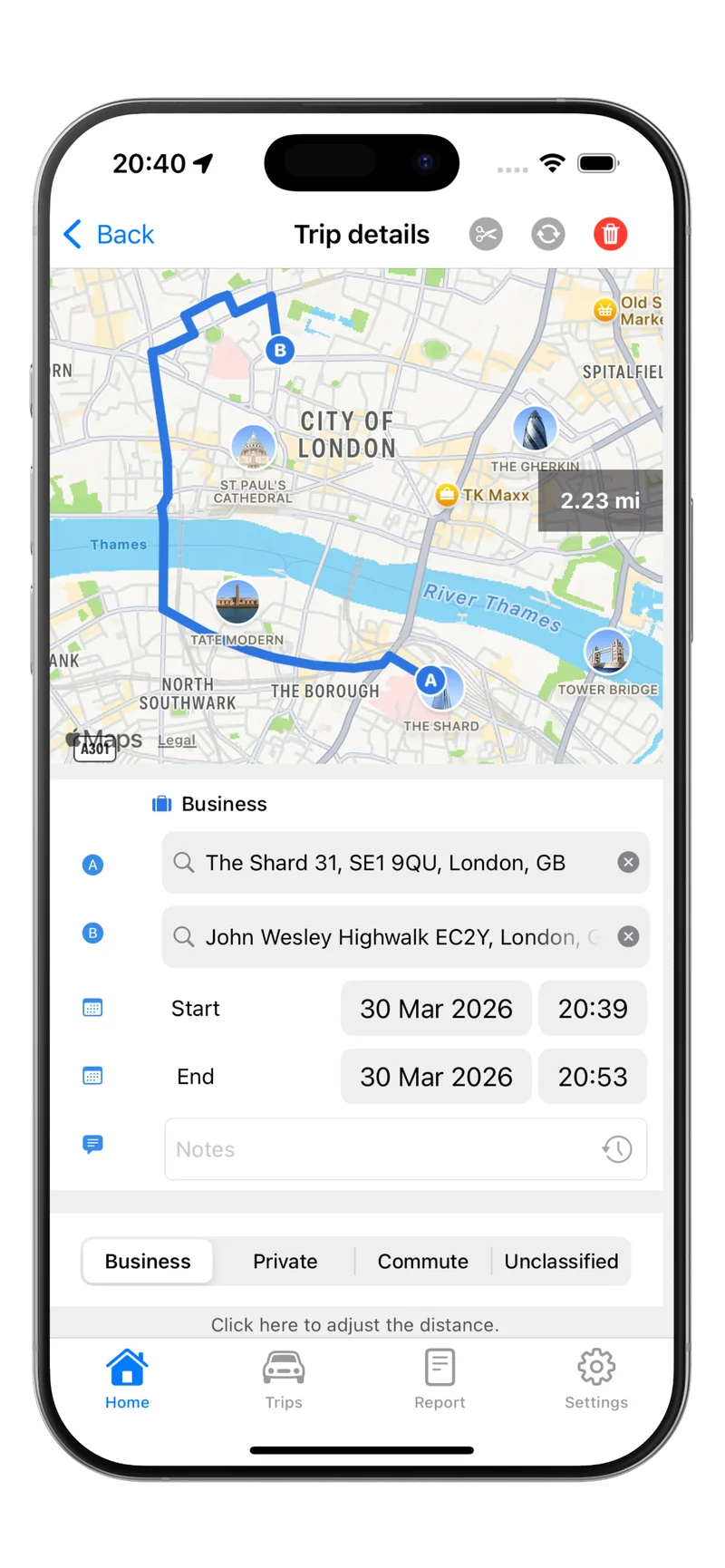
Mileage tracking: Once your new EV is on the road, accurate mileage records matter — whether you claim the HMRC approved mileage rate of 45p per mile (first 10,000 miles) or deduct actual running costs. Tripbook records your trips automatically using GPS, categorises them as business or personal, and generates HMRC-ready reports at tax time. For electric car owners who want to track charging costs against business miles, having a complete mileage history in one place makes self-assessment and expense claims far simpler. If you are buying an EV through a limited company or as a sole trader, Tripbook helps you stay compliant from day one.
Download Tripbook from the App Store and start logging your electric car mileage today.