Tax time is approaching, and if you drove your own car for work during the 2025–26 financial year, you may be entitled to a deduction. Claiming car expenses on your 2026 tax return in Australia is straightforward when you know the rules, but mistakes can cost you — either through missed deductions or ATO penalties.
This guide walks you through every step, from checking eligibility to lodging your claim.
Who can claim car expenses?
You can claim a deduction for car expenses if:
- You used your own vehicle (owned or leased) for work-related travel
- The travel was not reimbursed by your employer in full
- You have records to support the claim
Both employees and sole traders can claim, but they do so in different sections of the tax return. Employees use Item D1 — Work-Related Car Expenses, while sole traders include vehicle costs in their business schedule.
If your employer provided a company car or fully reimbursed your travel, there is nothing further to claim.
What counts as work-related travel?
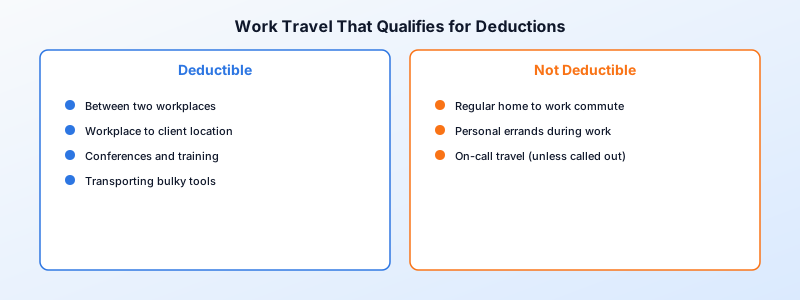
Deductible travel includes:
- Driving between two workplaces on the same day
- Travelling from your workplace to a client, customer, or alternate work location
- Attending conferences, training, or professional development off-site
- Transporting bulky tools when no secure workplace storage exists
Non-deductible travel includes:
- Your regular home-to-work commute
- Personal errands, even if made during the workday
- Travel between home and work while on call (unless actually called out)
For a detailed breakdown, see our work-related car expenses guide.
Step 1 — Choose your claiming method
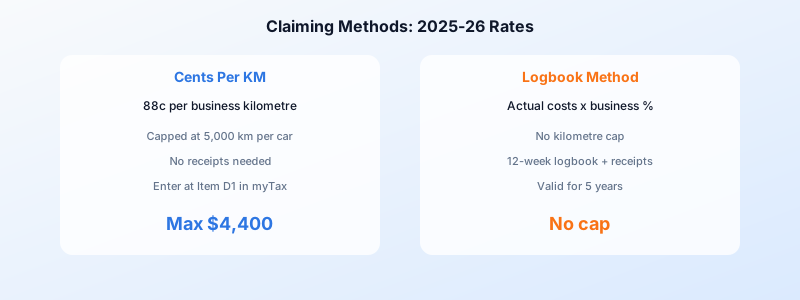
Cents per kilometre
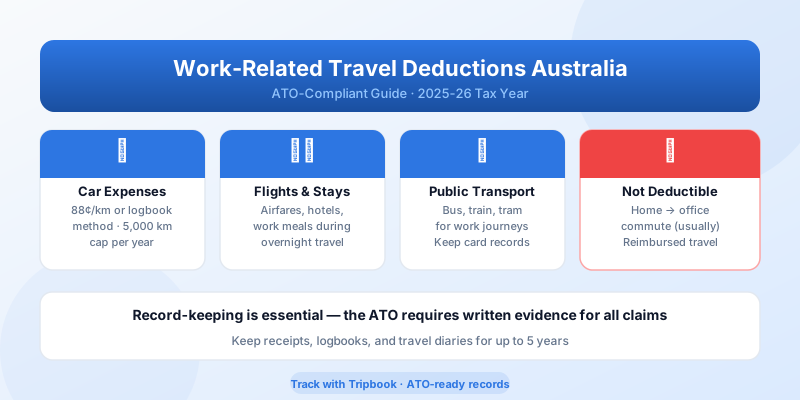
- Rate: 88 cents per km (2025–26)
- Cap: 5,000 km per car
- Maximum deduction: $4,400
- No receipts needed, but you must show how you calculated your kilometres
Logbook method
- Requires a valid 12-week logbook (current within the last five years)
- Apply your business-use percentage to total car expenses
- No kilometre cap
- Requires receipts for all car expenses plus odometer readings at 1 July and 30 June
Choose one method per car per income year. You cannot mix methods for the same vehicle.
Step 2 — Gather your records
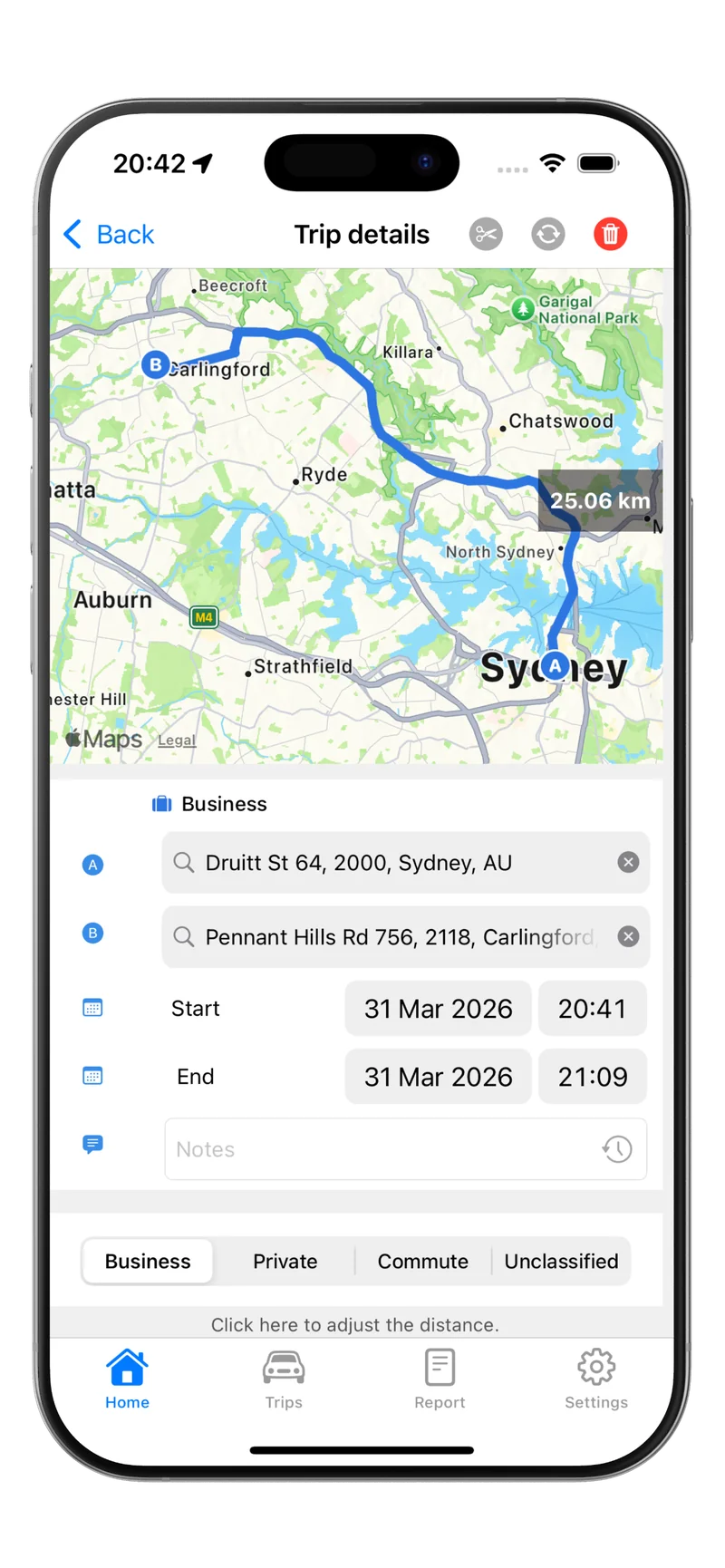
Cents per kilometre: Your trip diary or tracking app records showing dates, destinations, distances, and work purposes. Tripbook generates this log automatically throughout the year.
Logbook method: Your 12-week logbook, plus:
- Fuel receipts
- Insurance renewal notices
- Registration payments
- Service and repair invoices
- Tyre purchase receipts
- Odometer readings (1 July 2025 and 30 June 2026)
If you received a car allowance, also gather your income statement showing the allowance amount.
Step 3 — Complete Item D1 (employees)
In myTax or your tax agent’s software:
- Navigate to Deductions → Work-Related Car Expenses (D1)
- Select your method (cents per kilometre or logbook)
- For cents per km: enter the number of business kilometres
- For logbook: enter total car expenses and your business-use percentage
- If you received a car allowance, ensure it appears as income — the system should prefill this from your employer’s report
You do not attach receipts when lodging, but you must keep them available for five years in case the ATO reviews your claim.
Step 4 — Complete the business schedule (sole traders)
Sole traders report car expenses in their business schedule, which feeds into the individual tax return. The same two methods apply. If registered for GST, ensure car-related GST credits have been claimed in your BAS throughout the year.
For sole trader-specific guidance, see our sole trader car expenses guide.
Car allowances and reimbursements
Car allowances are assessable income. Your employer reports them on your income statement, and you declare them as income. You then claim your actual car expenses as a deduction at D1. If your expenses exceed the allowance, the net result is a deduction. If they are less, the allowance and deduction largely cancel out.
Reimbursements based on actual receipts are generally not assessable income, and no further deduction is available.
Always verify whether your employer’s payment is classified as an allowance or reimbursement — the distinction is critical.
Key 2025–26 figures at a glance
| Item | Amount |
|---|---|
| Cents per km rate | 88 cents |
| Maximum km (cents per km method) | 5,000 |
| Maximum deduction (cents per km) | $4,400 |
| Car cost limit (depreciation cap) | $69,674 |
| Maximum GST credit on car purchase | $6,334 |
| Instant asset write-off threshold | $20,000 |
Common mistakes to avoid
Claiming the commute. Home-to-work travel is private, regardless of distance.
Not choosing a method. You must select either cents per km or logbook for each car. Using a hybrid approach is not allowed.
Forgetting depreciation under the logbook method. Decline in value is often the largest single expense — do not leave it out.
Claiming without records. The ATO can request evidence at any time. Claims without supporting documentation are routinely disallowed.
Make next year easier
The best time to start tracking is now. Tripbook records every work trip automatically, so when the 2027 tax return comes around, your car expenses claim is already calculated and supported by GPS data.