Independent contractors in Australia rely heavily on their vehicles — whether you are an IT consultant driving between client offices, a trades contractor moving between job sites, or a freelance professional attending meetings across town. Understanding contractor car expenses tax deduction rules ensures you claim every dollar the ATO allows.
This guide covers the key differences between contractors and employees, the two claiming methods, GST considerations, and the records you need to keep.
Contractor vs employee — why it matters
The way you claim car expenses depends on your work arrangement:
- Employees claim at Item D1 on their individual tax return
- Contractors (sole traders) claim through their business schedule and may also claim GST credits
If you operate through a company or trust, vehicle expenses flow through that entity’s accounts. This guide focuses on sole trader contractors, which is the most common structure for independent contractors in Australia.
If you are unsure whether you are an employee or contractor, the ATO’s worker classification test considers factors such as control, risk, tools, and the ability to delegate. Getting this wrong can have significant tax consequences.
Two methods for claiming car expenses
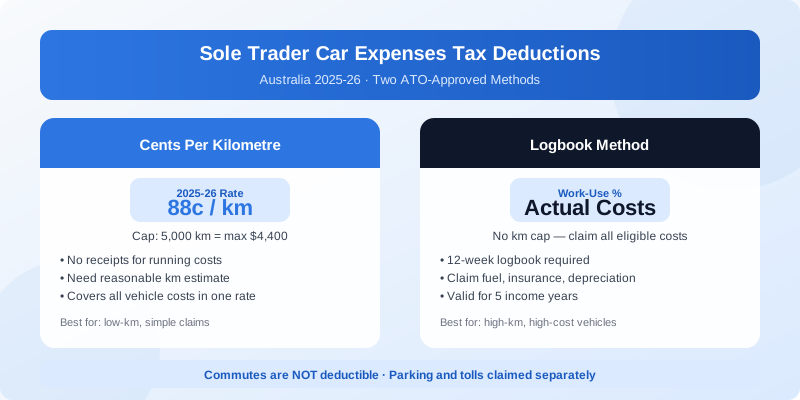
Cents per kilometre
Claim 88 cents per business kilometre (2025–26 rate), capped at 5,000 km per car. Maximum deduction: $4,400. Simple but limited — most full-time contractors exceed the cap quickly.
Logbook method
Maintain a 12-week logbook to establish your business-use percentage. Apply that percentage to total car costs: fuel, registration, insurance, servicing, tyres, and depreciation. No kilometre cap.
For contractors who drive daily to client sites, the logbook method almost always produces a significantly larger deduction. A valid logbook stays current for five years.
Our logbook vs cents per km guide compares the two methods with worked examples.
GST credits on car expenses
If you are registered for GST (mandatory once turnover hits $75,000), you can claim GST credits on car-related expenses that include GST — fuel, servicing, parts, and insurance.
Key GST rules for contractors:
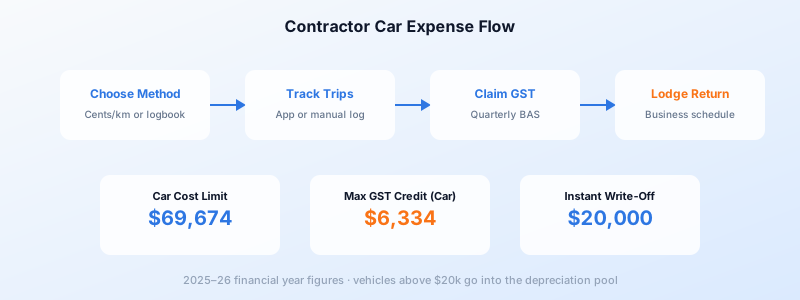
- Car cost limit for GST: The maximum GST credit you can claim on the purchase of a car is $6,334 for 2025–26 (one-eleventh of the $69,674 car cost limit)
- Running costs: Claim the GST component of fuel, servicing, and other expenses in your BAS
- Registration and insurance: Some components are GST-free — check each invoice
- Private use: Only claim the business-use portion
Report vehicle-related GST credits in your BAS each quarter (or monthly). For more detail, see our GST car expenses guide.
Depreciation and the car cost limit
Under the logbook method, depreciation (decline in value) is a major component of your claim. For passenger vehicles, the ATO caps the depreciable cost at $69,674 (2025–26 car cost limit). If your car cost more than this, you can only depreciate up to the limit.
Small business contractors with turnover under $10 million may also benefit from the instant asset write-off. For 2025–26, assets costing less than $20,000 can be written off immediately. Vehicles above this threshold (which is most cars) go into the small business depreciation pool.
For more on depreciation, see our motor vehicle depreciation guide.
What records contractors need
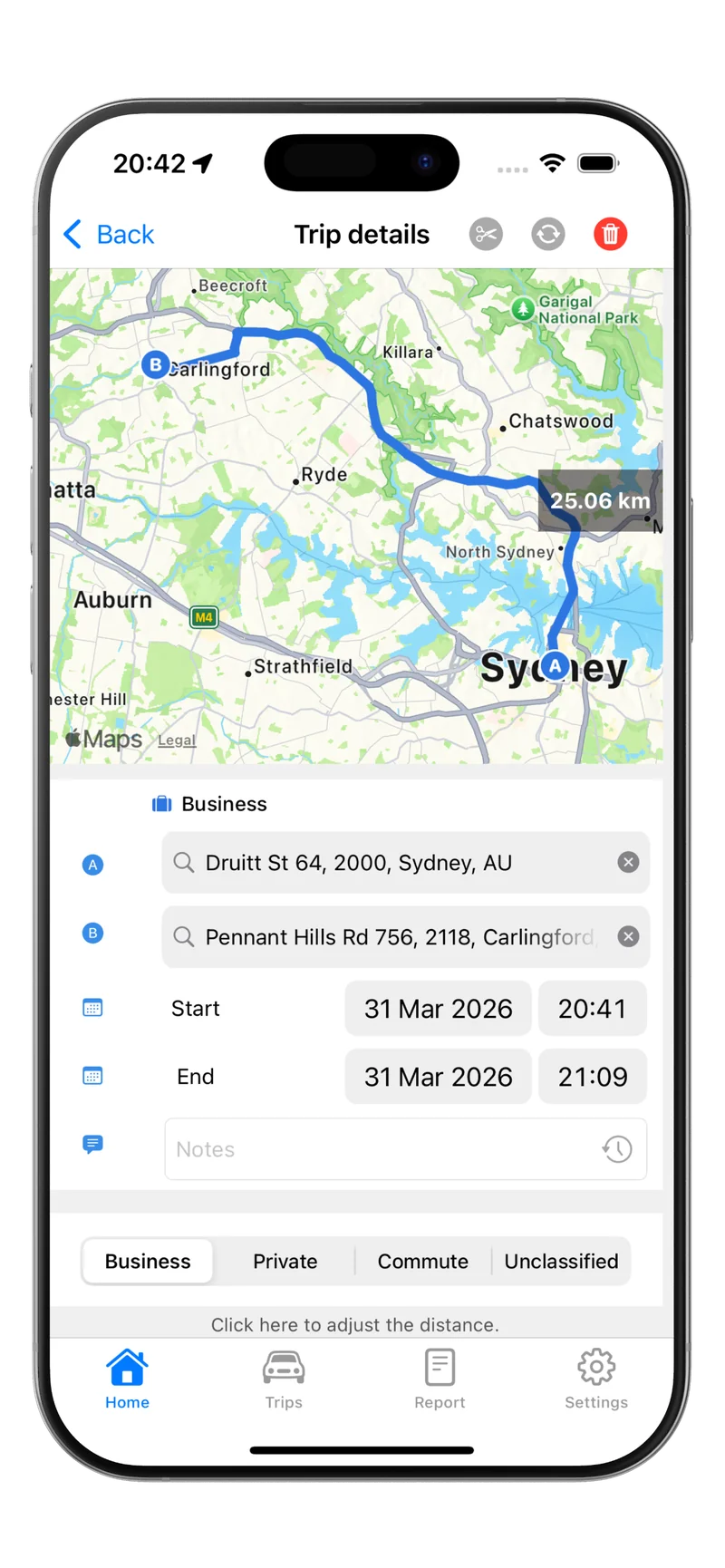
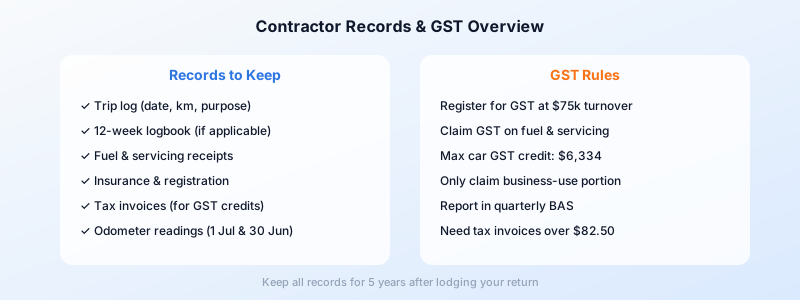
For cents per kilometre: A trip log with dates, distances, destinations, and work purposes. Tripbook automates this, creating GPS-verified records for every trip.
For the logbook method: A 12-week logbook, receipts for all car expenses, and odometer readings at 1 July and 30 June.
For GST: Tax invoices for all purchases over $82.50 (to claim GST credits).
For all methods: Retain records for five years after lodging.
Common mistakes contractors make
Mixing business and personal expenses without a logbook. Estimating your business-use percentage without a logbook is risky. The ATO can disallow the entire claim if challenged.
Forgetting BAS reporting. Car expenses with GST must be reported in your BAS. Failing to claim GST credits means you overpay, while incorrectly claiming credits on private use can attract penalties.
Not considering the car cost limit. If you purchased an expensive vehicle, applying depreciation to the full purchase price (rather than the $69,674 cap) will overstate your deduction.
Claiming without an ABN. To claim car expenses through your business, you need a valid ABN and appropriate business registration. Check our ABN car deductions guide for the requirements.
Claiming on your return
Sole trader contractors report car expenses in their business schedule, which flows through to the individual tax return. If you use the logbook method, enter total expenses and the business-use percentage. If using cents per km, enter the total business kilometres.
Tracking every client visit and job site trip with Tripbook ensures your contractor car expenses tax deduction is calculated accurately and backed by records the ATO accepts.