Australian farmers rely on vehicles more than almost any other profession. From utes running between paddocks to tractors working the fields, the costs add up quickly. The ATO provides several pathways for primary producers to claim deductions on farm vehicles — including some that are more generous than what other businesses receive. This guide breaks down what you can claim, how depreciation works, and what records to keep.
Types of farm vehicles and their tax treatment
Farm operations typically involve several categories of vehicles, each with its own tax treatment.
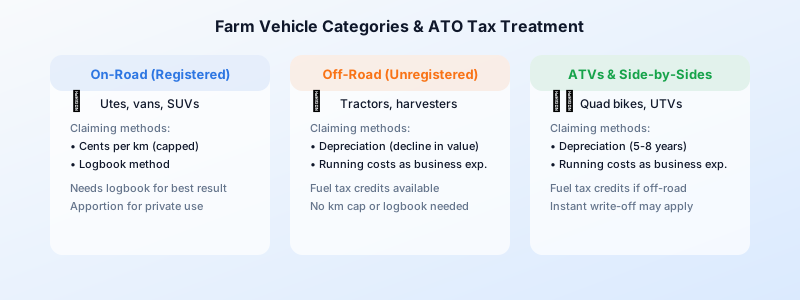
On-road vehicles (utes, vans, SUVs)
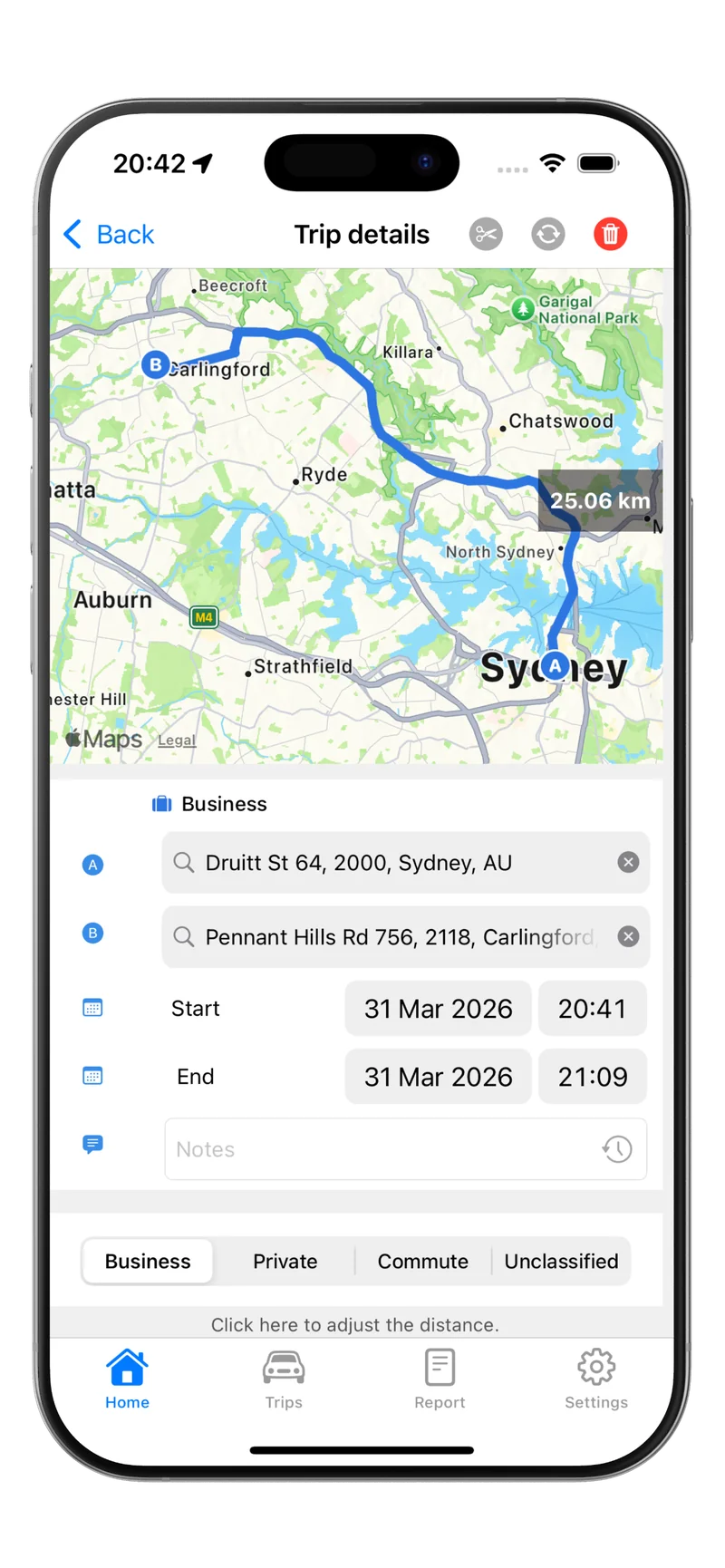
If you use a registered vehicle like a ute or SUV for farm work, the standard ATO car expense rules apply. You can choose between:
- Cents per kilometre — 88 cents per business km (2025–26), capped at 5,000 km
- Logbook method — claim the business-use percentage of all running costs, with no km cap
Most farmers who use their ute heavily for farm work will find the logbook method far more beneficial. If the vehicle is used 100% for the farm (and never for private trips), you can claim the full running costs.
For a comparison of both methods, see our guide on logbook vs cents per km.
Off-road and non-registered vehicles
Tractors, harvesters, ATVs (quad bikes), side-by-sides, and other unregistered farm machinery are not treated as “cars” under ATO rules. Instead, they are classified as plant and equipment or depreciating assets.
This means:
- You claim their cost through depreciation (decline in value)
- Running costs (fuel, maintenance, repairs) are claimed as general business expenses
- The cents per km and logbook methods do not apply — those are only for registered cars
Depreciation and instant asset write-off
Instant asset write-off
Under the instant asset write-off provisions, eligible small businesses can immediately deduct the full cost of assets (including vehicles) up to the applicable threshold in the year of purchase, rather than depreciating them over several years.
For the 2025–26 income year, check the current threshold — it has changed several times in recent years. Primary producers who qualify as small businesses (aggregated turnover under the relevant threshold) can take advantage of this for utes, ATVs, farm trailers, and other equipment.
Standard depreciation
If the instant asset write-off does not apply (for example, the asset exceeds the threshold or your business is too large), you depreciate the vehicle over its effective life:
- Passenger vehicles (utes, vans) — typically 8 years
- Tractors — typically 12 to 15 years depending on type
- ATVs and quad bikes — typically 5 to 8 years
- Farm trailers — typically 10 to 15 years
You can use either the prime cost or diminishing value method. Diminishing value gives larger deductions in the early years.
For more on vehicle depreciation, see our guide on motor vehicle depreciation ATO.
Fuel tax credits
Primary producers can claim fuel tax credits for fuel used in eligible off-road activities. This is separate from income tax deductions — it is a credit that reduces your fuel excise burden.
Eligible activities include:
- Operating tractors, harvesters, and other farm machinery
- Running generators, pumps, and stationary engines
- Using ATVs and side-by-sides for farm work (off public roads)
Fuel used in registered vehicles on public roads does not qualify for fuel tax credits (the excise is meant to fund road infrastructure). However, if you use a registered ute partly off-road on the farm, you may be able to apportion the fuel and claim credits for the off-road portion.
You claim fuel tax credits through your Business Activity Statement (BAS), not your income tax return.
Private use and apportionment
Many farm vehicles — especially utes — serve double duty as both a farm workhorse and a family car. If you use a vehicle for both farm and private purposes, you must apportion your deduction.
Farm ute example
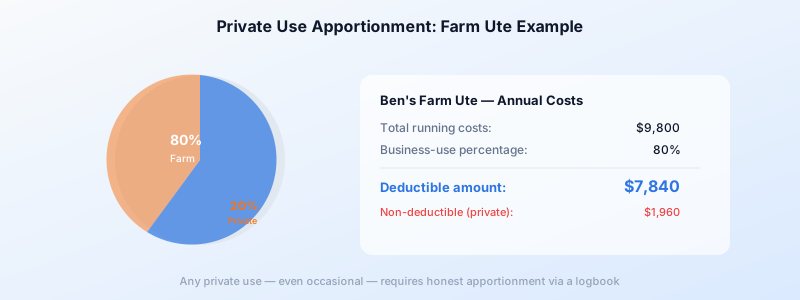
Ben owns a ute that he uses 80% for farm work (checking stock, carting feed, running to the stock agent) and 20% for private trips (school runs, weekend errands). Under the logbook method, he can claim 80% of the ute’s running costs.
If the ute is used exclusively for the farm and never leaves the property for private use, 100% of costs are deductible. However, any private use — even occasional — requires honest apportionment.
GST and farm vehicles
If you are registered for GST (most farmers are), you can claim the GST component of vehicle purchases and running costs as an input tax credit on your BAS. For passenger vehicles, the GST credit is limited to the GST included in the car cost limit ($69,674 for 2025–26).
For farm machinery that is not classified as a car (tractors, harvesters, ATVs), there is no cost limit on the GST credit — you can claim the full GST component.
Record keeping for farm vehicles
The ATO expects farmers to keep the same standard of records as any other business:
- Logbook (for on-road vehicles) — a 12-week logbook establishing your business-use percentage
- Receipts — for fuel, maintenance, insurance, and registration
- Purchase documentation — invoices or contracts showing the cost of the vehicle
- Depreciation schedules — tracking the decline in value each year
- Fuel records for fuel tax credits — quantity of fuel purchased and used in eligible activities
Keep all records for five years from the date you lodge your return.
Common mistakes
- Not apportioning for private use — the ATO audits primary producers and checks whether the claimed business-use percentage is realistic.
- Claiming car expense methods for non-car vehicles — tractors and ATVs are not cars. Use depreciation and business expense claims instead.
- Missing fuel tax credits — many farmers leave money on the table by not claiming off-road fuel credits on their BAS.
- Forgetting to update the logbook — if you buy a new ute or your travel patterns change, start a fresh 12-week logbook.
Track your farm vehicle kilometres with Tripbook
For registered on-road vehicles like utes and vans, Tripbook makes it easy to log every trip — whether it is a run to the stock agent, a trip to the nearest town for supplies, or travel between properties. Automatic tracking and simple trip classification mean you always have accurate records for your logbook-method claim, without adding to your already long to-do list.