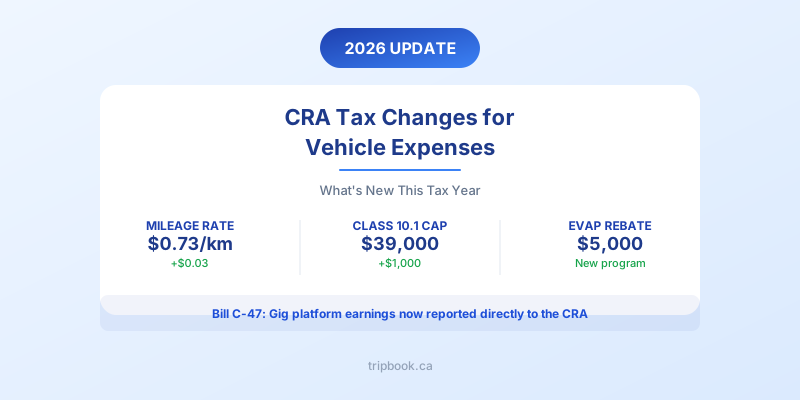
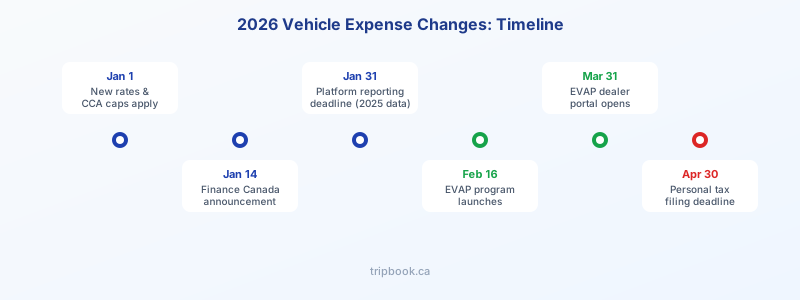
CRA tax changes vehicle expenses 2026 brought a new set of rates, limits, and programs that affect anyone who claims business driving costs. The Department of Finance Canada announced the 2026 automobile deduction limits on January 14, 2026 — weeks later than the usual December timeline — giving taxpayers less lead time to prepare. This guide covers every change that matters for your 2026 tax return, from higher per-kilometre rates to the brand-new Electric Vehicle Affordability Program.
Per-Kilometre Mileage Rate Increases
The CRA raised the prescribed automobile allowance rates by one cent across the board for 2026. Here is how the provinces and territories compare:
Provinces:
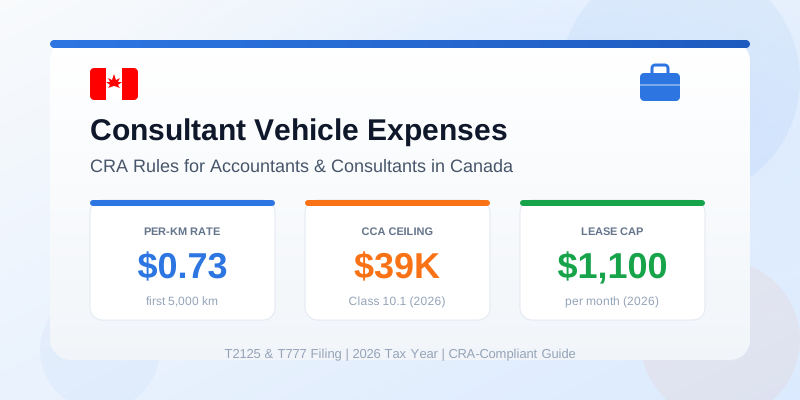
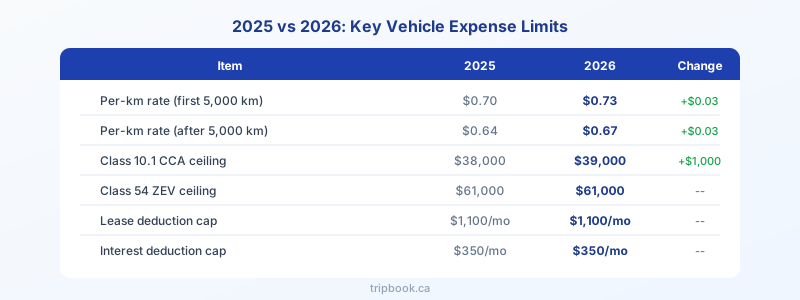
- First 5,000 km: $0.73/km (up from $0.70 in 2025)
- After 5,000 km: $0.67/km (up from $0.64 in 2025)
Territories:
- First 5,000 km: $0.77/km (up from $0.74 in 2025)
- After 5,000 km: $0.71/km (up from $0.68 in 2025)
These are the highest rates in CRA history, reflecting sustained increases in fuel, insurance, and maintenance costs. If your employer pays you a per-kilometre allowance at or below these rates, the amount is tax-free. If you are self-employed, you can use the detailed expense method on your T2125 instead — see the full breakdown in our self-employed vehicle expenses guide. Either way, accurate mileage records are the foundation of every vehicle expense claim, and Tripbook logs each trip automatically so nothing gets missed.
For a deeper look at how the per-km rates work and who qualifies, read our CRA mileage rate 2026 guide.
CCA Limits and Automobile Deduction Caps
The capital cost allowance ceiling for Class 10.1 passenger vehicles increased from $38,000 to $39,000 (before tax) for vehicles acquired on or after January 1, 2026. Several other limits remained the same:
| Limit | 2025 | 2026 | Change |
|---|---|---|---|
| Class 10.1 CCA ceiling | $38,000 | $39,000 | +$1,000 |
| Class 54 ZEV ceiling | $61,000 | $61,000 | No change |
| Monthly lease deduction cap | $1,100 | $1,100 | No change |
| Monthly interest deduction cap | $350 | $350 | No change |
| Taxable benefit rate (general) | $0.34/km | $0.34/km | No change |
| Taxable benefit rate (auto sales staff) | $0.31/km | $0.31/km | No change |
The Class 10.1 increase means that if you purchased a passenger vehicle in 2026 priced between $38,000 and $39,000 (before tax), you now have a higher depreciable base than you would have under the 2025 rules. For vehicles above the cap, you still depreciate only the ceiling amount.
For the full CCA calculation walkthrough, including half-year rule details and class selection, see our capital cost allowance vehicle Canada guide.
EVAP: The New Electric Vehicle Rebate Program
The Electric Vehicle Affordability Program (EVAP) launched on February 16, 2026, replacing the previous iZEV incentive. The federal government committed $2.3 billion over five years with a target of putting 840,000 new EVs on Canadian roads.
Rebate amounts:
- $5,000 for battery-electric vehicles (BEV) and hydrogen fuel cell vehicles
- $2,500 for plug-in hybrid electric vehicles (PHEV)
Key eligibility rules:
- The final transactional price must be $50,000 or less (unlike iZEV’s base-MSRP approach)
- EVs manufactured in Canada or free-trade-agreement countries are exempt from the price cap
- One rebate per person for the entire five-year program (not per vehicle as with iZEV)
- The rebate is applied at the dealership — you do not claim it on your tax return
The EVAP dealer submission portal opens March 31, 2026. If you purchased or leased an eligible EV on or after February 16, 2026, your dealer can submit retroactively once the portal is live.
Businesses buying a qualifying ZEV can stack the EVAP rebate with the Class 54 CCA deduction, which still offers enhanced first-year write-offs during the current phase-down period.
Accelerated CCA for Zero-Emission Vehicles
The enhanced first-year CCA deduction for zero-emission vehicles in Classes 54, 55, and 56 continues its scheduled phase-down in 2026:
| Period | Enhanced First-Year CCA Rate |
|---|---|
| 2019–2023 | 100% |
| 2024–2025 | 75% |
| 2026–2027 | 55% |
| 2028 onwards | Standard rates (30%/40%) |
However, the 2024 Fall Economic Statement and Budget 2025 proposed reinstating full 100% immediate expensing for ZEVs acquired from 2025 through 2029, with a new phase-out from 2030 to 2034. If enacted, businesses purchasing ZEVs in 2026 could claim the full cost in Year 1 rather than the 55% rate above. Check with your accountant on the status of this legislation before filing.
Gig Platform Income Reporting
The digital platform reporting rules enacted through Bill C-47 are now fully operational. Platforms such as Uber, DoorDash, Skip the Dishes, Airbnb, and Etsy must report Canadian workers’ earnings directly to the CRA each January for the prior calendar year.
What platforms report: your full name, date of birth, address, SIN, and gross earnings broken down by activity type.
Reporting threshold: workers who completed 30 or more activities and earned more than $2,800 in a calendar year are reportable.
What this means for you: the CRA now cross-references platform-reported income against your filed return. Underreporting gig income triggers automatic matching notices, and the CRA can audit up to six years back. The best defence is straightforward — report all income and claim every legitimate deduction with proper documentation.
For gig drivers, a complete mileage log is the single most valuable supporting document. Tripbook records trip distance, route, and business purpose in real time, giving you an audit-ready log without manual effort.
CRA Tax Changes Vehicle Expenses 2026: What Changed vs. What Stayed
Here is a side-by-side summary for quick reference:
| Item | 2025 | 2026 | Status |
|---|---|---|---|
| Per-km rate (first 5,000 km) | $0.70 | $0.73 | Increased |
| Per-km rate (after 5,000 km) | $0.64 | $0.67 | Increased |
| Territory rate (first 5,000 km) | $0.74 | $0.77 | Increased |
| Territory rate (after 5,000 km) | $0.68 | $0.71 | Increased |
| Class 10.1 CCA ceiling | $38,000 | $39,000 | Increased |
| Class 54 ZEV ceiling | $61,000 | $61,000 | Unchanged |
| Lease deduction cap | $1,100/mo | $1,100/mo | Unchanged |
| Interest deduction cap | $350/mo | $350/mo | Unchanged |
| EV rebate program | iZEV (ended) | EVAP ($5,000) | New program |
| Gig platform reporting | First filings | Fully operational | Expanded |
How to Prepare Your 2026 Filing
Self-employed and sole proprietors: update your per-kilometre rate in any spreadsheet or accounting software. If you use the detailed method on Form T2125, the new CCA ceiling applies to 2026 vehicle purchases. Keep every fuel receipt, repair invoice, and insurance statement organized by calendar year.
Employees with a T2200: confirm with your employer that your allowance rate matches the 2026 CRA rate. If your employer pays below $0.73/km, you can claim the shortfall as an employment expense on your return.
Corporations: review your fleet CCA schedules for Class 10.1 and Class 54 assets. If you are considering a ZEV fleet purchase, model both the current 55% enhanced rate and the proposed 100% reinstatement to understand your best-case and worst-case depreciation.
Gig workers: reconcile every platform earnings statement against your own records before filing. Claim all vehicle expenses you are entitled to — mileage, parking, tolls, and phone data plans used for navigation.
These CRA tax changes for vehicle expenses in 2026 reward taxpayers who stay organized. Download Tripbook to keep a CRA-compliant mileage log and ensure every business kilometre counts toward your deductions.