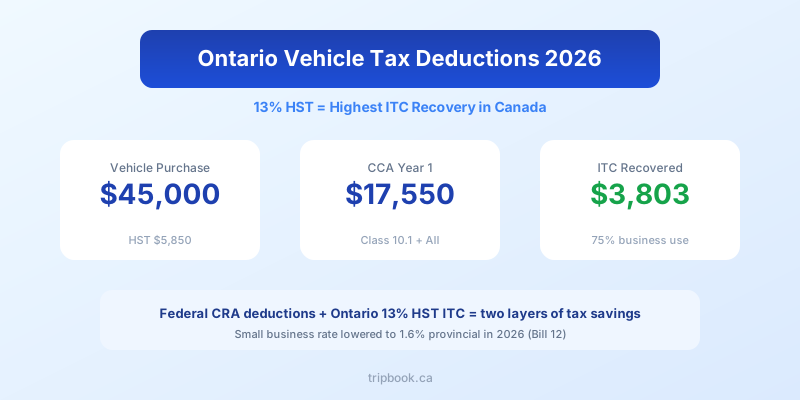
Ontario businesses benefit from the largest HST input tax credit opportunity in Canada. At 13% — the highest harmonized rate in the country — every vehicle purchase, lease payment, and fuel receipt generates a recoverable tax amount that provinces with separate PST systems cannot match. Combine that with the new 2026 Ontario small business deduction rate cut and federal CRA vehicle deduction limits, and Ontario business owners have real reasons to plan their vehicle expenses carefully this year.
2026 CRA Vehicle Deduction Limits
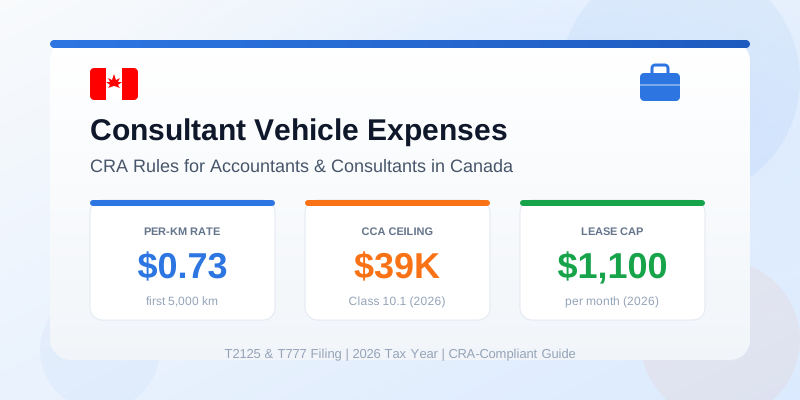
All vehicle expense deductions in Canada are governed by the CRA at the federal level. Ontario does not have a separate provincial vehicle deduction system. Here are the key limits for the 2026 tax year:
| Deduction Category | 2026 Limit |
|---|---|
| CRA mileage rate (first 5,000 km) | $0.73/km |
| CRA mileage rate (after 5,000 km) | $0.67/km |
| Class 10.1 CCA ceiling (passenger vehicles) | $39,000 before tax |
| Class 54 CCA ceiling (zero-emission vehicles) | $61,000 before tax |
| Monthly lease deduction cap | $1,100 before tax |
| Monthly interest deduction cap | $350 |
| First-year ZEV enhanced CCA (2026-27) | 55% |
Self-employed Ontario residents report vehicle expenses on Form T2125. Employees claim through Form T777 with a signed T2200 from their employer. For a detailed walkthrough of the filing process, see T2125 vehicle expenses for self-employed.
The Class 10.1 ceiling increased from $38,000 to $39,000 for vehicles acquired on or after January 1, 2026. This applies to both new and used vehicles.
Ontario’s 13% HST and Input Tax Credits
Ontario’s Harmonized Sales Tax is 13%, combining 5% federal GST and 8% provincial PST into a single tax. For GST/HST-registered businesses, this creates the highest ITC recovery rate of any harmonized province.
For vehicles used 90% or more for business: You can claim the full ITC on the HST paid, subject to the Class 10.1 capital cost ceiling.
For mixed-use vehicles: Your ITC is prorated by the business-use percentage. This is calculated separately from your income tax deduction and claimed on your GST/HST return.
Real example — Toronto management consultant purchasing a $45,000 vehicle:
- Purchase price: $45,000
- HST at 13%: $5,850
- Total out-of-pocket: $50,850
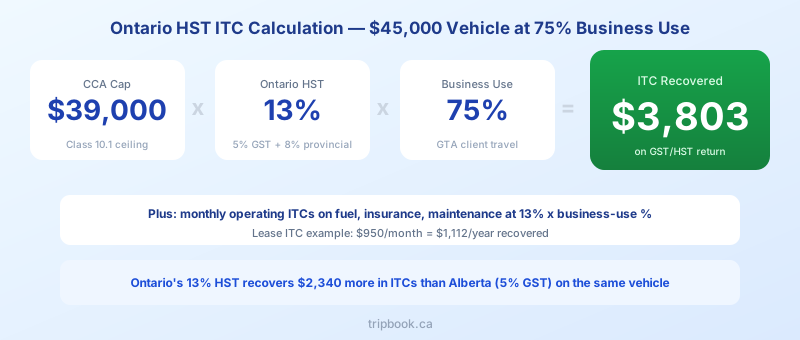
- CRA Class 10.1 cap: $39,000
- ITC eligible HST: $39,000 x 13% = $5,070
- Business use: 75% (client meetings across the GTA)
- ITC recoverable: $5,070 x 75% = $3,803
- Year-one CCA deduction: $39,000 x 30% x 1.5 (Accelerated Investment Incentive) = $17,550
That consultant recovers $3,803 in HST through their GST/HST return and deducts $17,550 from taxable income in year one alone. Using Tripbook to log every client meeting trip ensures the 75% business-use ratio holds up to CRA scrutiny.
How Ontario Compares to Alberta and BC
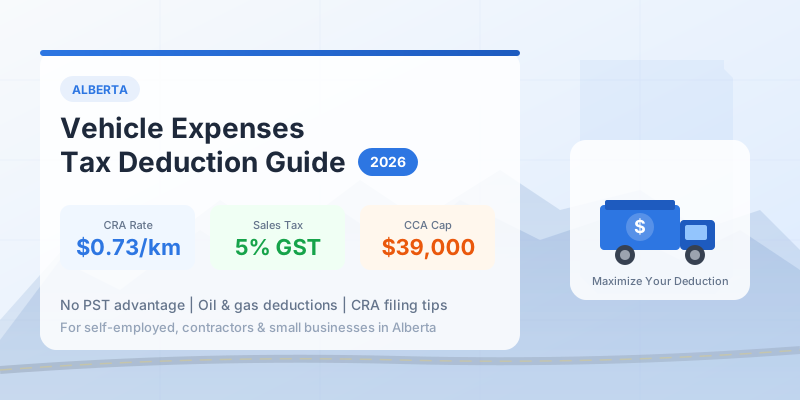
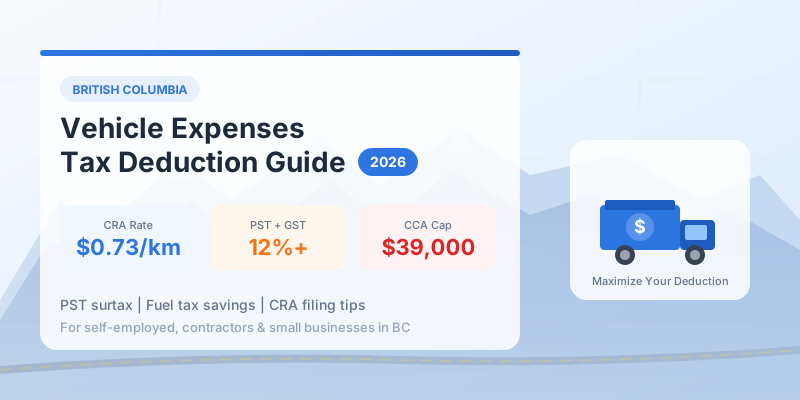
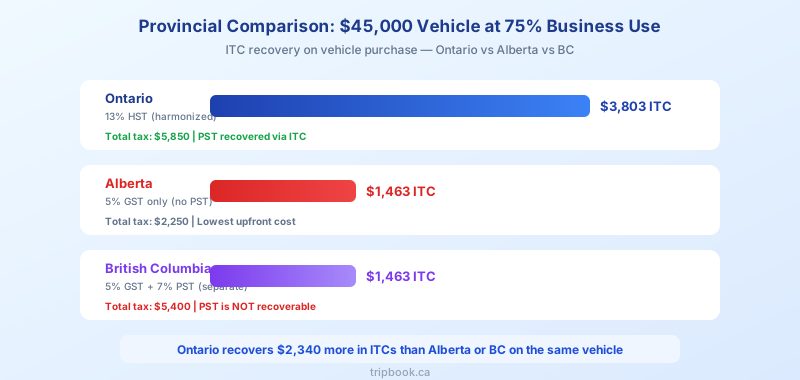
Ontario’s harmonized system creates a meaningful advantage over provinces that charge PST separately. Here is how the same $45,000 vehicle purchase breaks down across three provinces:
| Factor | Ontario (13% HST) | Alberta (5% GST only) | BC (5% GST + 7% PST) |
|---|---|---|---|
| GST paid | $2,250 | $2,250 | $2,250 |
| PST/provincial portion | $3,600 (included in HST) | $0 | $3,150 |
| Total tax | $5,850 | $2,250 | $5,400 |
| ITC recoverable (75% biz use) | $3,803 | $1,463 | $1,463 |
| PST recovered | Included in ITC | N/A | $0 |
Alberta has the lowest total tax because it charges no PST. However, Ontario businesses recover far more through ITCs because the provincial portion is embedded in the harmonized tax. In BC, the 7% PST is a dead cost — it cannot be claimed as an ITC. Ontario’s $3,803 ITC recovery is more than double Alberta’s $1,463.
For businesses that purchase or lease multiple vehicles, this difference compounds significantly. A fleet of five vehicles produces over $11,700 more in ITC recovery in Ontario than in Alberta or BC. See the full breakdown in our Alberta vehicle expenses tax deduction and BC vehicle expenses tax deduction guides.
Lease ITCs and Fuel Expenses in Ontario
Lease payments
On monthly lease payments, your ITC calculation is straightforward: lease payment x 13% HST x business-use percentage, subject to the $1,100/month deductible cap.
Example — $950/month lease at 75% business use:
- Monthly HST: $950 x 13% = $123.50
- Monthly ITC: $123.50 x 75% = $92.63
- Annual ITC recovery: $1,112
- Over a 4-year lease: $4,446 in recovered HST
The lease payment itself is also deductible on your income tax return (up to $1,100/month before tax), giving you two separate tax benefits from the same expense.
Fuel expenses
Fuel purchases in Ontario include 13% HST. Despite the suspension of the consumer-facing federal carbon charge in April 2025, Ontario drivers still pay embedded costs from the federal Clean Fuel Regulations — estimated at 4 to 7 cents per litre in 2026. Ontario also temporarily reduced its provincial fuel tax to 9 cents per litre through mid-2025.
Every cent on your fuel receipt is deductible as a vehicle operating expense, proportional to your business-use percentage. Other deductible operating costs include insurance, maintenance, parking, licence fees, and bridge or highway tolls. For every fill-up, keep the receipt and record the trip in Tripbook so your business-use percentage is always backed by a real mileage log.
Ontario-Specific Tax Advantages in 2026
New small business deduction rate. Starting January 1, 2026, Ontario’s small business deduction rate increases from 8.3% to 9.9% under Bill 12. This effectively lowers the provincial corporate tax rate on the first $600,000 of active business income from 3.2% to approximately 1.6%. The eligible income threshold also increased from $500,000 to $600,000. Combined with the 9% federal small business rate, Ontario CCPCs pay just 10.6% on their first $600,000 — making vehicle expense deductions even more impactful dollar-for-dollar.
No provincial EV rebate. Ontario has not offered a provincial electric vehicle purchase rebate since 2018. However, the new federal Electric Vehicle Affordability Program (EVAP), launched in February 2026, provides up to $5,000 for battery EVs and $2,500 for plug-in hybrids priced at or below $50,000. There is no price cap for Canadian-built EVs. The Class 54 CCA ceiling of $61,000 and the 55% first-year enhanced write-off remain strong incentives for Ontario businesses considering an EV. For full details, see GST/HST input tax credit on vehicles.
Employer Health Tax exclusion. If you employ drivers or delivery staff in Ontario and pay them a vehicle allowance at the CRA-prescribed rate ($0.73/km for the first 5,000 km), those non-taxable allowances are excluded from Ontario Employer Health Tax payroll calculations. Taxable excess allowances above the CRA rate are included.
Toronto and GTA parking. Municipal parking fees in Toronto and the Greater Toronto Area are fully deductible as business operating expenses. For salespeople, consultants, and field workers who pay $20 to $30 per day in downtown Toronto parking, this adds up to $5,000 or more in annual deductions. Keep every receipt.
Mileage Tracking and CRA Compliance
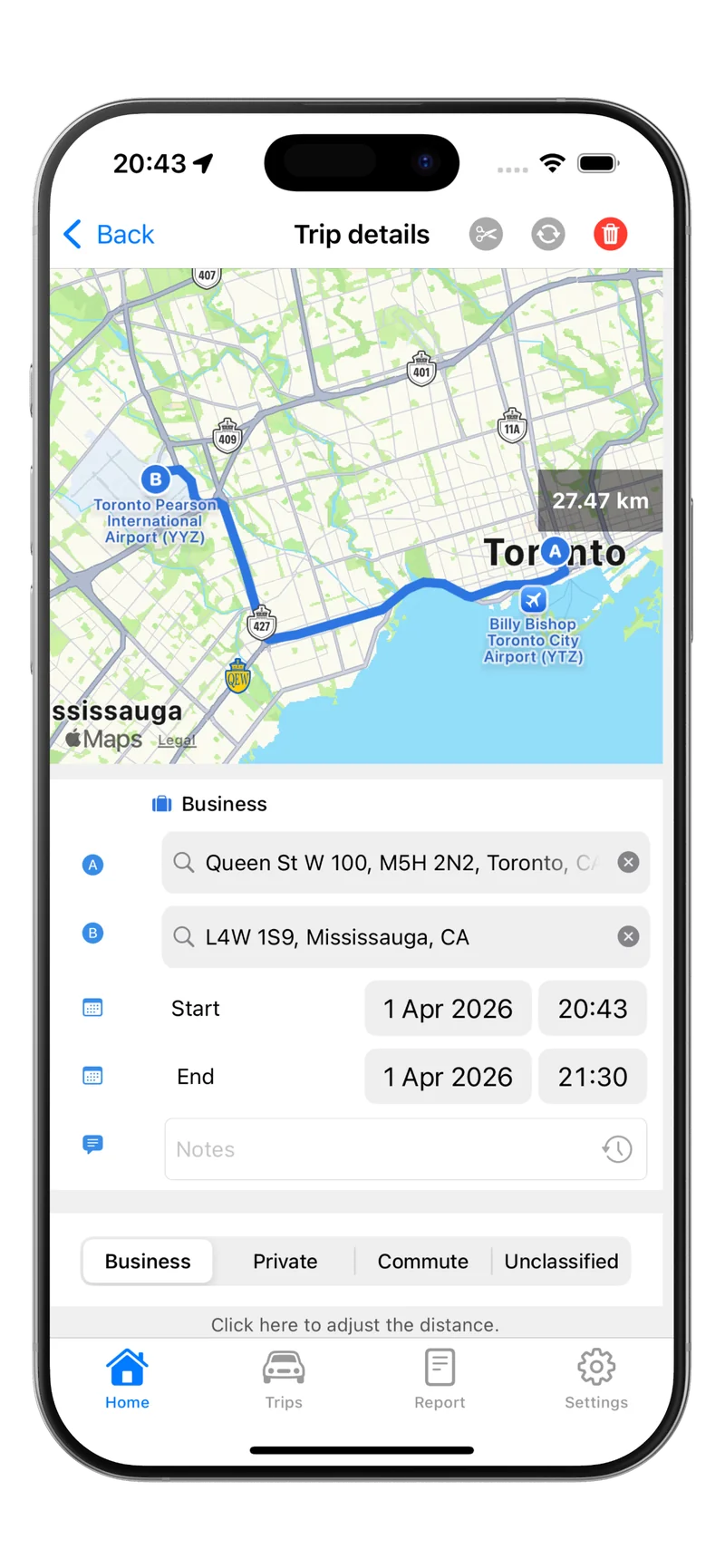
The CRA requires a mileage log for every vehicle expense claim, regardless of whether you use the per-kilometre method or the actual-expense method. Each log entry must include the date, destination, business purpose, and kilometres driven. The CRA can audit your records going back six years, and a missing or incomplete log is the most common reason vehicle expense claims are denied.
Ontario business owners face unique tracking challenges. A consultant in Toronto may log dozens of short trips to client offices across the GTA in a single day. A contractor in Ottawa may drive to job sites in Gatineau across the provincial border. A salesperson in London may cover territory stretching from Windsor to Hamilton. All of them need the same five data points per trip.
Tripbook automates this process entirely. It records trips in the background, calculates your business-use percentage automatically, and generates CRA-compliant reports ready for your accountant or a CRA audit. Missing even one 40-km trip per week at $0.73/km costs you $1,518 in unclaimed deductions per year.
Start your CRA-compliant mileage log today. Download Tripbook and turn every business kilometre in Ontario into a tax deduction.