
A C corp vehicle deduction can save your corporation thousands of dollars every year, but the rules differ depending on whether the company owns the vehicle or reimburses employees for personal car use. C-Corporations have two distinct paths to write off driving costs, and choosing the wrong one — or failing to document it properly — can turn a legitimate deduction into a taxable event.
This guide covers both approaches for the 2026 tax year: corporate-owned vehicles with depreciation and Section 179 expensing, and mileage reimbursement through an accountable plan. You will learn the dollar limits, the IRS requirements, and how to decide which strategy works best for your business.
How C Corps Deduct Vehicle Costs
A C-Corporation is a separate taxable entity. That distinction matters because vehicle expenses must flow through the corporation to be deductible. There are two primary methods.
Corporate-owned vehicle. The corporation buys or leases the vehicle, holds the title, and deducts depreciation, fuel, insurance, maintenance, and other operating costs on its corporate tax return. If an employee uses the vehicle for personal driving, that personal-use portion is a taxable fringe benefit reported on the employee’s W-2.
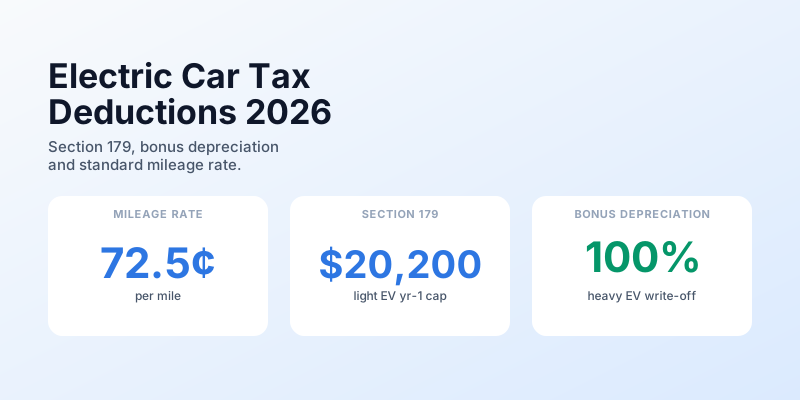
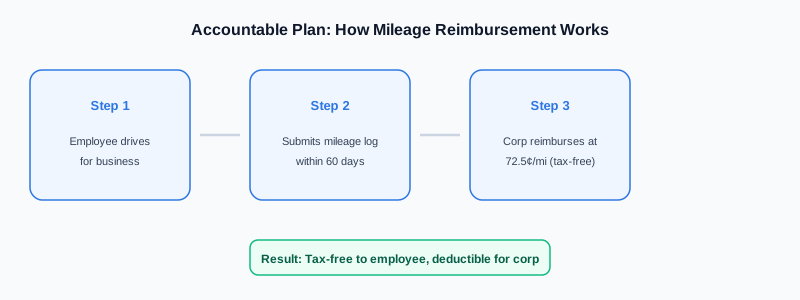
Employee reimbursement under an accountable plan. The employee owns the vehicle and drives it for business. The corporation reimburses the employee at the IRS standard mileage rate of 72.5 cents per mile for 2026. Under a properly structured accountable plan, the reimbursement is tax-free to the employee and fully deductible by the corporation.
Both methods require careful documentation. Without it, the IRS may reclassify deductions as nondeductible constructive dividends or taxable wages.
Corporate-Owned Vehicles: Section 179 and Bonus Depreciation
When the C corp owns the vehicle, the biggest first-year tax benefit comes from combining Section 179 expensing with bonus depreciation. The One Big Beautiful Bill Act restored 100% bonus depreciation for qualified property acquired after January 19, 2025, making 2026 one of the most favorable years for business vehicle purchases.
Light Vehicles Under 6,000 lbs
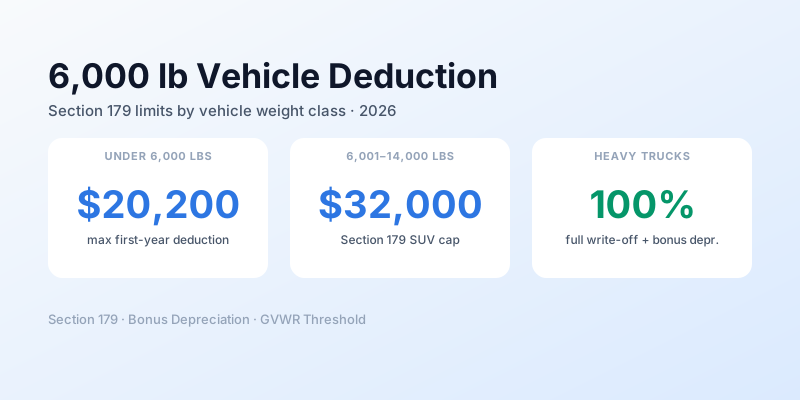
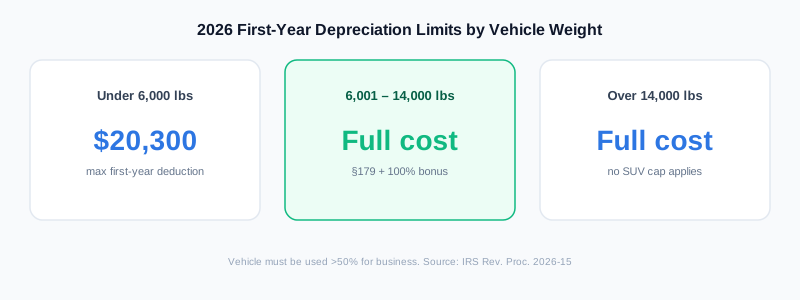
Passenger cars and small SUVs face IRS luxury auto caps that limit how much you can deduct in the first year, regardless of the purchase price. For 2026, the combined first-year maximum with bonus depreciation is $20,300. Without bonus depreciation, the cap drops to $12,300.
Depreciation limits continue in subsequent years: $19,800 in year two, $11,900 in year three, and $7,160 per year after that until the vehicle is fully depreciated.
Heavy SUVs Between 6,000 and 14,000 lbs
Vehicles with a Gross Vehicle Weight Rating above 6,000 pounds qualify for much larger deductions. The Section 179 SUV cap is $32,000 for 2026, but because 100% bonus depreciation applies to the remaining cost with no cap, you can potentially write off the entire purchase price in the first year.
For example, a $65,000 SUV with a GVWR of 7,200 pounds and 100% business use could yield a $32,000 Section 179 deduction plus $33,000 in bonus depreciation — a full write-off in year one.
Vehicles Over 14,000 lbs
Trucks and vans exceeding 14,000 lbs GVWR are exempt from the SUV cap entirely. The full cost qualifies for Section 179 expensing up to the overall $2,560,000 limit for 2026, and 100% bonus depreciation covers any remainder.
Business-Use Requirement
The vehicle must be used more than 50% for business to claim Section 179 or bonus depreciation. If business use falls below 50% during the five-year recovery period, the IRS triggers depreciation recapture, and you owe back the excess deduction. For a deeper comparison of depreciation versus per-mile deductions, see our guide on Section 179 vs. the mileage rate.
Accountable Plan Reimbursement
If employees (including shareholder-employees) drive their personal vehicles for business, the C corp can reimburse them at the IRS standard mileage rate of 72.5 cents per mile. This approach avoids the complexity of tracking depreciation, insurance, and fuel costs at the corporate level.
Three Requirements for an Accountable Plan
The IRS requires every accountable plan to satisfy three tests.
Business connection. Each reimbursed trip must have a legitimate business purpose — client visits, job sites, supply pickups, or travel between work locations. Commuting from home to a regular office does not qualify.
Substantiation. Employees must submit a mileage log showing the date, destination, business purpose, and miles driven for each trip. Records must be submitted within 60 days of the expense.
Return of excess. Any advance or reimbursement that exceeds documented expenses must be returned to the corporation within 120 days.
If any requirement is missing, the IRS reclassifies the entire reimbursement as taxable wages subject to income tax, Social Security, Medicare, and FUTA. A written plan is not technically required, but having one in your corporate records provides strong protection during an audit.
Mileage Rate vs. Actual Expenses
When the corporation reimburses at the standard mileage rate, the 72.5 cents per mile covers fuel, depreciation, insurance, and maintenance. The only costs that can be stacked on top of the standard rate are parking fees, tolls, and loan interest. You cannot claim actual vehicle expenses for any period after you begin using the standard rate on a vehicle that was previously depreciated using Section 179 or bonus depreciation.
Advantage for Shareholder-Employees
C corp owner-employees who drive personal vehicles for business should strongly consider the accountable plan approach. Since the Tax Cuts and Jobs Act eliminated the unreimbursed employee expense deduction through 2025, and the One Big Beautiful Bill Act extended many TCJA provisions, shareholder-employees cannot deduct business driving costs on their personal returns. Without an accountable plan, those deductions are lost entirely.
The S-Corp mileage reimbursement rules work similarly, but C corp owners face the additional risk of the IRS treating unreimbursed expenses as constructive dividends rather than compensation — a nondeductible outcome for the corporation.
Personal Use of a Corporate Vehicle
When a C corp provides a vehicle to an employee who also uses it for personal driving, the personal-use value must be reported as taxable income on the employee’s W-2. The IRS offers three valuation methods.
Annual Lease Value (ALV). Based on the vehicle’s fair market value when first made available. For 2026, the FMV threshold for the cents-per-mile valuation method is $61,700 — vehicles above this value must use ALV or general valuation instead.
Cents-per-mile rule. Multiply personal miles by 72.5 cents. Only available when the vehicle’s FMV does not exceed $61,700 and the vehicle is driven at least 10,000 miles annually.
Commuting valuation. Each one-way commute is valued at $1.50. This method is available only when personal use is restricted to commuting and the employer establishes a written policy prohibiting other personal use.
For C corp shareholder-employees, documenting the compensatory nature of vehicle use in corporate minutes is critical. Without this documentation, the IRS may treat the personal-use value as a constructive dividend, which is not deductible by the corporation.
Choosing the Right Strategy for Your C Corp
The best approach depends on your situation.
Buy through the corporation when you plan to purchase a heavy vehicle (over 6,000 lbs GVWR) and want the maximum first-year write-off through Section 179 and bonus depreciation. This strategy works best when business use will consistently exceed 50% and personal use is minimal or well-documented.
Reimburse through an accountable plan when employees drive personal vehicles, when the corporation wants to avoid carrying vehicle-related liabilities on its balance sheet, or when simplicity matters more than a large upfront deduction. The 72.5 cents per mile rate provides a clean, predictable deduction without depreciation schedules.
Combine both methods across different vehicles. A C corp might own a heavy-duty truck for field work while reimbursing sales staff for mileage on their personal sedans.
Keep Accurate Records
Whichever strategy you choose, the IRS expects contemporaneous records. For corporate-owned vehicles, that means documenting every trip with the date, destination, purpose, and miles. For accountable plan reimbursements, employees must submit the same information within 60 days.
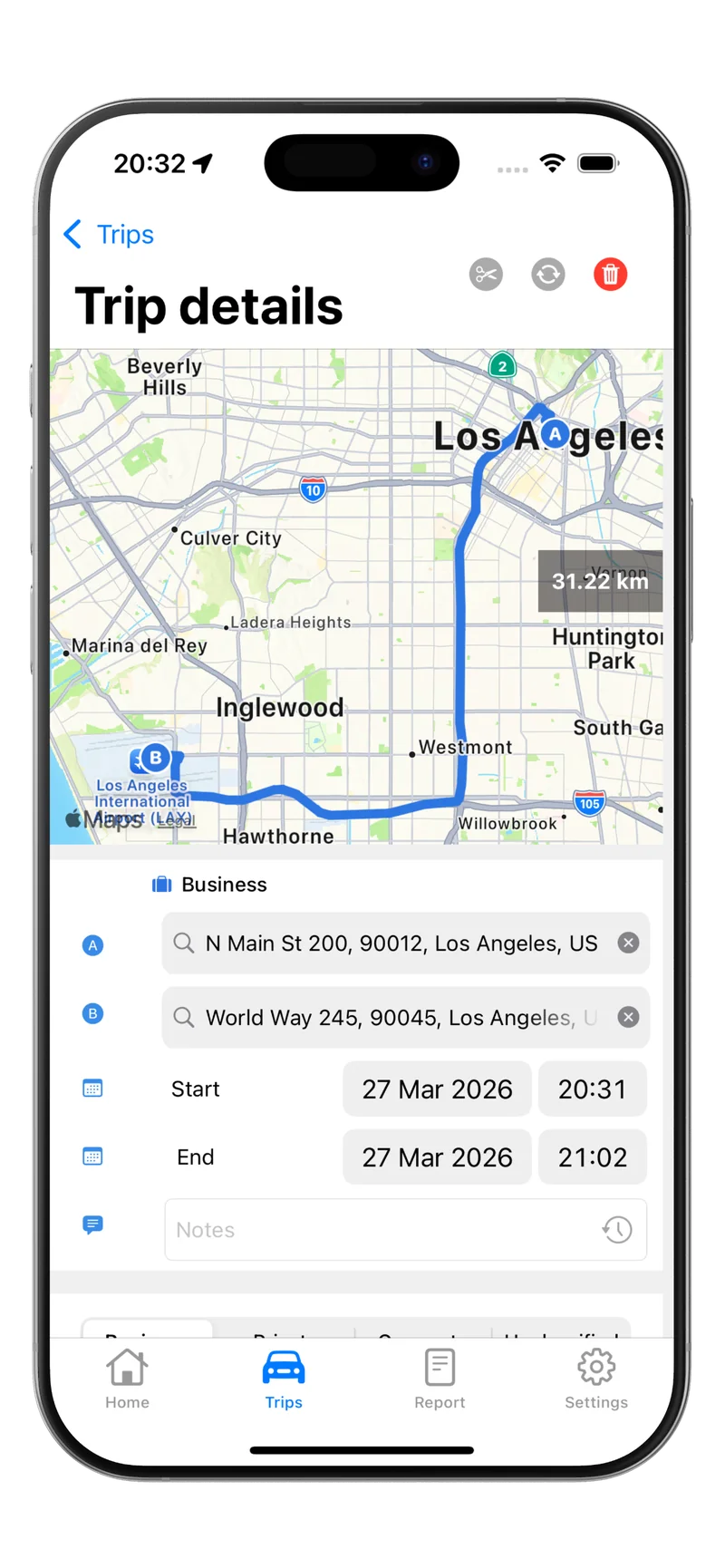
A mileage tracking app eliminates the guesswork. Download Tripbook to automatically log every business trip with GPS-verified data that satisfies IRS requirements — whether you are tracking corporate vehicle use or substantiating accountable plan reimbursements.
C Corp Vehicle Deduction: Key Takeaways
The C corp vehicle deduction offers real flexibility. Corporate-owned vehicles unlock Section 179 and 100% bonus depreciation for major first-year savings — up to $20,300 for light vehicles and the full purchase price for heavy trucks and SUVs. Accountable plan reimbursement at 72.5 cents per mile gives shareholder-employees a tax-free way to recover driving costs while providing the corporation a straightforward deduction.
The common thread is documentation. Maintain detailed mileage logs, keep your accountable plan in writing, and record vehicle-related decisions in your corporate minutes. With the right structure and accurate records, your C corp captures every deduction the tax code allows.