
A tax write-off for a new car is one of the largest single-year deductions a business owner can claim. With Section 179 expensing and 100% bonus depreciation both available in 2026, buying the right vehicle at the right time can produce a deduction worth tens of thousands of dollars on a single tax return.
But the rules are not simple. The amount you can write off depends on the vehicle’s weight rating, how much you use it for business, and which depreciation elections you make. This guide breaks down the current limits, the weight-based categories, and the steps to maximize your deduction.
How the Tax Write-Off for a New Car Works
When you buy a new car and use it for business, the IRS allows you to recover the cost through depreciation. Normally, a vehicle is depreciated over five years using the Modified Accelerated Cost Recovery System (MACRS). Two provisions let you speed that up dramatically:
Section 179 allows you to deduct the cost of qualifying business property in the year you place it in service rather than spreading it across multiple years. For 2026, the overall Section 179 deduction limit is $2,560,000, though vehicles have their own sub-limits based on weight class.
Bonus depreciation allows you to deduct a percentage of the remaining depreciable basis after applying Section 179. The One Big Beautiful Bill Act restored bonus depreciation to 100% for property acquired after January 19, 2025, replacing the TCJA phase-down that would have reduced it to 20% in 2026.
Vehicle Weight Categories and Deduction Limits
The IRS separates business vehicles into three weight-based categories, each with different deduction caps. The weight that matters is the Gross Vehicle Weight Rating (GVWR) — the maximum operating weight specified by the manufacturer, usually printed on the driver-side door jamb sticker.
Light Vehicles: Under 6,000 lbs GVWR
Standard sedans, smaller crossovers, and most passenger cars fall into this category. The IRS applies “luxury auto” limits under Section 280F that cap how much depreciation you can take regardless of the vehicle’s purchase price.
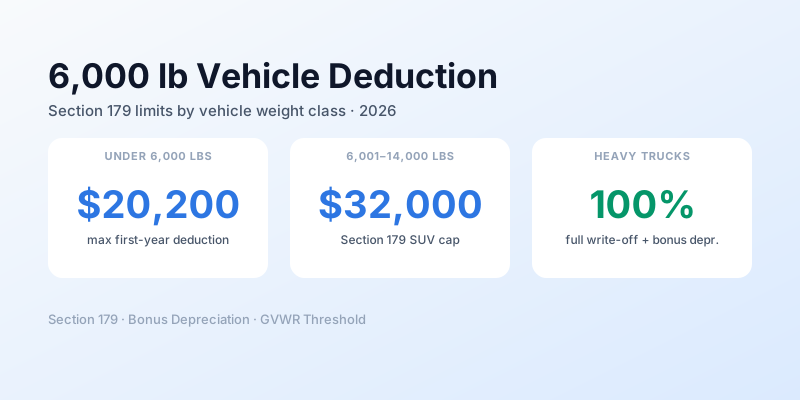
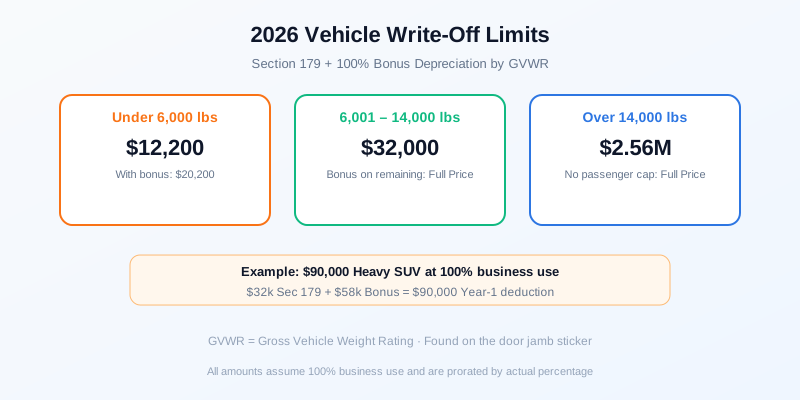
For 2026, the first-year deduction cap for a light vehicle is $20,200 when you combine Section 179 and bonus depreciation. Without bonus depreciation, the Section 179 portion alone is limited to $12,200.
Even if you buy a $60,000 sedan and use it 100% for business, your first-year write-off is still capped at $20,200. The remaining basis is recovered over the following years at reduced annual limits.
Heavy SUVs: 6,001 to 14,000 lbs GVWR
This is where the deductions get substantially larger. Many full-size SUVs and large crossovers fall into this range — think Cadillac Escalade, Ford Expedition, Chevrolet Tahoe, or BMW X7.
For 2026, the Section 179 deduction for heavy SUVs is capped at $32,000. However, you can apply 100% bonus depreciation to the entire remaining basis with no additional cap. On a $90,000 heavy SUV used entirely for business, the math works like this:
- Section 179: $32,000
- Bonus depreciation on remaining $58,000: $58,000
- Total first-year deduction: $90,000
This combination makes the heavy SUV category the sweet spot for business owners looking for a large write-off on a vehicle that still functions as a passenger vehicle.
Heavy Trucks and Vans: Over 14,000 lbs GVWR
Vehicles exceeding 14,000 lbs GVWR — box trucks, heavy-duty cargo vans, and large commercial vehicles — are treated like equipment rather than passenger vehicles. They qualify for the full Section 179 deduction up to $2,560,000 with no SUV sub-limit, plus 100% bonus depreciation on any remaining basis.
The Pickup Truck Exception
Pickup trucks with a cargo bed of six feet or longer avoid the SUV cap even if they are rated between 6,001 and 14,000 lbs GVWR. A Ford F-250 crew cab with an eight-foot bed, for example, qualifies for the full Section 179 deduction rather than the $32,000 SUV limit.
The Business Use Percentage Requirement
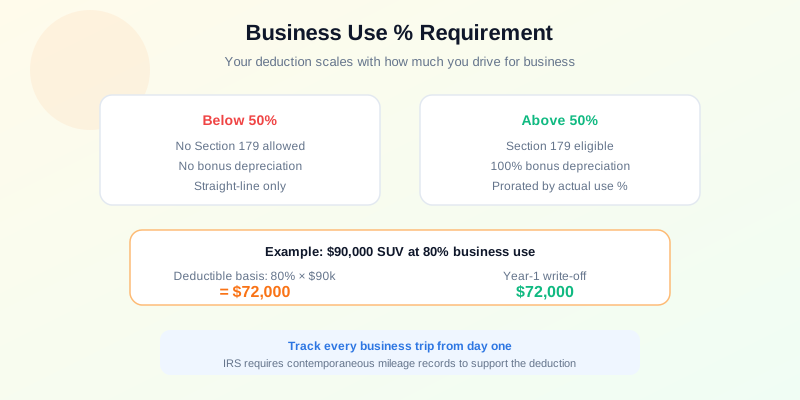
The single most important rule: you must use the vehicle more than 50% for business to claim any Section 179 or bonus depreciation deduction. If business use falls to 50% or below, you lose both elections entirely and must use straight-line depreciation instead.
Your deduction is also prorated by actual business use. If you buy a $90,000 SUV and use it 80% for business, your deductible amount is 80% of the cost — $72,000 — not the full price.
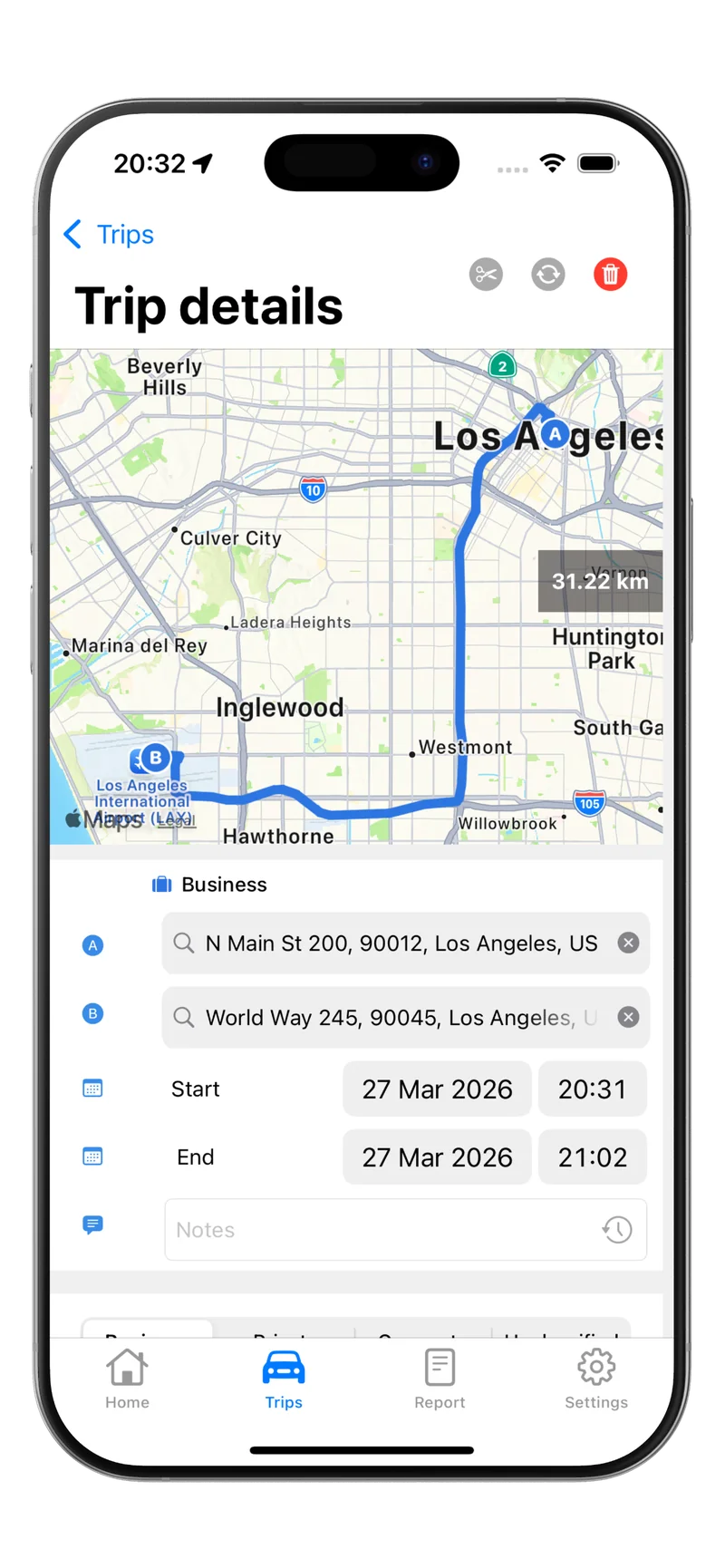
The IRS requires contemporaneous records of business use. That means logging your business trips as they happen, not reconstructing a mileage log at year end. You need to document the date, destination, business purpose, and miles driven for each trip. A mileage tracking app makes this straightforward and creates the kind of documentation that holds up in an audit.
Recapture Risk
If business use drops below 50% in any year during the vehicle’s recovery period, the IRS can claw back part of the deduction. You would need to add previously claimed depreciation back into your income as ordinary income. Consistent tracking protects you from this scenario.
Section 179 vs Bonus Depreciation: Key Differences
While both provisions accelerate your deduction, they work differently in important ways:
Income limitation: Section 179 cannot create a business loss. Your deduction is limited to your taxable business income for the year. Bonus depreciation has no income limitation and can create or increase a net operating loss (NOL) that carries forward.
Election flexibility: Section 179 is an election — you choose how much to expense, up to the limit. Bonus depreciation applies automatically to all qualifying property unless you elect out. Some business owners elect out of bonus depreciation strategically to spread deductions across multiple years.
Order of application: The IRS requires Section 179 to be applied first, then bonus depreciation on the remaining depreciable basis, then regular MACRS depreciation on anything left over.
For a detailed comparison of Section 179 versus operating-cost deductions, see Section 179 Deduction vs Mileage Rate.
New Car vs Used Car Write-Off
Both new and used vehicles qualify for Section 179 and bonus depreciation in 2026, as long as the vehicle is “new to you.” A used truck you purchase from a dealer qualifies just like a factory-new one, provided it meets the business-use and weight requirements.
The key difference is cost basis. A used vehicle with a lower purchase price means a lower deduction ceiling. If the goal is to maximize the first-year write-off, the vehicle’s price and its GVWR matter more than whether it rolled off the assembly line this year.
Impact on Future Deduction Methods
Choosing a Section 179 or bonus depreciation write-off locks you into the actual expenses method for the life of the vehicle. You cannot switch to the standard mileage rate in later years. That means you will need to track all actual operating costs — fuel, insurance, maintenance, repairs, registration — multiplied by your business-use percentage each year.
This makes ongoing mileage tracking essential regardless of which depreciation method you choose. You need the business-use percentage to calculate your actual expense deduction every year you own the vehicle.
Steps to Claim Your Tax Write-Off for a New Car
-
Check the GVWR before you buy. Look at the door jamb sticker or manufacturer specifications. The 6,000-lb threshold makes a dramatic difference in deduction size.
-
Place the vehicle in service before December 31 of the tax year you want the deduction. “Placed in service” means the vehicle is available and ready for business use, not just ordered or paid for.
-
Track every business trip from day one. The IRS expects contemporaneous records. Start logging miles the first time you drive the vehicle for business. Download Tripbook to automate this from the start.
-
File Form 4562 with your tax return to claim the Section 179 deduction and bonus depreciation. Consult a tax professional to ensure the elections are made correctly.
-
Maintain records for the full recovery period. Keep your purchase documentation, mileage logs, and expense records for at least three years after the last depreciation deduction — longer if the IRS recommends it for your situation.
2026 Deduction Quick Reference
| Vehicle Category | Section 179 Cap | With 100% Bonus | Total Potential Year-1 |
|---|---|---|---|
| Light (under 6,000 lbs) | $12,200 | +$8,000 | $20,200 |
| Heavy SUV (6,001–14,000 lbs) | $32,000 | Remaining basis | Full purchase price |
| Pickup (6+ ft bed, 6,001+ lbs) | Full (up to $2.56M) | Remaining basis | Full purchase price |
| Commercial (over 14,000 lbs) | Full (up to $2.56M) | Remaining basis | Full purchase price |
All amounts assume 100% business use. Deductions are prorated by actual business-use percentage.
Make Your Write-Off Audit-Proof
A tax write-off for a new car can save you thousands, but only if your records support the deduction. The IRS can disallow the entire claim if you cannot prove business use exceeded 50%. That means your mileage log is just as important as the purchase receipt.
Start tracking from the first business mile. Automated logging removes the guesswork and creates a timestamped record that stands up to scrutiny. Download Tripbook and build the documentation your deduction requires.