Illinois is one of three states that legally requires employers to reimburse employees for business mileage. The Illinois mileage reimbursement law, codified in the Illinois Wage Payment and Collection Act at 820 ILCS 115/9.5, mandates that employers cover all necessary expenditures employees incur while performing their job duties. That includes the cost of using a personal vehicle for work-related driving.
This is not optional. Illinois treats unreimbursed mileage expenses as unpaid wages, and the penalties for non-compliance include monthly interest charges, fines payable to the Illinois Department of Labor, and the right of employees to sue. Understanding this law is critical for every Illinois employer and employee.
What 820 ILCS 115/9.5 Requires
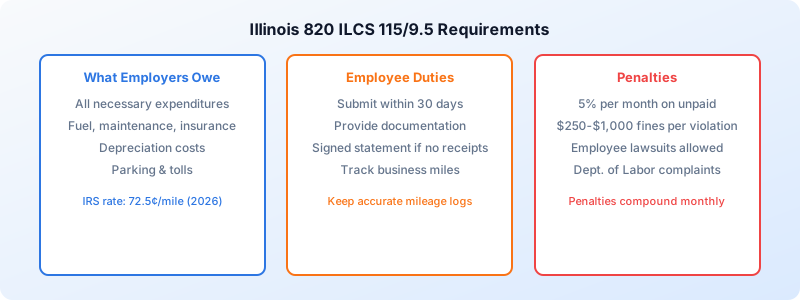
The Illinois Wage Payment and Collection Act defines necessary expenditures as expenses incurred by an employee that are directly related to services performed for the employer. For mileage, this means the full cost of operating a personal vehicle for work purposes, including fuel, maintenance, insurance, and depreciation.
The law does not specify a per-mile rate. Most Illinois employers use the 2026 IRS standard mileage rate of 72.5 cents per mile as the reimbursement benchmark. Employers can set a higher rate, but any reimbursement above the IRS rate becomes taxable income. Employers cannot set a rate below what is necessary to cover actual employee costs.
Employees must submit documentation of their expenses within 30 calendar days of incurring them, unless the employer has an extension policy in place. If receipts are lost or unavailable, the employee can submit a signed statement with expense details.
Who Is Covered by the Illinois Law
The law applies to all Illinois employees who incur necessary expenditures in the course of their employment. There is no limitation by industry, job title, or employment status. If your employer requires you to drive your personal vehicle for work, you must be reimbursed.
Common roles affected include pharmaceutical and medical sales reps covering Illinois territories, home healthcare workers visiting patients, field service and repair technicians, social workers and case managers, real estate employees traveling to showings, and delivery drivers using personal vehicles.
Both full-time and part-time employees are covered. Independent contractors are generally not covered, though misclassification issues can change that determination.
Employer Obligations and Documentation
Illinois employers must establish clear policies for expense reimbursement. The law allows employers to require reasonable documentation before approving reimbursements, but employers cannot reject claims solely because of missing receipts if the employee provides a signed statement.
A strong Illinois mileage reimbursement policy should include a per-mile rate at or above the IRS standard of 72.5 cents, a requirement for mileage logs showing date, destination, business purpose, and miles driven, a defined submission timeline aligned with the 30-day rule, a process for handling missing documentation, and clear definitions of which driving qualifies as business travel.
Employers should also run their mileage program as an accountable plan to keep reimbursements tax-free for both the company and its employees.
Penalties for Non-Compliance
The consequences of violating the Illinois mileage reimbursement law are significant. Employers who fail to reimburse face additional damages of 5 percent of the unpaid amount for each month the reimbursement remains outstanding.
On top of that, the Illinois Department of Labor can impose fines ranging from $250 to $1,000 per violation. Employees can file a complaint directly with the Department of Labor or pursue compensation through the court system.
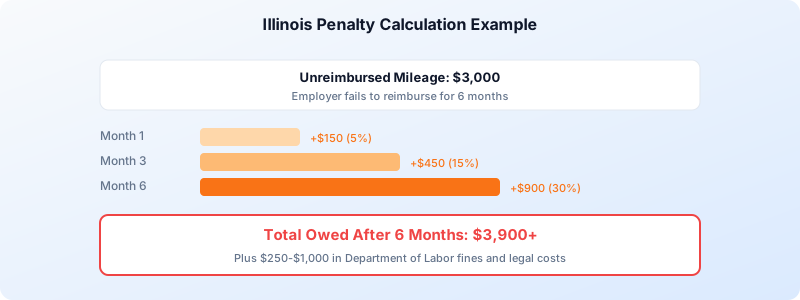
These penalties compound quickly. An employer who fails to reimburse $3,000 in mileage expenses for six months would owe the original $3,000 plus $900 in penalties (5 percent per month for six months), plus potential fines and the employee’s legal costs.
How Illinois Compares to Other Mandatory States
Illinois joins California and Massachusetts as the only states requiring mileage reimbursement by law. Each state takes a slightly different approach.
California’s Labor Code Section 2802 requires reimbursement of all necessary expenditures and allows employees to challenge reimbursement rates as insufficient. Massachusetts imposes mandatory treble damages for violations under its Wage Act. Illinois applies monthly penalties that compound over time, creating strong incentives for prompt payment.
For a complete overview of requirements across the country, see our guide on state mileage reimbursement laws.
All other states leave mileage reimbursement to employer discretion, though the federal Fair Labor Standards Act prevents unreimbursed expenses from pushing an employee’s effective pay below minimum wage.
Employee Rights Under Illinois Law
If your Illinois employer is not reimbursing your business mileage, take these steps.
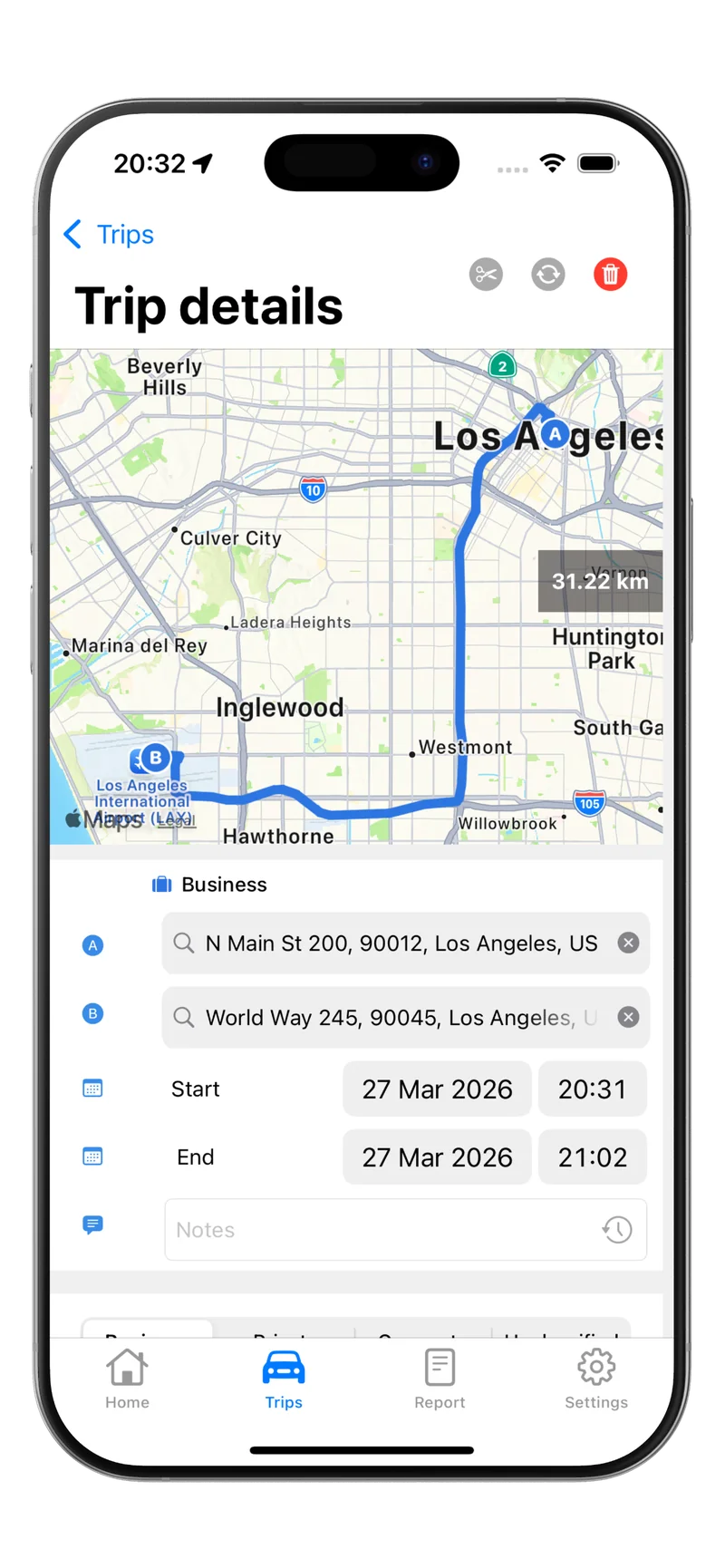
Start tracking every business trip with detailed records. Log the date, starting point, destination, business purpose, and miles driven for each trip. Tripbook automates this process with GPS tracking that captures every trip without manual effort, creating the documentation you need to support a claim.
Submit a written reimbursement request to your employer citing 820 ILCS 115/9.5. Many employers are not aware of their obligations and will correct the issue once informed. If your employer refuses to reimburse you, file a complaint with the Illinois Department of Labor or consult an employment attorney. The monthly penalty provisions and potential fines create strong leverage for employees.
Keep Accurate Records to Stay Compliant
Whether you are an Illinois employer building a compliant mileage policy or an employee ensuring you receive the reimbursement you are owed, accurate mileage records are the foundation. The Illinois mileage reimbursement law protects workers, but documentation is what makes enforcement possible.
Download Tripbook and create automatic, GPS-verified mileage logs that satisfy both employer requirements and IRS standards.