Massachusetts is one of only three states in the country that requires employers to reimburse employees for business mileage. Under the Massachusetts mileage reimbursement law, codified in 454 CMR 27.04(4)(b) and Massachusetts General Law Chapter 151, employers must compensate workers for all travel time and transportation expenses incurred during the workday. If you drive your personal vehicle for work in Massachusetts, your employer owes you money.
This law carries real consequences. Violations fall under the Massachusetts Wage Act, which imposes mandatory treble damages, meaning any unreimbursed amount is automatically tripled. Employers who ignore this obligation face significant financial exposure.
What the Massachusetts Law Requires
The regulation at 454 CMR 27.04(4)(b) states that an employee required or directed to travel from one place to another after the beginning of or before the close of the work day shall be compensated for all travel time and shall be reimbursed for all transportation expenses.
This language is broad. It covers any work-related travel that occurs during the workday, including driving between job sites, visiting clients, running work errands, and traveling to secondary work locations. The law does not specify a per-mile rate. Most Massachusetts employers use the federal IRS standard mileage rate of 72.5 cents per mile for 2026 as their benchmark. Employers may set a higher rate to reflect actual costs, but any amount above the IRS rate becomes taxable income for the employee.
In addition to mileage, the law requires reimbursement for parking fees, tolls, and other legitimate business travel costs.
Who Is Covered Under Massachusetts Law
Massachusetts General Law Chapter 151, Section 2 defines which workers are covered. The law applies broadly to employees across various occupations who use personal vehicles for work purposes.
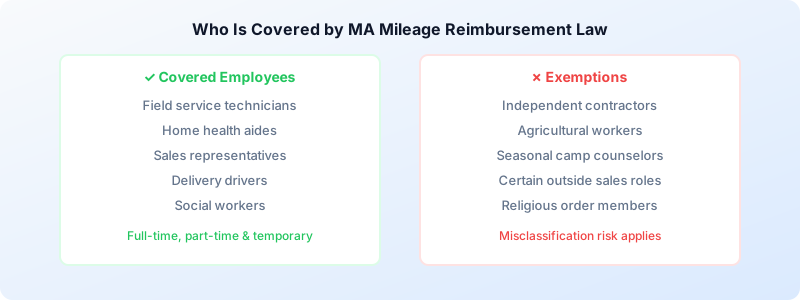
Full-time, part-time, and temporary employees are all covered. Common roles affected include field service technicians, home health aides, sales representatives, construction workers traveling between sites, delivery drivers, and social workers making home visits.
There are limited exemptions. Agricultural workers, employees in rehabilitation or training programs, seasonal camp counselors, workers in religious orders, and certain outside sales roles with no daily office reporting requirement may be excluded.
Independent contractors are not covered because they are not employees under state law. However, Massachusetts has aggressive misclassification enforcement, and many workers classified as contractors may actually qualify as employees.
Penalties for Non-Compliance
The Massachusetts Wage Act provides some of the harshest penalties in the country for failing to reimburse employees. When an employer violates the reimbursement requirement, the unreimbursed expense is treated as unpaid wages.
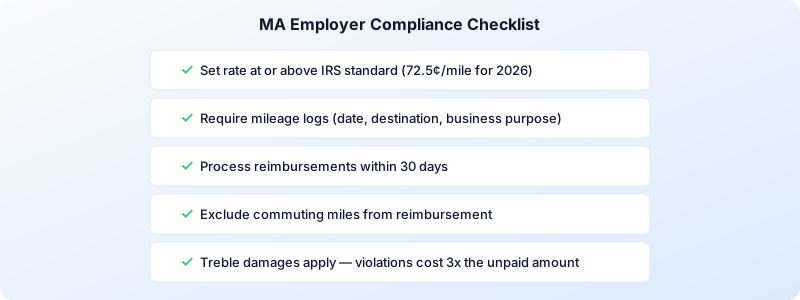
Under the Wage Act, unpaid wages are subject to mandatory treble damages. If an employer fails to reimburse $5,000 in mileage expenses, the employee can recover $15,000 plus attorney’s fees and costs. There is no discretion here. Courts must award triple damages once a violation is established.
Employees have three years from the date of the violation to file a claim. They can file a complaint with the Massachusetts Attorney General’s Fair Labor Division or pursue a private lawsuit. Class action lawsuits are common when companies have systemic policies that fail to reimburse properly.
How Employers Should Build a Compliant Policy
A compliant Massachusetts mileage reimbursement policy should include several key elements.
Set the rate at or above the IRS standard. The 2026 IRS rate of 72.5 cents per mile is the safest benchmark. Consider whether employees in the Boston metro area face higher costs that warrant a higher rate.
Require mileage logs. Employees should submit logs showing the date, destination, business purpose, and miles driven for each trip. This protects the company from inflated claims and meets IRS requirements for an accountable plan.
Process reimbursements promptly. Massachusetts courts look unfavorably at employers who delay reimbursements. Process claims within 30 days of submission.
Define what counts as business travel. Clearly distinguish between commuting miles and business miles. Normal commuting from home to the primary workplace is not reimbursable, but travel between work locations during the day is covered. For more on this distinction, see our guide on business miles vs commuting miles.
Put it in writing. A written policy distributed to all employees creates clarity and reduces disputes.
Employee Rights and What to Do If Unreimbursed
If you are a Massachusetts employee who drives for work and your employer is not reimbursing you, you have strong legal protections.
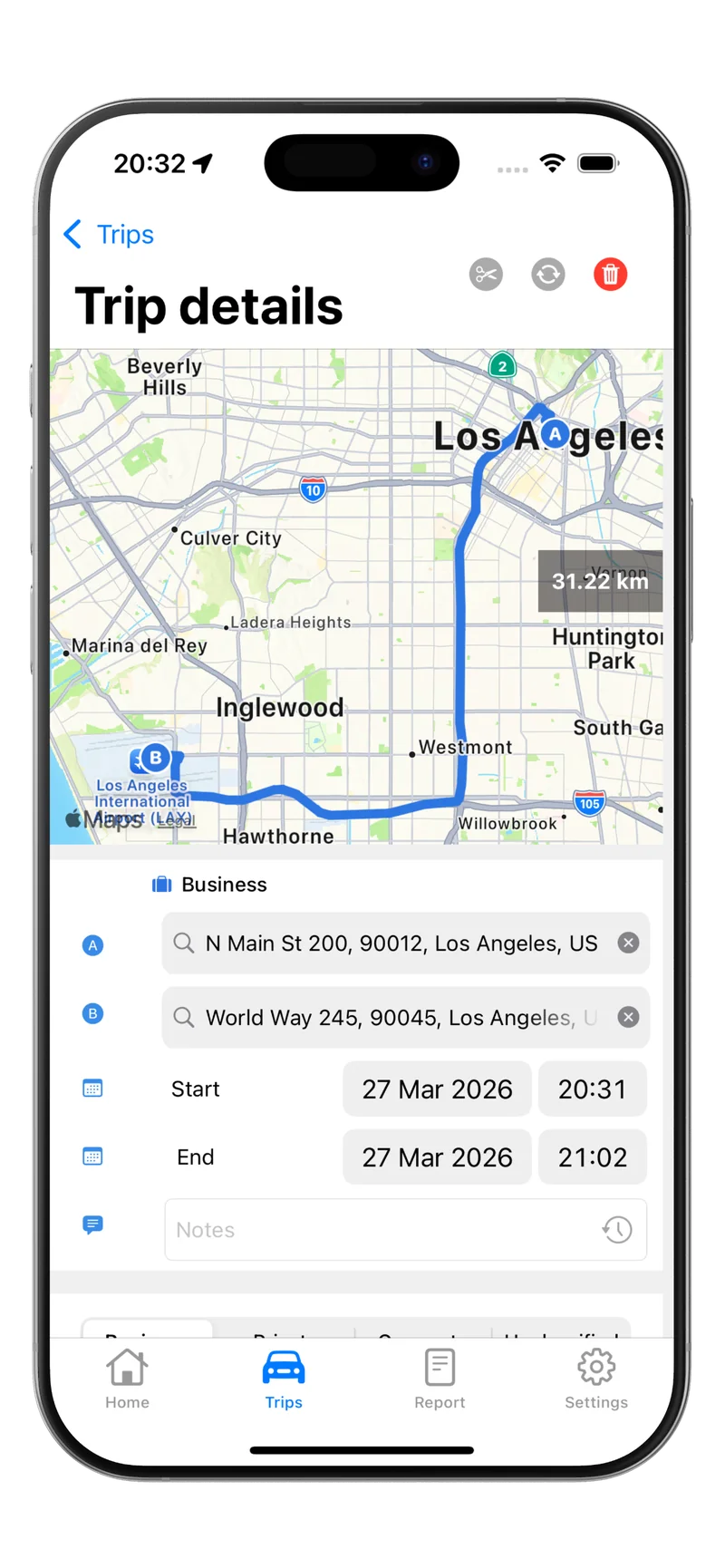
Document every business trip carefully. Keep records of dates, destinations, odometer readings, and the business purpose of each trip. Tripbook creates this documentation automatically with GPS tracking that logs every trip, building the evidence you need if a dispute arises.
Raise the issue with your employer first. Many companies are simply unaware of the Massachusetts requirement or have outdated policies. A written request citing 454 CMR 27.04(4)(b) often resolves the issue.
If your employer refuses to reimburse you, file a complaint with the Attorney General’s Fair Labor Division or consult an employment attorney. The treble damages provision means the financial recovery can be substantial.
How Massachusetts Compares to Other States
Massachusetts joins California and Illinois as the only three states with mandatory mileage reimbursement laws. For a detailed comparison of all state requirements, see our overview of state mileage reimbursement laws.
California’s Labor Code Section 2802 is the most well-known, but the Massachusetts Wage Act arguably has stronger enforcement teeth because of the mandatory treble damages provision. Illinois requires reimbursement under 820 ILCS 115/9.5, with penalties of 5 percent per month on unpaid amounts.
All other states leave mileage reimbursement to the discretion of employers, though the federal Fair Labor Standards Act still requires that unreimbursed expenses cannot push an employee’s effective pay below minimum wage.
Track Every Mile to Protect Yourself
Whether you are an employer ensuring compliance with the Massachusetts mileage reimbursement law or an employee documenting your business driving, accurate mileage records are essential. The law protects employees, but only those who can prove their business miles with reliable documentation.
Download Tripbook and create automatic, GPS-verified mileage logs that stand up in any dispute or audit.