
New Jersey mileage reimbursement is not required by state law for private-sector employers. Unlike California, Illinois, and Massachusetts, the Garden State does not have a standalone statute compelling businesses to pay employees back for miles driven in a personal vehicle. However, several New Jersey laws still influence when and how employers must handle vehicle expenses, and most companies choose to reimburse voluntarily.
This guide covers how mileage reimbursement works in New Jersey for 2026, including the IRS rate, Wage Theft Act protections, public employee rules, and tax treatment.
Does New Jersey Require Mileage Reimbursement?
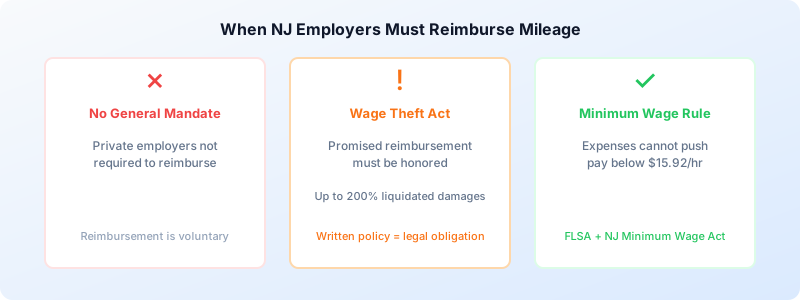
No. New Jersey has no law that specifically mandates mileage reimbursement from private employers to employees. Businesses are free to set their own policies, reimburse at any rate they choose, or offer no reimbursement at all.
That said, three legal frameworks shape how New Jersey mileage reimbursement works in practice.
The New Jersey Wage Theft Act
New Jersey’s Wage Theft Act (WTA), signed into law in 2019, is one of the strongest anti-wage-theft statutes in the country. While it does not mention mileage reimbursement directly, it significantly raises the stakes for employers who promise reimbursement but fail to deliver.
If your employer has a written policy, employment contract, or handbook that includes mileage reimbursement, the WTA makes that promise enforceable. Key provisions include:
- Six-year statute of limitations for wage and hour claims (tripled from the previous two years)
- Liquidated damages up to 200% of the amount owed
- Anti-retaliation protections for employees who file complaints
- Criminal penalties for repeat offenders, including fines and potential third-degree criminal charges for a pattern of wage nonpayment
Starting a mileage reimbursement program in New Jersey is optional, but once an employer puts a policy in writing, it becomes a legal obligation.
The New Jersey Minimum Wage Act
Under both the New Jersey Minimum Wage Act and the federal Fair Labor Standards Act (FLSA), unreimbursed business expenses cannot reduce an employee’s effective hourly pay below the minimum wage. New Jersey’s minimum wage is $15.92 per hour for most employers in 2026.
If an employee drives extensively for work without reimbursement, their out-of-pocket fuel, insurance, and wear costs could push effective earnings below minimum wage. In that scenario, the employer must reimburse enough to stay compliant. This is especially relevant for delivery drivers, home health aides, and field technicians who log significant mileage.
Federal FLSA Protections
The FLSA provides a federal floor. Even if New Jersey’s minimum wage did not apply, the federal minimum wage of $7.25 per hour still prevents employers from letting unreimbursed vehicle expenses erode pay below that threshold.
For a broader comparison of which states mandate reimbursement and which rely on federal protections, see our state mileage reimbursement laws overview.
The 2026 IRS Standard Mileage Rate
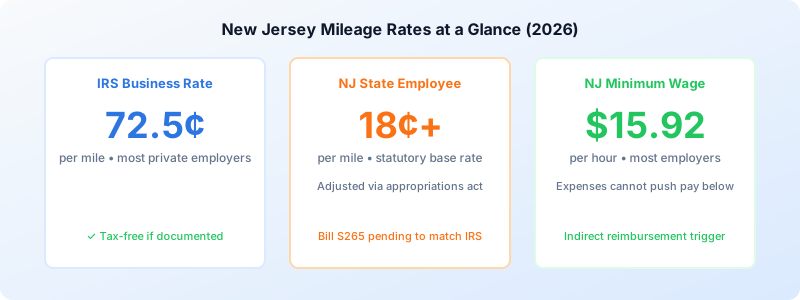
Most New Jersey employers who reimburse mileage follow the IRS standard mileage rate. For 2026, the IRS business mileage rate is 72.5 cents per mile. This figure reflects the average annual cost of operating a personal vehicle, including fuel, insurance, depreciation, maintenance, and tires.
Employers can set their reimbursement rate above or below 72.5 cents. However, the IRS rate is the dividing line for tax treatment. Reimbursements at or below 72.5 cents per mile are tax-free for employees when submitted through an accountable plan. Any amount above the IRS rate is treated as taxable income and must appear on the employee’s W-2.
New Jersey State Employee Mileage Rate
While private employers choose their own rates, the State of New Jersey reimburses state employees for mileage under a separate framework. The permanent statutory rate under N.J. Rev. Stat. 52:14-17.1 is 18 cents per mile, adjusted biannually to reflect changes in gasoline prices. In practice, annual appropriations acts have set the actual rate higher.
A pending bill (S265) in the 2026 legislative session would tie the state employee reimbursement rate directly to the IRS standard mileage rate. If enacted, state workers would automatically receive 72.5 cents per mile for 2026 business travel. As of mid-2025, this bill has not been signed into law.
State employees must follow official travel policies, use the most economical route, and submit documentation to the employing agency for reimbursement.
How New Jersey Compares to Neighboring States
New Jersey falls into the majority of states that do not mandate mileage reimbursement for private employers. Here is how it compares to nearby states:
| State | Private Employer Mandate? | Notes |
|---|---|---|
| New Jersey | No | WTA enforces promised reimbursement |
| Pennsylvania | No | WPCL enforces promised reimbursement |
| New York | No | Labor Law 198-C covers some expenses |
| California | Yes | Labor Code 2802 |
| Illinois | Yes | Expense Reimbursement Act |
| Massachusetts | Yes | MGL Chapter 149 |
New Jersey’s approach is similar to Pennsylvania’s mileage reimbursement rules, where there is no state mandate but strong wage protections and contractual obligations still apply.
Tax Treatment of New Jersey Mileage Reimbursement
Tax treatment depends on how the employer structures the program.
Accountable Plan (Tax-Free)
Under an IRS-compliant accountable plan, mileage reimbursements up to 72.5 cents per mile are:
- Not taxable income for the employee
- Fully deductible as a business expense for the employer
- Not subject to payroll taxes (Social Security, Medicare, unemployment)
To qualify, the plan must require a business connection, adequate documentation (date, destination, purpose, and miles), and the return of any excess reimbursement within a reasonable time.
Non-Accountable Plan (Taxable)
If the employer pays mileage without requiring documentation, the entire amount is treated as taxable wages. It must be included on the employee’s W-2 and is subject to income tax and payroll taxes.
W-2 Employees and Unreimbursed Expenses
Under the Tax Cuts and Jobs Act (TCJA), W-2 employees cannot deduct unreimbursed mileage on their federal tax return. The One Big Beautiful Bill Act made this elimination permanent — the deduction will not return. This makes employer reimbursement the only way for employees to recover driving costs. For more details on the taxability of reimbursements, see our guide on whether mileage reimbursement is taxable.
Setting Up a New Jersey Mileage Reimbursement Policy
Employers who want to establish a clear, defensible policy should include these elements:
- Reimbursement rate — State whether you follow the IRS rate (72.5 cents per mile for 2026) or a different amount, and how often the rate is updated.
- Eligible travel — Define which trips qualify. Commuting from home to a regular office is typically excluded. Client visits, job sites, errands, and travel between work locations usually count.
- Documentation requirements — Require employees to log the date, starting point, destination, business purpose, and total miles for each trip.
- Submission deadlines — Set a reasonable window for submitting mileage claims (for example, within 30 days of the trip).
- Payment timeline — Specify when employees can expect reimbursement after submitting an approved claim. Extended delays can potentially violate New Jersey wage payment laws if reimbursement is considered part of compensation.
Having a written policy protects the employer under the WTA and ensures IRS compliance for tax-free treatment.
How to Track Mileage Accurately in New Jersey
Accurate mileage records are essential whether you are an employee seeking reimbursement or an employer verifying claims. The IRS requires documentation of every business trip, including the date, destination, purpose, and distance.
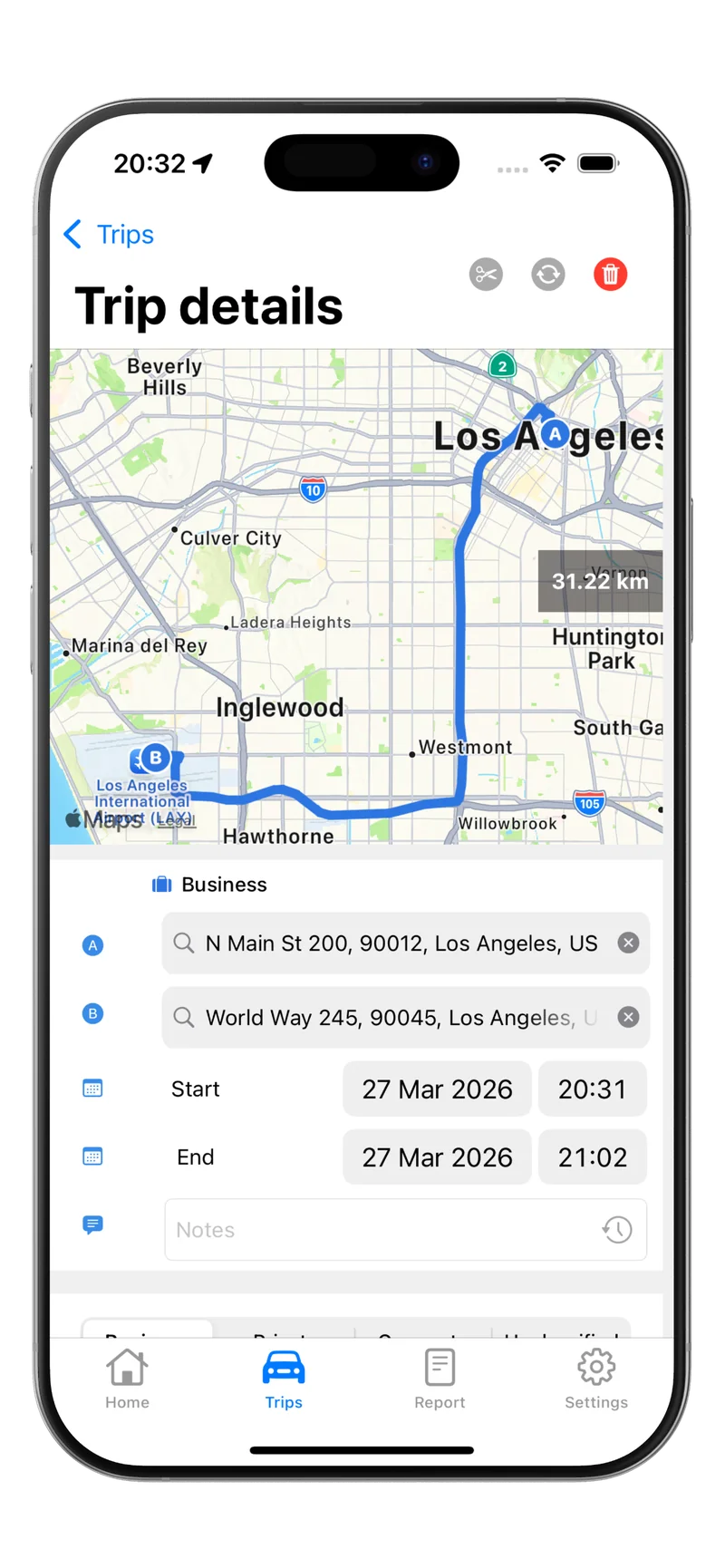
Paper logs and spreadsheets work but are error-prone and hard to verify. A GPS-based mileage tracking app automates the process and creates a defensible record that satisfies both employer policies and IRS requirements.
Download Tripbook to track every business mile in New Jersey automatically. The app records your trips with GPS precision, categorizes them by purpose, and generates reports ready for reimbursement submission or tax filing.
Key Takeaways on New Jersey Mileage Reimbursement
New Jersey does not require private employers to reimburse mileage, but the Wage Theft Act makes any promised reimbursement legally enforceable with severe penalties for violations. The state minimum wage of $15.92 per hour also creates situations where reimbursement is effectively mandatory for employees who drive extensively. The 2026 IRS rate of 72.5 cents per mile remains the standard benchmark for tax-free reimbursements.
Whether you are an employer drafting a policy or an employee tracking miles for reimbursement, proper documentation is the foundation. Accurate mileage logs protect both sides and ensure tax-free treatment under an accountable plan.