Understanding the IRS mileage rate history helps you spot trends, plan ahead for tax season, and make sure you claimed the correct rate for every year you drove for business. The IRS adjusts the standard mileage rate annually based on a study of fixed and variable vehicle operating costs, and in rare cases mid-year when fuel prices spike.
This guide gives you the complete table from 2010 through 2026, explains the three mid-year adjustments the IRS has made, and shows you how to use historical rates if you need to amend a past return.
Complete IRS Mileage Rate History Table (2010-2026)
Below is every IRS standard business mileage rate for the past 17 years. Years marked with an asterisk had mid-year rate changes.
| Year | Business Rate | Medical/Moving Rate | Charity Rate |
|---|---|---|---|
| 2026 | 72.5¢ | 20.5¢ | 14¢ |
| 2025 | 70¢ | 21¢ | 14¢ |
| 2024 | 67¢ | 21¢ | 14¢ |
| 2023 | 65.5¢ | 22¢ | 14¢ |
| 2022* | 58.5¢ / 62.5¢ | 18¢ / 22¢ | 14¢ |
| 2021 | 56¢ | 16¢ | 14¢ |
| 2020 | 57.5¢ | 17¢ | 14¢ |
| 2019 | 58¢ | 20¢ | 14¢ |
| 2018 | 54.5¢ | 18¢ | 14¢ |
| 2017 | 53.5¢ | 17¢ | 14¢ |
| 2016 | 54¢ | 19¢ | 14¢ |
| 2015 | 57.5¢ | 23¢ | 14¢ |
| 2014 | 56¢ | 23.5¢ | 14¢ |
| 2013 | 56.5¢ | 24¢ | 14¢ |
| 2012 | 55.5¢ | 23¢ | 14¢ |
| 2011* | 51¢ / 55.5¢ | 19¢ / 23.5¢ | 14¢ |
| 2010 | 50¢ | 16.5¢ | 14¢ |
*Split-year rate: January-June / July-December
For the current year breakdown, see our full guide to the 2026 IRS mileage rate.
How the IRS Sets the Standard Mileage Rate
Each year the IRS commissions an independent contractor to study the fixed and variable costs of operating a car, van, pickup, or panel truck in the United States. Fixed costs include insurance, registration, and depreciation. Variable costs include fuel, tires, and maintenance.
The results of that study determine the business rate and the medical/moving rate for the following year. The charitable rate, however, is different. Congress set it at 14 cents per mile through the Taxpayer Relief Act of 1997, and it has not changed since.
This is why the business rate fluctuates with gas prices and vehicle costs while the charity rate stays flat year after year.
Years With Mid-Year Rate Changes
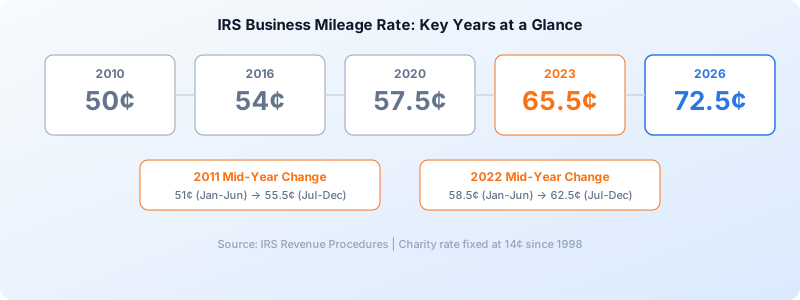
In the entire history of the standard mileage rate, the IRS has issued a mid-year adjustment only three times: 2005, 2011, and 2022. Each time, the trigger was a sharp spike in fuel prices.
2011: Gas Price Surge
The business rate started at 51 cents per mile in January 2011. By summer, national average gas prices had climbed significantly, and the IRS bumped the rate to 55.5 cents effective July 1. That 4.5-cent jump mid-year was notable at the time.
2022: Record Fuel Costs
The business rate began at 58.5 cents in January 2022. By June, the national average price of gasoline hit record highs. The IRS responded with a 4-cent increase to 62.5 cents effective July 1, 2022. This was only the third mid-year change ever.
If you filed taxes for either of these years, you need to split your mileage log by the date ranges and apply the correct rate to each half. A mileage tracking app makes this much easier than doing it by hand.
Key Trends in IRS Mileage Rates
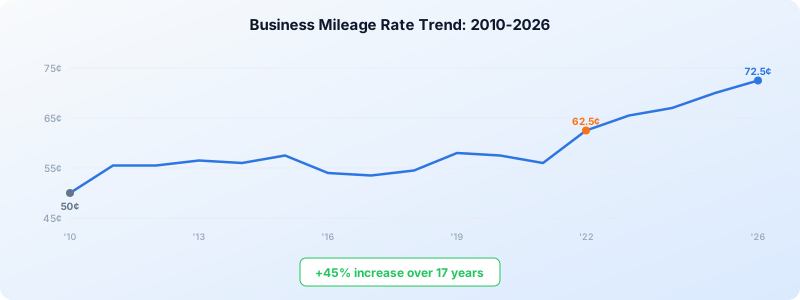
Looking at the IRS mileage rate history from 2010 to 2026, a few patterns stand out:
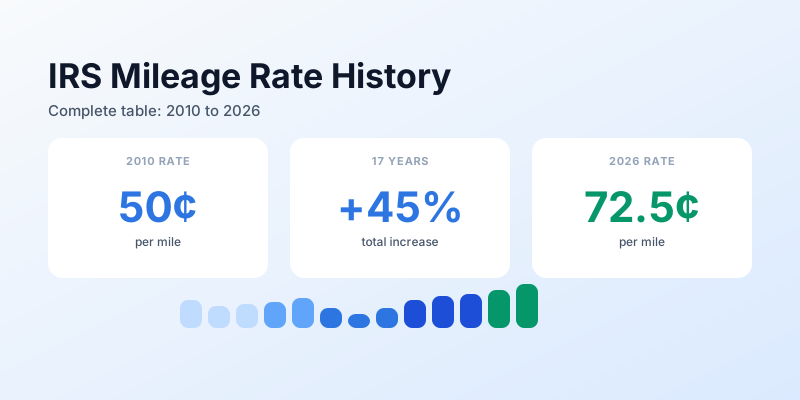
Overall upward trend. The business rate went from 50 cents in 2010 to 72.5 cents in 2026, a 45% increase over 17 years. This tracks with rising vehicle costs, insurance premiums, and fuel prices over the same period.
Occasional dips happen. The rate does not always go up. It dropped from 57.5 cents in 2015 to 54 cents in 2016, then again from 58 cents in 2019 to 57.5 cents in 2020. These reflect years when gas prices fell or vehicle operating costs stabilized.
The post-pandemic surge was the steepest. From 2021 to 2023, the business rate jumped from 56 cents to 65.5 cents, a 9.5-cent increase in just two years. Supply chain disruptions, inflation, and record fuel costs drove that rapid climb.
Recent years show steady growth. The 2024 rate (67 cents), 2025 rate (70 cents), and 2026 rate (72.5 cents) show consistent annual increases in the 2-3 cent range, suggesting costs have stabilized into a predictable upward pattern.
Curious about where rates might go next? Read our IRS mileage rate 2027 prediction.
Standard Mileage Rate vs. Actual Expenses: A Historical Perspective
The rising standard mileage rate makes the standard mileage method increasingly valuable compared to tracking actual expenses. At 72.5 cents per mile in 2026, a driver logging 15,000 business miles gets a $10,875 deduction without tracking a single receipt for gas, oil changes, or insurance.
Back in 2010 at 50 cents per mile, that same 15,000 miles produced only a $7,500 deduction. The gap between the two methods has narrowed for many drivers, making the simpler standard rate a smarter choice for those who want to avoid the paperwork of the actual expense method.
How to Use Historical Rates for Amended Returns
If you realize you missed a mileage deduction in a prior year, you can file an amended return (Form 1040-X) using the correct rate from that year. You generally have three years from the original filing date to amend.
Here is what you need:
- A mileage log for that year. The IRS requires contemporaneous records showing the date, destination, business purpose, and miles for each trip.
- The correct rate from the table above. For split years like 2022, make sure you apply the right rate to the right date range.
- Form 1040-X and Schedule C. File the amendment with the updated mileage deduction on the appropriate line.
If you did not keep a mileage log at the time, reconstructing one retroactively is difficult and risky in an audit. Going forward, the best approach is to track every business trip as it happens.
Start Tracking Your Miles Automatically
The IRS mileage rate history shows one clear pattern: rates keep climbing, which means your potential deduction keeps growing. But that deduction is worth nothing if you do not have a proper mileage log.
Tripbook automatically records every business trip with GPS, timestamps, and purpose tags so you never miss a deduction. Whether the rate is 72.5 cents today or higher next year, your log will be ready at tax time.
Download Tripbook and start turning every business mile into tax savings.