If you drive your own car for work, mileage tracking is one of the simplest ways to protect your deductions and get reimbursed correctly. Whether you are a freelancer, a small business owner, or an employee who uses a personal vehicle for work, a clean mileage log makes the difference between a smooth tax season and a painful one.
In this guide, we explain what mileage tracking is, which trips count as business miles, what you need to record, and the easiest ways to keep a reliable log that meets IRS expectations.
What is mileage tracking?
Mileage tracking (also called mileage logging) is the habit of recording every business-related trip you take in your vehicle. A proper log includes the date, start and end odometer readings, the origin and destination, the purpose of the trip, and the total miles driven. This creates a clear record of your business mileage for tax deductions or reimbursements.
For a deeper dive into the IRS rules and the current mileage rate, see our IRS Mileage Reimbursement Guide.
Why mileage tracking matters
Mileage tracking is not just bookkeeping. It protects your money in three key ways:
- Tax deductions for self-employed drivers: If you are self-employed, business miles can reduce taxable income. Without a clean log, those deductions are easy to lose.
- Employer reimbursement: If your employer reimburses mileage, a log is usually required to get paid back and keep reimbursements non-taxable.
- Audit protection: The IRS expects contemporaneous records. A complete log shows when you drove, where you went, and why the trip was business-related. If you have gaps in your records, our guide on what to do if you forgot to track mileage can help.
Regular commuting between home and your normal workplace does not count as business mileage. Trips to clients, job sites, temporary workplaces, or work errands generally do.
Who should keep a mileage log?
Mileage tracking is useful in any situation where a vehicle is used for work:
- Freelancers and independent contractors: Track business miles for tax deductions using the standard mileage method or actual expenses.
- Small business owners: Document business mileage for yourself and anyone driving a personal vehicle for the business.
- Employees: Log miles for reimbursement or expense reports when using your own car for work.
What a complete mileage log should include
A strong mileage log is simple but consistent. At a minimum, record:
- Date of the trip
- Start and end odometer readings (or total miles)
- Start location and destination
- Business purpose of the trip
- Whether it was business or personal
Keeping this information for every trip makes your log defensible and easy to summarize for taxes or reimbursements.
How to track mileage: three practical options
There are several ways to track business miles. The best option depends on how often you drive and how much time you want to spend on admin.
1. Manual log or spreadsheet
The traditional method is a notebook or spreadsheet. After each trip, you enter the date, mileage, locations, and purpose. It costs nothing and gives you full control, but it requires discipline. Missed trips or small errors can make your log incomplete.
2. Mileage tracking app
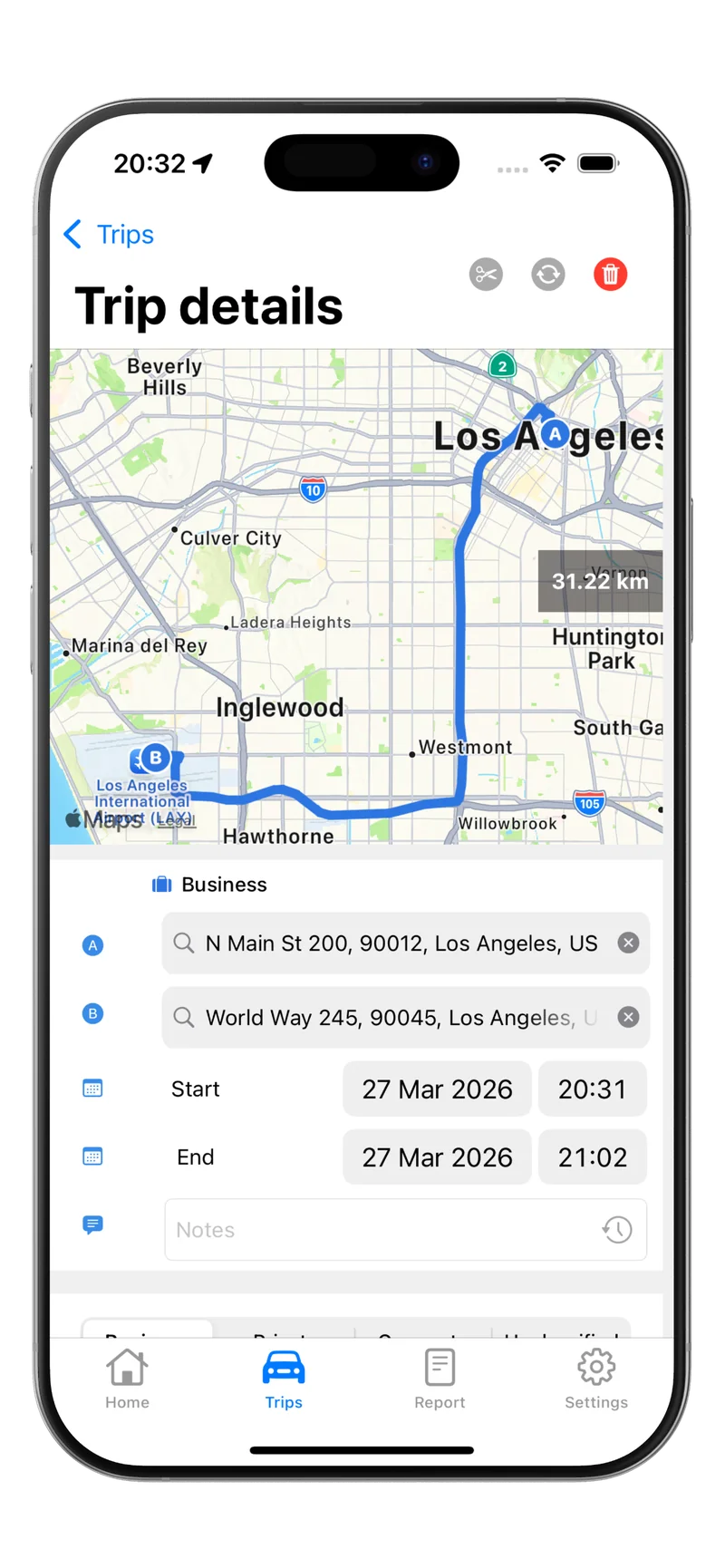
Mileage apps use GPS to detect and log trips automatically. You can tag each trip as business or personal, add notes, and export reports for taxes or reimbursements. The main advantage is consistency: fewer missed trips and less manual work. The tradeoff is relying on your phone and trusting how location data is stored. For a detailed comparison of both approaches, see our guide on mileage tracking app vs. paper log.
3. GPS device or OBD tracker
Some drivers use a dedicated GPS or OBD-II device in the vehicle. It logs trips automatically without relying on a phone. This is popular for people who drive daily or want higher accuracy. The downside is hardware cost, setup time, and less flexibility if you switch vehicles.
Build a mileage habit that sticks
Mileage tracking does not need to be complicated. What matters is consistency and clarity. Pick a method that fits your routine, keep your log up to date, and make sure each trip has a clear business purpose.
If you want to understand the latest IRS mileage rates and reimbursement rules, our IRS Mileage Reimbursement Guide breaks it all down.