Minnesota does not have a state statute that requires private employers to reimburse employees for mileage driven in personal vehicles for work purposes. However, state employees and certain public-sector workers are covered by specific reimbursement policies, and federal tax rules create strong incentives for all Minnesota employers to offer mileage reimbursement through an accountable plan.
Understanding the legal landscape helps both employers and employees in Minnesota make informed decisions about mileage reimbursement policies.
Does Minnesota Law Require Mileage Reimbursement?
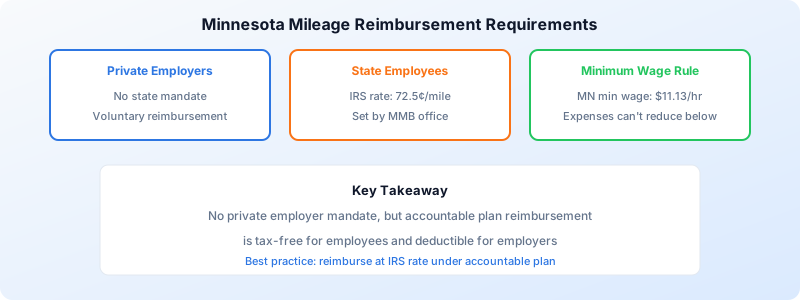
Unlike states such as California and Massachusetts, Minnesota does not have a general statute requiring private employers to reimburse employees for business-related mileage. This means private employers in Minnesota can technically require employees to use their personal vehicles for work without offering any reimbursement.
However, there is an important exception. Under federal law, if unreimbursed mileage expenses push an employee’s effective wages below the federal minimum wage or the Minnesota state minimum wage (which is higher than the federal rate), the employer could be in violation of wage and hour laws. Minnesota’s minimum wage for large employers is $11.13 per hour in 2026, and failing to account for mandatory vehicle expenses could create compliance problems.
For a deeper look at how state laws compare across the country, see our overview of state mileage reimbursement laws.
Minnesota State Employee Mileage Rates
Minnesota state employees are reimbursed for business mileage under rates set by the Minnesota Management and Budget (MMB) office. The state typically follows the IRS standard mileage rate, which is 72.5 cents per mile for 2026.
State employee reimbursement covers miles driven in a personal vehicle when a state fleet vehicle is not available. Employees must submit mileage logs that include the date of travel, starting and ending locations, purpose of the trip, and total miles driven. Trips between home and a regular worksite are generally not reimbursable, consistent with the IRS definition of commuting miles.
For the latest IRS rate details, check our guide on the IRS mileage rate for 2026.
Best Practices for Minnesota Employers
Even without a legal mandate, most Minnesota employers reimburse mileage because it is good business practice. Unreimbursed driving costs create dissatisfaction and can lead to turnover, especially for roles that require heavy travel such as sales, field service, and healthcare positions.
Set Up an Accountable Plan
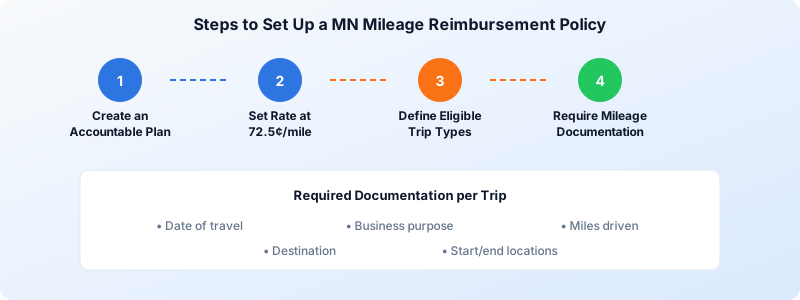
The most tax-efficient approach is to establish an accountable plan that meets IRS requirements. Under an accountable plan, reimbursements are not taxable income for the employee and are deductible as a business expense for the employer. To qualify, the plan must require a business connection for each expense, substantiation of miles with adequate records, and return of any excess reimbursement within a reasonable time.
Choose a Reimbursement Rate
Most Minnesota employers use the IRS standard mileage rate of 72.5 cents per mile. This rate covers fuel, depreciation, insurance, maintenance, and all other vehicle operating costs. Employers are free to set a lower rate, but reimbursing at or near the IRS rate is the most common approach.
Some employers with high-mileage employees may consider a Fixed and Variable Rate (FAVR) program, which accounts for geographic cost differences across Minnesota. Driving costs in the Twin Cities metro area differ from those in rural areas of northern Minnesota.
Require Proper Documentation
Strong mileage records protect both the employer and the employee. Every trip should be documented with the date, business purpose, destination, and miles driven. The IRS requires contemporaneous records, meaning logs should be completed at or near the time of travel rather than reconstructed at the end of the month.
Employee Rights and Options
If your Minnesota employer does not reimburse mileage, your options depend on your tax filing status. Self-employed individuals and independent contractors can deduct mileage on Schedule C. However, W-2 employees cannot deduct unreimbursed mileage on their federal tax return due to the suspension of miscellaneous itemized deductions.
Minnesota also conforms to the federal tax treatment, so there is no state-level deduction for unreimbursed employee mileage expenses. This makes negotiating a mileage reimbursement policy with your employer even more important if you drive frequently for work.
If you are an independent contractor in Minnesota, you can claim the full IRS mileage rate for all business miles. Accurate record-keeping is essential, and you should review our guide on how to claim mileage on taxes when self-employed.
Common Reimbursable vs Non-Reimbursable Trips
Understanding which trips qualify for reimbursement helps avoid disputes. Trips from one work location to another, travel to client sites, trips to the bank or post office for business purposes, and travel to conferences or training sessions are typically reimbursable.
Normal commuting from home to your regular office is not reimbursable. However, if you work from home as your primary office and travel to a secondary work location, that trip may qualify as business mileage under IRS rules.
Tracking Mileage in Minnesota
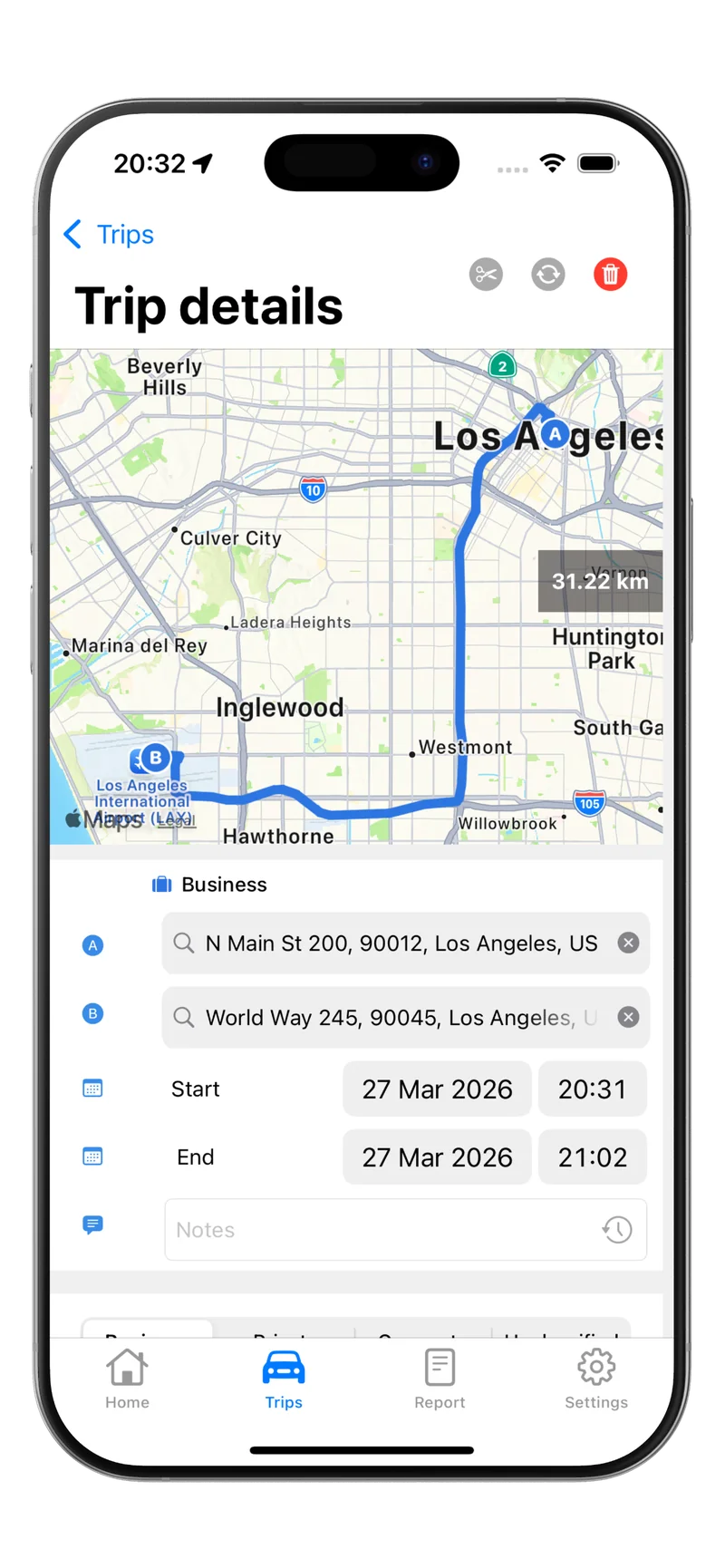
Whether you are an employer setting up a reimbursement program or an employee documenting business trips, consistent mileage tracking is the foundation of any good policy. Manual spreadsheets work but are prone to errors and gaps. GPS-based mileage tracking apps like Tripbook automatically record every trip with the date, route, distance, and purpose, making it simple to generate IRS-compliant mileage logs for reimbursement or tax filing.
Accurate records protect employees during audits and help employers verify that reimbursements are legitimate business expenses. Whatever method you choose, the key is to track every business trip as it happens rather than trying to estimate miles at the end of the year.