Washington state does not have a general statute that mandates mileage reimbursement for private-sector employees. However, Washington’s employment laws contain provisions that can effectively require reimbursement in certain situations, and the state has well-defined rates for public employees. Employers and employees in Washington should understand how these rules interact with federal tax law to make the most of mileage reimbursement programs.
Does Washington Require Employers to Reimburse Mileage?
Washington does not have a law that explicitly requires private employers to reimburse employees for using personal vehicles on the job. This places Washington in the same category as most states, where mileage reimbursement is a matter of company policy rather than legal obligation.
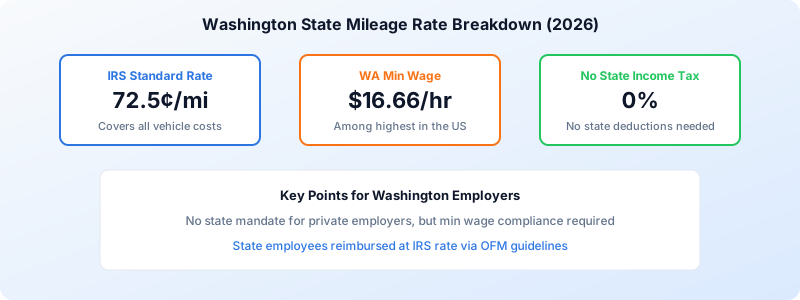
That said, Washington’s minimum wage law creates an indirect requirement. Washington has one of the highest state minimum wages in the country at $16.66 per hour in 2026. If an employee’s unreimbursed vehicle expenses reduce their effective hourly compensation below the minimum wage, the employer could face a wage violation. This is most likely to affect lower-paid employees who drive significant distances for work, such as delivery drivers or home care workers.
Washington also has strong wage deduction protections. Employers generally cannot deduct vehicle expenses from employee wages without written authorization. This means that while employers are not required to add reimbursement, they also cannot shift vehicle costs to employees through paycheck deductions.
For a comparison of how other states handle this issue, see our guide on state mileage reimbursement laws.
Washington State Employee Mileage Rates
Washington’s Office of Financial Management (OFM) sets mileage reimbursement rates for state employees. The state rate typically mirrors the IRS standard mileage rate, which is 72.5 cents per mile for 2026.
State employees must use a state fleet vehicle when one is available. Mileage reimbursement at the full rate applies only when a fleet vehicle is not reasonably available. If a state employee chooses to drive a personal vehicle when a fleet vehicle is available, the reimbursement rate may be reduced.
Setting Up a Mileage Reimbursement Policy in Washington
Most Washington employers offer mileage reimbursement voluntarily because it helps attract and retain employees, particularly for roles involving travel. A well-structured policy reduces tax liability and keeps employees satisfied.
Use an Accountable Plan
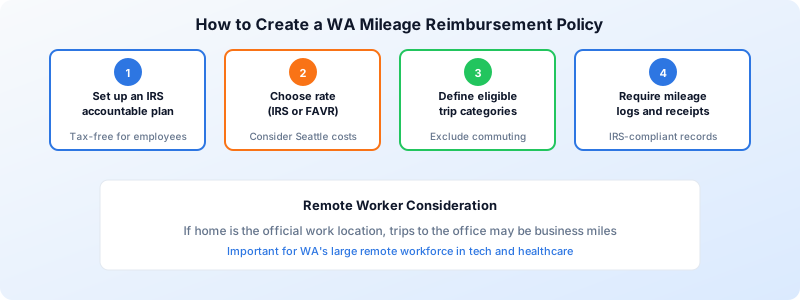
The best approach is to create an IRS-compliant accountable plan. Under this structure, reimbursements are tax-free for employees and deductible for the employer. The plan must meet three requirements: expenses must have a business connection, employees must substantiate each expense with adequate records, and any excess reimbursement must be returned within a reasonable period.
Without an accountable plan, mileage reimbursements become taxable wages, increasing the employer’s payroll tax burden and reducing the employee’s take-home pay.
Determine the Reimbursement Rate
Most Washington employers use the IRS standard mileage rate of 72.5 cents per mile. This is the simplest approach and is widely understood by both employers and employees. Some companies in the Seattle metro area may consider higher reimbursement through a FAVR program because vehicle costs such as insurance and parking are significantly higher in the Puget Sound region than in eastern Washington.
Employers can also reimburse at a rate lower than the IRS standard, but doing so may leave employees feeling undercompensated for their true driving costs, especially given Washington’s higher-than-average fuel prices and insurance rates.
Define Eligible Trips
A clear policy should specify which types of travel qualify for reimbursement. Business trips between work sites, travel to client locations, trips to the airport for business travel, and errands conducted for the employer are generally reimbursable. Daily commuting from home to a regular office is not reimbursable.
Washington employers should pay special attention to employees who work remotely. If an employee’s home is their primary workplace and they travel to a company office for meetings, that trip may qualify as business mileage rather than commuting under IRS rules.
Tax Implications for Washington Employees
Washington has no state income tax, which simplifies the mileage reimbursement picture somewhat. Employees do not need to worry about state-level deductions for unreimbursed mileage expenses because there is no state income tax return to file.
However, federal tax rules still apply. W-2 employees in Washington cannot deduct unreimbursed business mileage on their federal return. Self-employed workers and independent contractors can still deduct business mileage on Schedule C. For more on this topic, read our article on whether W-2 employees can deduct mileage.
If you are self-employed in Washington, tracking mileage is especially important because the federal mileage deduction is one of the largest write-offs available. At 72.5 cents per mile, a contractor driving 15,000 business miles per year can claim a $10,875 deduction. See our guide on self-employed tax deductions for the complete picture.
Industries Affected Most in Washington
Several industries in Washington have large numbers of employees who drive personal vehicles for work. Technology companies with field engineers, healthcare organizations with home health workers, agricultural businesses with field supervisors, and real estate agencies all rely on employee driving. The construction industry across the state also involves significant travel between job sites.
These employers benefit the most from establishing a formal mileage reimbursement policy because the driving volume is high and the cost to employees is substantial. A clear policy with proper documentation requirements also helps during audits.
Tracking Miles in Washington State
Whether you are a Washington employer managing a fleet of mobile employees or a self-employed contractor tracking your own business miles, accurate mileage records are essential. The IRS requires records that include the date, destination, business purpose, and miles driven for each trip.
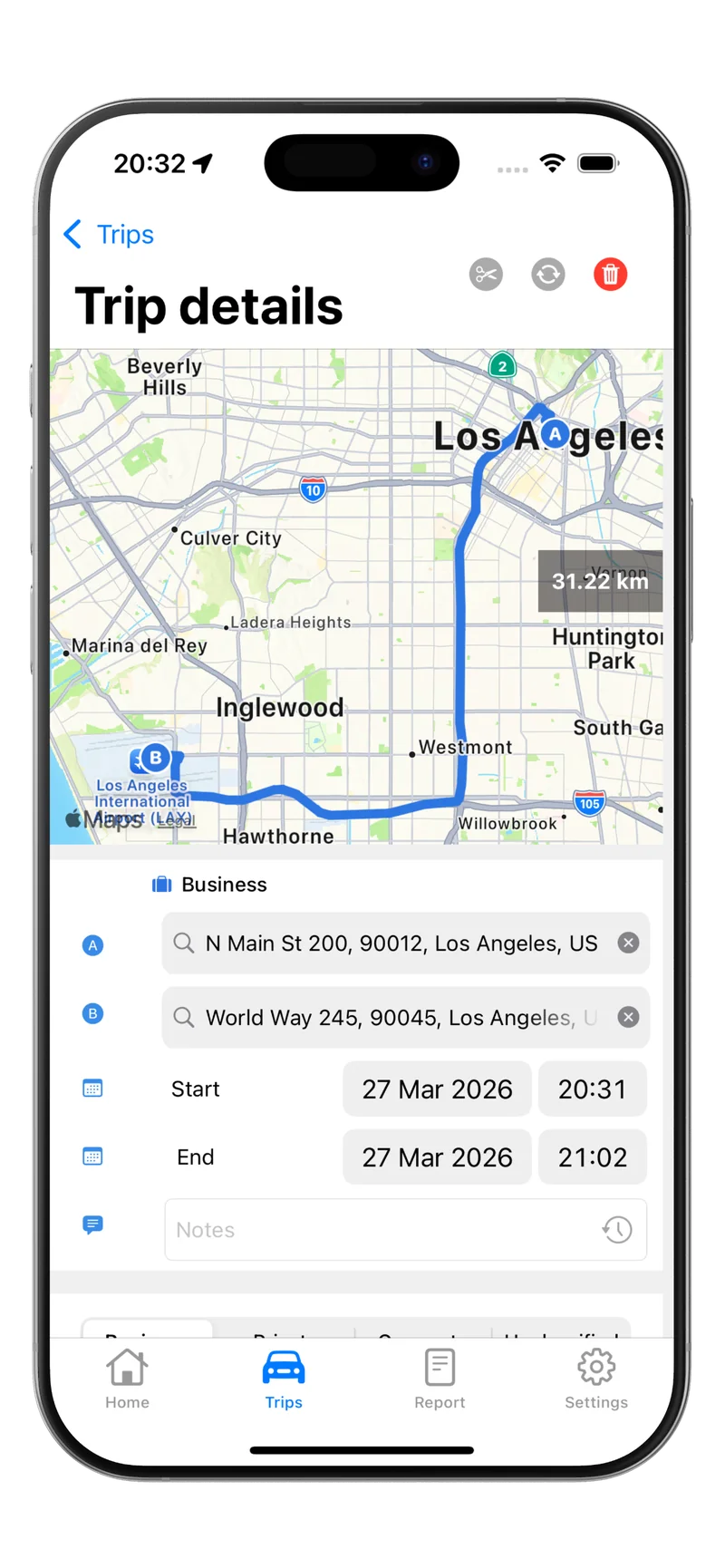
Tripbook makes mileage tracking simple by automatically recording trips with GPS, categorizing business and personal miles, and generating reports that satisfy IRS documentation requirements. For Washington state employees and contractors alike, having reliable mileage logs ensures you capture every deductible mile and stay compliant with reimbursement policies.