When you work for yourself, nobody withholds taxes from your paycheck or reimburses your business expenses. That is the bad news. The good news is that you can deduct a wide range of business expenses on Schedule C, which directly reduces the income you owe taxes on.
Most self-employed workers leave money on the table because they do not know what qualifies. This complete list covers every major deduction available to freelancers, independent contractors, and 1099 workers in 2026.
1. Mileage (The Biggest Deduction for Most)
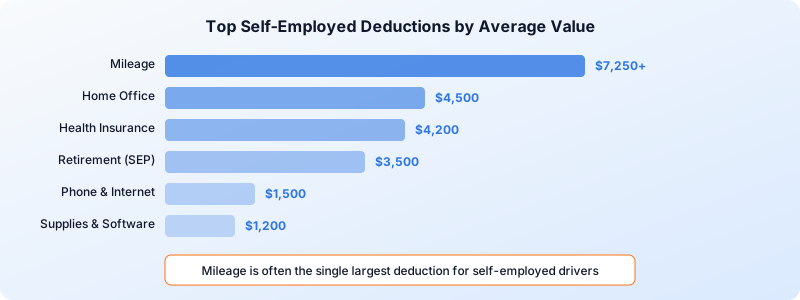
If you drive for business, mileage is likely your single largest tax deduction. The 2026 IRS mileage rate is 72.5 cents per mile. That adds up fast.
Drive 10,000 business miles and you are looking at a $7,250 deduction. For many freelancers, this exceeds the value of every other deduction combined.
Qualifying business miles include trips to clients, project sites, the bank, the post office, office supply stores, and anywhere else you drive for work. Your regular commute does not count unless you have a qualifying home office.
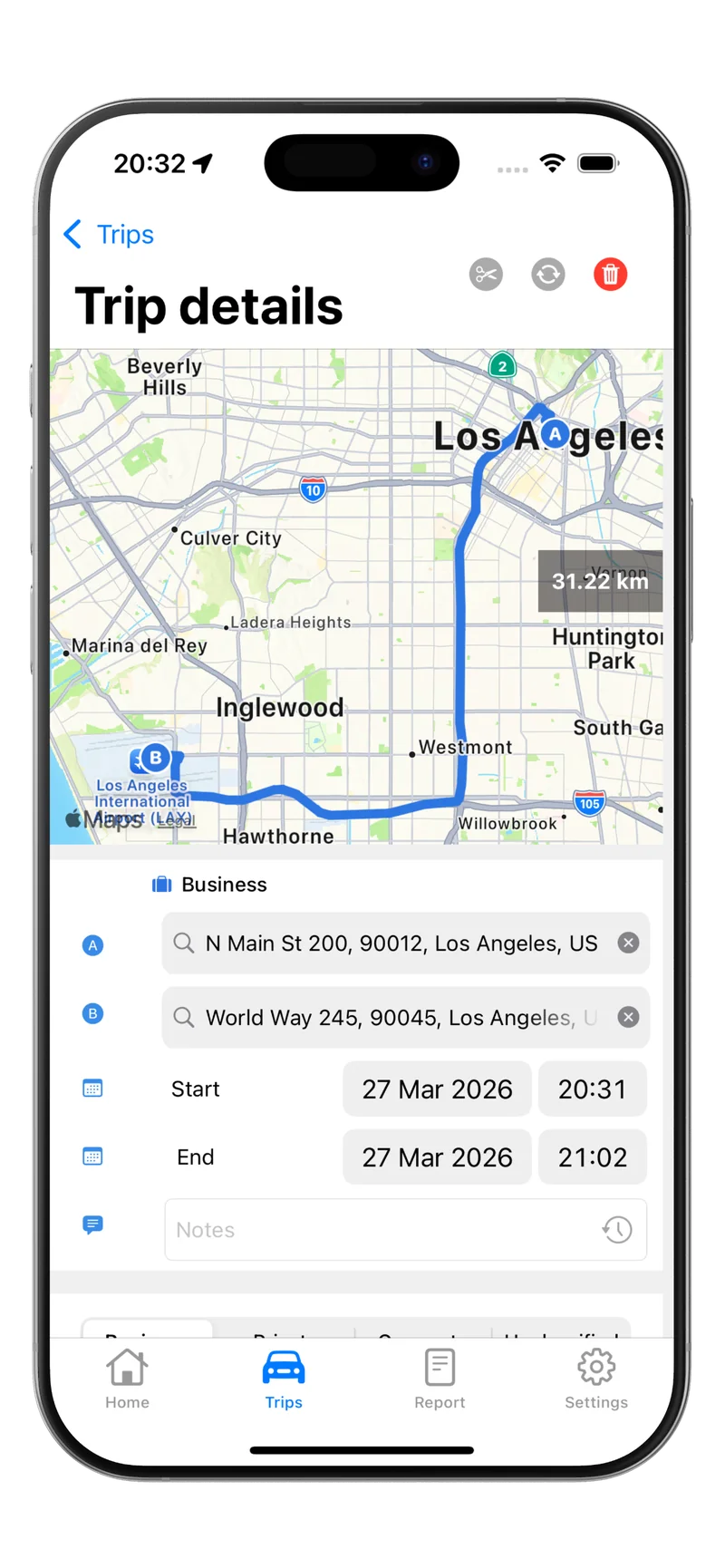
The key requirement is tracking. The IRS requires a contemporaneous log with the date, destination, purpose, and miles for each trip. An app like Tripbook handles this automatically using GPS, so you never have to remember to write anything down.
You can either deduct 72.5¢ per mile (standard rate) or track actual vehicle costs and deduct the business percentage. Most people choose the standard rate because it is simpler and often higher. Learn more in our detailed comparison.
2. Home Office Deduction
If you use part of your home regularly and exclusively for business, you can deduct a portion of your rent or mortgage, utilities, insurance, and maintenance. There are two methods:
Simplified method: Deduct $5 per square foot of your home office, up to 300 square feet. Maximum deduction: $1,500 per year.
Regular method: Calculate the actual percentage of your home used for business and apply it to your total housing costs. This often results in a larger deduction but requires more record-keeping.
A qualifying home office also changes how mileage works in your favor. We cover this in detail in our guide on home office mileage deductions.
3. Health Insurance Premiums
Self-employed individuals can deduct 100% of health insurance premiums for themselves, their spouse, and dependents. This includes medical, dental, and vision insurance, as well as long-term care insurance (subject to age-based limits).
This deduction goes on Form 1040, not Schedule C, so it reduces your adjusted gross income even if you do not itemize.
4. Retirement Contributions
Contributing to a retirement plan is one of the most powerful deductions available. Your options include:
- SEP-IRA: Contribute up to 25% of net self-employment income, up to $70,000 in 2026
- Solo 401(k): Contribute as both employer and employee, up to $70,000
- SIMPLE IRA: Up to $16,500 in employee contributions, plus employer match
These contributions reduce your taxable income dollar-for-dollar and grow tax-deferred.
5. Phone and Internet
You can deduct the business-use percentage of your phone bill and internet service. If you use your phone 70% for business, you deduct 70% of the monthly cost.
For a $150/month phone plan, that is $1,260 per year. Add internet at $100/month with 50% business use, and you are looking at another $600.
6. Software and Subscriptions
Any software or online service you use for business is deductible. Common examples include:
- Accounting software (QuickBooks, FreshBooks, Wave)
- Design tools (Adobe Creative Cloud, Canva Pro)
- Project management (Asana, Trello, Notion)
- Cloud storage (Google Workspace, Dropbox)
- Mileage tracking apps
- Website hosting and domain names
7. Office Supplies and Equipment
Pens, paper, printer ink, and other supplies are fully deductible. Larger purchases like computers, monitors, desks, and printers can be deducted in full under Section 179 or depreciated over time.
In 2026, the Section 179 limit allows you to deduct up to $1,250,000 in equipment purchases in the year you buy them, rather than spreading the deduction over several years.
8. Professional Services
Fees paid to accountants, bookkeepers, lawyers, tax preparers, and business consultants are deductible. If you pay someone to do your taxes, that fee reduces next year’s taxable income.
9. Education and Professional Development
Courses, workshops, certifications, books, and conferences that maintain or improve skills in your current business are deductible. The training must relate to your existing work. You cannot deduct education for entering a new profession.
10. Advertising and Marketing
Business cards, website ads, social media advertising, flyers, and promotional materials are fully deductible. This includes Google Ads, Facebook Ads, and any other paid marketing you run.
11. Business Insurance
Liability insurance, professional indemnity insurance, errors and omissions coverage, and commercial auto insurance premiums are all deductible on Schedule C.
12. Self-Employment Tax (Partial Deduction)
You pay both the employer and employee portions of Social Security and Medicare taxes, totaling 15.3% on your first $168,600 of net income. The IRS lets you deduct the employer half (7.65%) on Form 1040 to offset the extra burden.
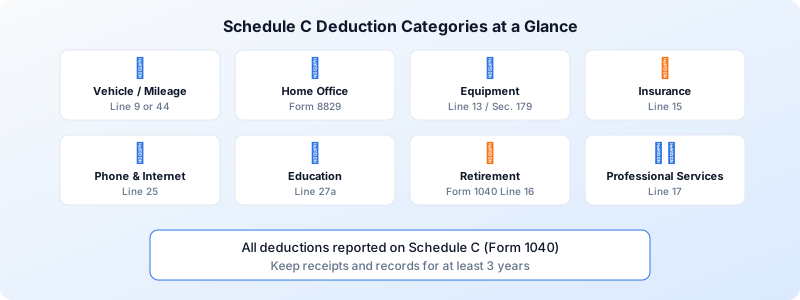
The IRS can audit your return up to three years after filing (six years if they suspect underreporting). Keep all receipts, invoices, bank statements, and mileage logs for at least three years. Digital copies are accepted.
13. Travel Expenses
When you travel overnight for business, you can deduct airfare, hotels, rental cars, taxis, and 50% of meals. Keep detailed records including dates, locations, and the business purpose of each trip.
14. Meals (50% Deductible)
Business meals with clients, prospects, or colleagues are 50% deductible. The meal must involve a business discussion, and you need to record who attended, what was discussed, and the amount spent.
15. Bank Fees and Interest
Monthly bank account fees, credit card processing fees, PayPal or Stripe fees, and interest on business loans are all deductible. If you have a dedicated business credit card, the annual fee and interest charges qualify.
How Much Can You Save in Total?
A typical freelancer driving 10,000 business miles per year with a home office might have deductions that look like this:
| Deduction | Amount |
|---|---|
| Mileage (10,000 mi) | $7,250 |
| Home office | $3,000 |
| Health insurance | $4,200 |
| Retirement (SEP-IRA) | $3,500 |
| Phone and internet | $1,500 |
| Software | $800 |
| Supplies | $400 |
| Professional services | $600 |
| Total | $21,250 |
At a 22% tax bracket plus 15.3% self-employment tax, those deductions save roughly $7,900 in taxes. Mileage alone accounts for $2,700 of that savings.
Start With the Biggest Deduction First
Mileage is the easiest high-value deduction to claim because it requires no receipts, just an accurate log. If you are not already tracking your business miles, that is the first thing to fix.
For a step-by-step walkthrough, read our guide on how to claim mileage on taxes when self-employed. And to make tracking effortless, download Tripbook on the App Store and let GPS record every business mile automatically.