The shift to remote and hybrid work has created new questions about mileage deductions. If you work from home and occasionally drive to the office, a coworking space, or client sites, can you deduct those miles? The answer depends on your employment status, whether you have a qualifying home office, and the nature of the trips.
Understanding these rules can save remote workers significant money on taxes, but getting them wrong can trigger IRS problems.
The Basic Rule: Commuting vs Business Travel
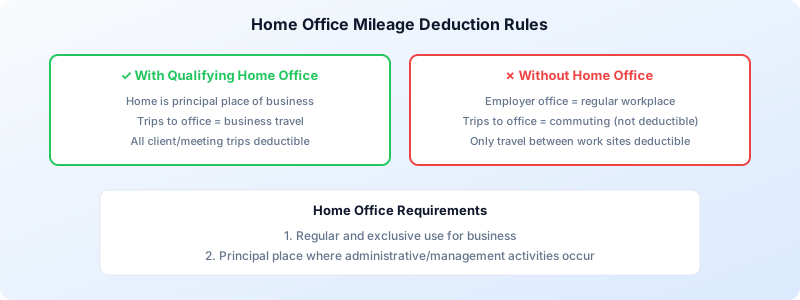
The IRS treats your daily trip from home to your regular place of work as commuting, which is never deductible. However, if your home qualifies as your principal place of business, the definition of commuting changes in your favor.
When your home office is your principal place of business, trips from home to a secondary work location are classified as business travel, not commuting. This means a remote worker who drives from a home office to the company headquarters for a meeting is making a business trip, and the mileage is deductible.
The key question is whether your home qualifies as your principal place of business under IRS rules.
Qualifying for a Home Office
The IRS has two tests for determining whether your home qualifies as your principal place of business.
Regular and exclusive use test. You must use a specific area of your home regularly and exclusively for business. A dedicated office room qualifies. Working from the kitchen table occasionally does not.
Principal place of business test. Your home must be the primary location where you conduct substantial administrative or management activities, and there is no other fixed location where you conduct these activities. For remote workers who do most of their work from home, this test is typically met.
If you are self-employed and meet both tests, your home is your principal place of business. This makes all trips from home to client sites, meetings, vendor locations, and secondary work locations deductible as business mileage.
For the full details on how the home office affects mileage, see our guide on home office mileage deductions.
W-2 Employees Who Work From Home
If you are a W-2 employee who works remotely, the mileage deduction picture is different. Under current federal tax law, W-2 employees cannot deduct unreimbursed business expenses, including mileage, on their federal income tax return. This applies regardless of whether you have a home office.
This means that even if your employer requires you to come into the office twice a week and you drive 40 miles round trip each time, you cannot deduct those miles on your federal return.
However, there are two strategies for W-2 remote employees:
Request mileage reimbursement. Ask your employer to reimburse business travel under an accountable plan. Many employers are willing to reimburse mileage for employees who work remotely and travel to the office or client sites. Under an accountable plan, the reimbursement is tax-free.
Check your state tax laws. Some states still allow unreimbursed employee expense deductions on the state return. States with such provisions include California, New York, and several others. Check our guide on state mileage reimbursement laws for details.
Self-Employed Remote Workers
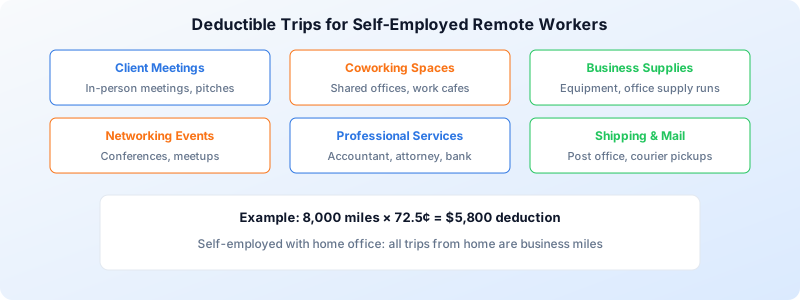
Self-employed individuals who work from home have the most flexibility. If you meet the home office requirements, every trip from your home office to a business destination is deductible.
Common deductible trips for self-employed remote workers include:
- Driving to client meetings
- Travel to a coworking space or shared office
- Trips to pick up business supplies or equipment
- Driving to networking events and conferences
- Travel to your accountant, attorney, or bank for business purposes
- Trips to the post office for business shipments
The IRS standard mileage rate for 2026 is 72.5 cents per mile. A self-employed remote worker who drives 8,000 business miles per year can claim a deduction of $5,800. Combined with other self-employed tax deductions, this meaningfully reduces your tax liability.
For a comprehensive list of write-offs, see our article on self-employed tax deductions.
Hybrid Work Arrangements
Hybrid workers who split time between home and an employer’s office face the most complex mileage situation. The rules depend on which location is considered the principal place of business.
If your employer’s office is your principal workplace and you voluntarily work from home some days, your trips to the office on in-office days are commuting and not deductible. Working from home does not change the status of the office as your regular workplace.
If your employer designates your home as your official work location and requires you to come to the office only for specific meetings or events, the analysis may differ. In this scenario, the office may be considered a secondary work location, making trips there potentially deductible. This applies primarily to self-employed workers and some statutory employees.
Temporary Work Locations
There is an important IRS exception for temporary work locations. If you travel from home to a temporary work location that you expect to use for less than one year, the trip is generally deductible regardless of the distance or your home office status. This applies even to W-2 employees, though the current suspension of unreimbursed employee deductions limits its practical value for most W-2 workers.
For self-employed workers, the temporary work location rule is valuable. A freelancer who travels to a client’s office for a three-month project can deduct the mileage as business travel rather than commuting.
Record-Keeping for Remote Worker Mileage
If you are eligible to deduct mileage as a remote worker, proper documentation is essential. The IRS requires records of the date, destination, business purpose, and miles driven for each trip.
Remote workers should also maintain documentation of their home office, including the square footage, layout, and proof that the space is used regularly and exclusively for business. This supports both the home office deduction and the mileage deduction.
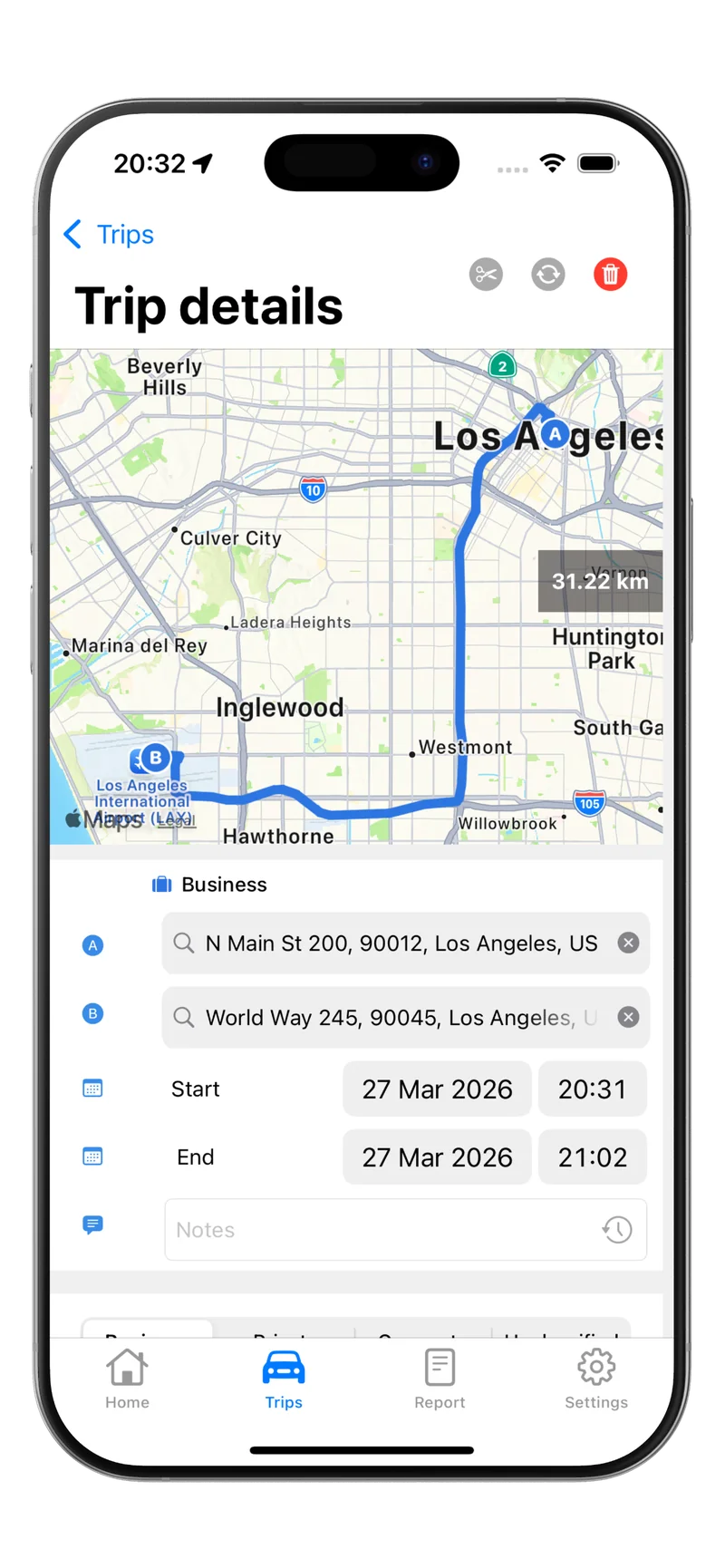
Tripbook simplifies mileage tracking for remote workers by automatically logging every trip with GPS. You can quickly classify trips as business or personal and generate reports that meet IRS requirements. For remote workers who drive to meetings, client sites, and secondary offices, automated tracking ensures every deductible mile is captured.