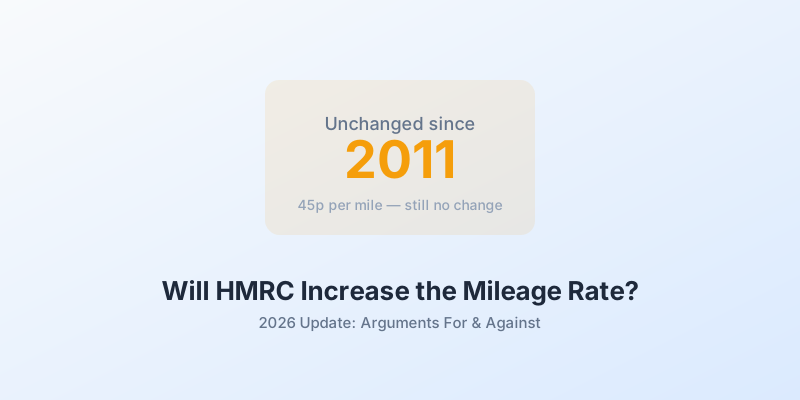
The HMRC mileage rate has been stuck at 45p per mile since April 2011. In those fifteen years, fuel prices have climbed, insurance premiums have surged, and the overall cost of running a car has risen dramatically. Yet the Approved Mileage Allowance Payment (AMAP) rate — the amount you can claim tax-free for using your own vehicle on business — has not moved by a single penny.
That freeze is now under serious political scrutiny. In March 2026, MPs debated the issue in the House of Commons after a petition calling for an HMRC mileage rate increase attracted over 41,500 signatures. This article explains what happened in Parliament, why the current rate falls short, what the Chancellor has said, and what drivers who rely on mileage claims should do right now.
The 45p Rate: Frozen Since 2011
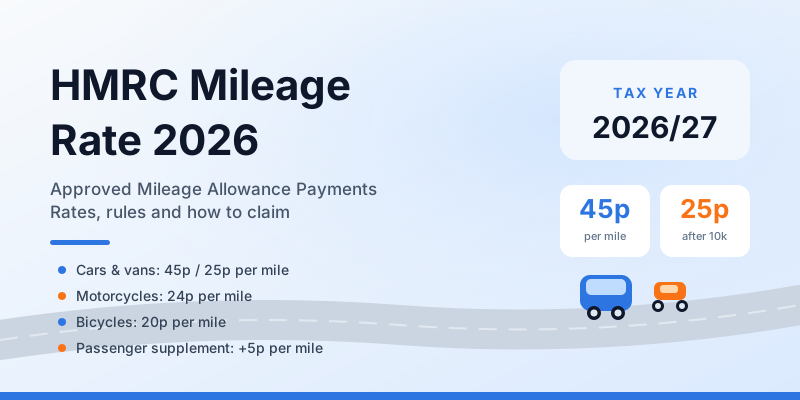
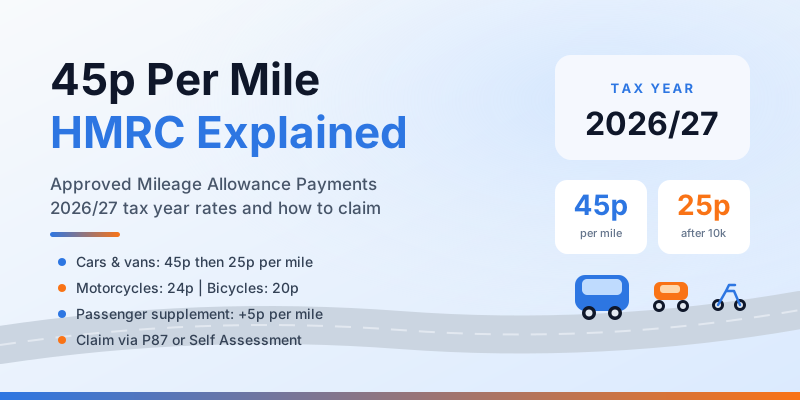
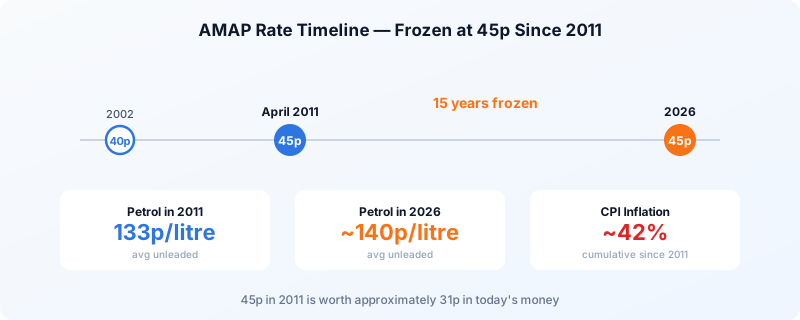
The AMAP rate was last increased in April 2011, when it rose from 40p to 45p per mile for the first 10,000 business miles (25p thereafter). At that time, the average UK petrol price was around 133p per litre, and annual car insurance premiums were considerably lower than they are today.
The rate is meant to cover all vehicle running costs in a single flat-rate figure: fuel, insurance, depreciation, servicing, road tax, and tyres. When the rate was set, 45p was a reasonable approximation of those combined costs. Fifteen years on, it no longer is.
For a full breakdown of how the 45p rate works in practice, see our guide to 45p per mile — how HMRC mileage allowance works.
What Does It Actually Cost to Run a Car Per Mile?
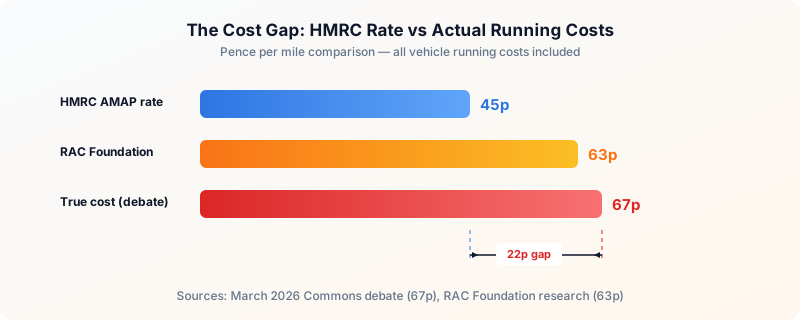
The gap between the AMAP rate and reality has been quantified by several organisations. During the March 2026 Commons debate, MPs cited the true cost of running a vehicle at approximately 67p per mile — nearly 50 per cent higher than the 45p HMRC allows.
The RAC Foundation has carried out its own analysis, calculating that a fair AMAP rate would be around 63p per mile based on actual running costs including fuel, insurance, depreciation, and maintenance. Their research found that the cost of motoring increased by over 46 per cent in the decade to March 2024 alone, while the reimbursement rate stayed exactly where it was.
Inflation tells a similar story. Cumulative CPI inflation since 2011 stands at roughly 40 to 45 per cent, which means 45p in 2011 purchasing power is equivalent to approximately 31p today. Put another way, you would need around 65p per mile now just to match the buying power the rate had when it was set.
For frontline workers the impact is tangible. Social workers, community nurses, and care workers who drive hundreds of business miles each month are effectively subsidising their employers. One case raised in Parliament involved a social worker covering 400 miles per month for work, leaving her roughly a thousand pounds per year out of pocket simply for doing her job.
The March 2026 Parliamentary Debate
On 10 March 2026, MPs debated the HMRC Approved Mileage Rates in the House of Commons. The debate was triggered by a public petition — started by Rev. Nick Ralph — which called for the mileage rate to be increased from 45p to 60p per mile and gathered more than 41,500 signatures.
Representatives from the Good Neighbours Network, the Community Transport Association, UNISON, and the Association of Taxation Technicians all contributed to the case for a rise. The core arguments made by MPs included:
- The rate no longer covers costs. At 67p per mile for actual running costs, drivers are absorbing a shortfall of over 20p on every business mile.
- Volunteers are being lost. Charities that rely on volunteer drivers — for hospital transport, community care, and other services — report that recruitment has become increasingly difficult because volunteers cannot afford to use their own vehicles at the current rate.
- Public-sector workers are hit hardest. NHS staff, social workers, and local government employees who must use personal cars for work have no choice but to absorb the difference.
The Chancellor acknowledged that motoring costs have evolved significantly since the rate was last set and stated that the Government would consider the matter at a future fiscal event. However, no specific commitment to increase the rate was made.
What Has the Government Said?
The Government’s position, restated during the debate, is that AMAP rates are not mandatory. Employers are free to reimburse at a higher rate if they choose — though any amount paid above 45p becomes taxable income for the employee. In practice, many employers simply pay the HMRC rate because it is administratively simple and tax-free.
The Chancellor has not announced an increase for the 2026/27 tax year. The Spring Budget 2026 made no reference to the AMAP rate, meaning the rate remains at 45p/25p for at least another year.
Importantly, the Chancellor did not rule out a future increase. The phrase “consider the matter at a future fiscal event” leaves the door open to an Autumn Statement announcement or a change in the 2027 Budget. But for now, no increase is confirmed.
What Could Trigger a Rate Rise?
Several factors could push the Government to act:
- Continued political pressure. The March 2026 debate demonstrated broad cross-party support for a review. If further petitions gain traction or union campaigns intensify, the political cost of inaction may grow.
- Rising motoring costs. If fuel prices, insurance premiums, or vehicle costs continue to climb, the gap between 45p and actual costs will widen further, making the freeze harder to defend.
- A formal review. The RAC Foundation and others have called for a structured, evidence-based review of the AMAP rate linked to actual motoring costs — similar to how Advisory Fuel Rates for company cars are updated quarterly.
Factors that could delay change include fiscal constraints, the growing number of electric vehicles with lower per-mile running costs, and a general reluctance to alter long-standing tax reliefs without a comprehensive review.
If an increase is announced, the earliest it would likely take effect is April 2027. For the current rates and detailed claiming rules, see our complete guide to the HMRC mileage rate for 2026/27.
What You Should Do Now
Whether the rate increases or not, the single most valuable thing you can do is claim every mile you are entitled to at the current rate. Many drivers under-claim simply because they do not keep consistent mileage records.
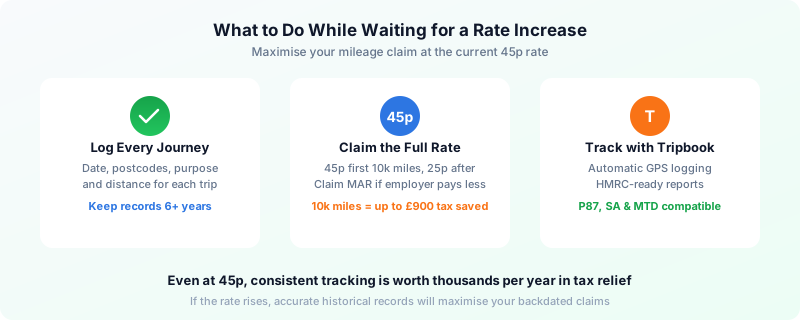
At the current 45p rate, 10,000 well-documented business miles is worth £4,500 in tax-free reimbursement. Even for employees whose employer pays nothing, a Mileage Allowance Relief claim for 10,000 miles saves £900 at the basic rate of tax or £1,800 at the higher rate.
To maximise your claim:
- Log every business journey with the date, start and end postcodes, business purpose, and distance. HMRC can request this at any time and incomplete records may lead to your claim being reduced.
- Claim the full AMAP rate. If your employer pays less than 45p, claim the shortfall via Form P87 or Self Assessment.
- Keep records for six years. HMRC requires you to retain mileage logs for at least six years from the end of the tax year they relate to.
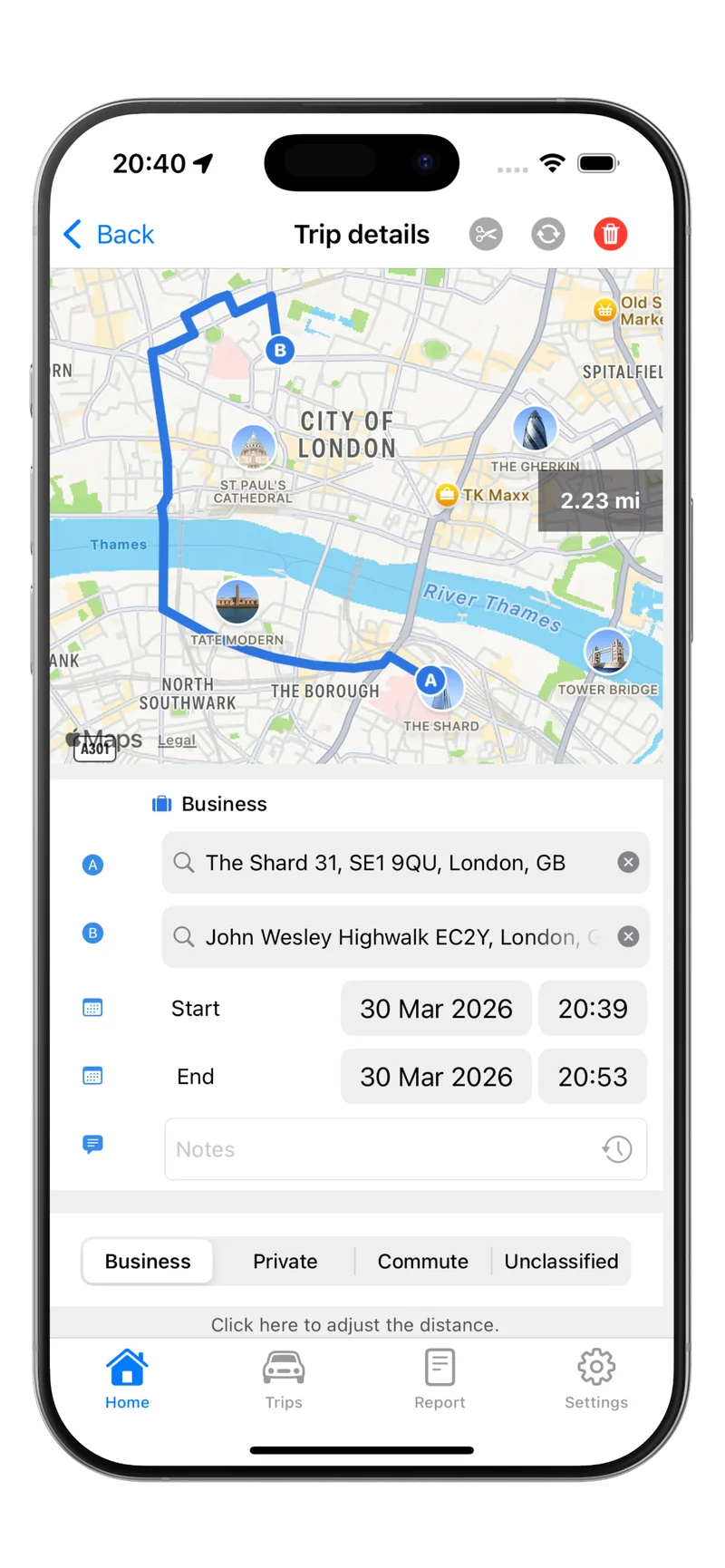
- Go digital. A mileage tracking app like Tripbook removes the burden of manual record-keeping. Every journey is logged via GPS with the route, distance, and timestamp captured automatically.
Tripbook also generates HMRC-ready reports for your P87 claim, Self Assessment return, or Making Tax Digital quarterly update — so your records are always complete and audit-ready.
Download Tripbook on the App Store to make sure every qualifying mile is recorded and ready to claim.
Summary
The HMRC mileage rate has been frozen at 45p per mile since April 2011 — over fifteen years without an increase. The real cost of running a car is estimated at 63p to 67p per mile, leaving drivers who use their own vehicles for business significantly out of pocket. The March 2026 parliamentary debate showed strong support for a review, and the Chancellor has acknowledged the issue, but no increase has been confirmed for 2026/27.
Until the rate changes, your best move is to track every business mile meticulously and claim the full amount you are entitled to. Even at 45p, the annual tax savings are substantial — and if the rate does eventually rise, having accurate historical records will put you in the strongest possible position.