Not every mile you drive for work is tax-deductible. The IRS draws a firm line between business miles and commuting miles, and getting that line wrong can cost you deductions or trigger problems in an audit. Understanding this distinction is one of the most important things any working driver can do.
This guide explains the IRS rules in plain language, covers the key exceptions, and shows you practical strategies to maximize the miles that qualify.
The basic rule: commuting is not deductible
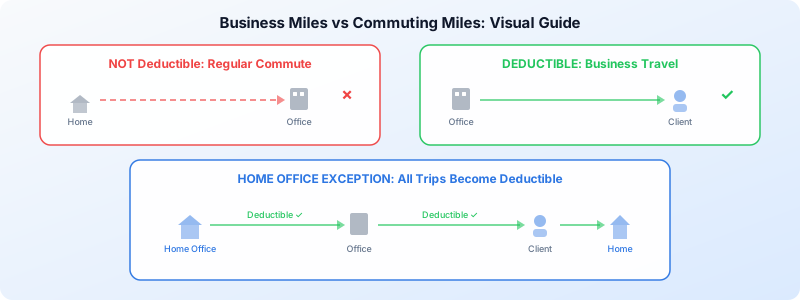
The IRS considers your daily commute, the drive from home to your regular workplace and back, to be a personal expense. It does not matter how far it is, whether you take work calls during the drive, or whether you carry tools and equipment. If you are driving between home and the same office every day, those miles are commuting miles and are not deductible.
This applies to both employees and self-employed individuals. The logic is simple: the IRS views choosing where you live as a personal decision, so the cost of getting from your home to your job is on you.
What counts as a business mile?
Business miles are trips between work locations or from your workplace to a business destination. The IRS considers these deductible:
- Trips between two work locations (e.g., your office and a client site)
- Travel to temporary work locations (job sites, client offices, project locations)
- Trips from your regular workplace to a business meeting, errand, or event
- Travel between home and a temporary work location (when you have a regular office elsewhere)
The key distinction: once you have arrived at your regular workplace, any further business travel during the day is deductible. The non-deductible part is only the first trip from home to work and the last trip from work to home.
The home office exception
This is the single most powerful rule for turning commuting miles into business miles. If you have a qualifying home office, your home becomes your principal place of business. That means every trip from home to any work-related destination is a business mile, not a commute.
To qualify for the home office deduction, you need a space in your home that is:
- Used regularly and exclusively for business (not occasionally, not shared with personal use)
- Your principal place of business OR a place where you regularly meet clients
A dedicated room works. A desk in the corner of your bedroom can work too, as long as that area is used only for business. A kitchen table where you sometimes do paperwork does not qualify.
The impact is substantial. Without a home office, your first and last trip of the day are non-deductible commutes. With one, every trip from your front door is a business mile.
The home office exception is especially valuable for self-employed professionals like real estate agents, consultants, salespeople, and contractors who spend most of their day traveling between client locations. It turns every single trip into a deductible business mile.
Temporary work locations
Even without a home office, you can deduct miles to temporary work locations. The IRS defines a temporary work location as any place where you work for less than one year. If you know from the start that the assignment will last more than a year, it is not temporary.
Examples of temporary work locations:
- A construction site for a three-month project (see our guide on mileage tracking for construction contractors for industry-specific tips)
- A client’s office where you consult one day per week
- A conference or training event
Trips from home directly to a temporary work location are deductible, even if you also have a regular office. This is a separate exception from the home office rule and applies to everyone.
The first-stop strategy
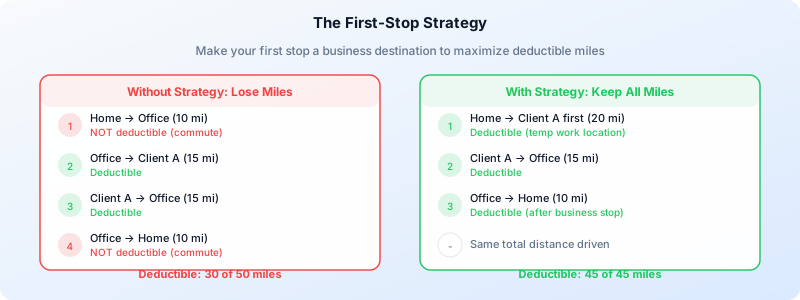
Here is a practical strategy that can significantly increase your deductible miles. The IRS allows you to deduct travel from home to a temporary work location. So if your first stop of the day is a client, a job site, or any temporary business location (rather than your regular office), that entire first trip becomes deductible.
The same logic works at the end of the day. If your last stop before heading home is a business destination other than your regular office, the drive home is also deductible.
Without the strategy: Home to office (commute, not deductible) then office to client (deductible) then office to home (commute, not deductible).
With the strategy: Home to client first (deductible) then client to office (deductible) then office to home (deductible, because you had a business stop before the office).
Same total miles driven, but more of them are deductible.
Multiple jobs and work locations
If you work at two or more regular locations for the same employer (or for different employers), travel between those locations during the workday is deductible. The trip from home to your first job and from your last job to home remain non-deductible commutes.
For example, if you work at one office in the morning and another in the afternoon, the drive between the two offices is a business mile. But the morning drive from home and the evening drive home are commutes.
Self-employed and gig worker rules
Self-employed individuals and gig workers often have an easier time classifying miles as business because they typically do not have a single fixed workplace. If you are a freelancer who works from home and visits clients throughout the day, every client trip is a business mile.
Rideshare and delivery drivers get an even broader benefit. Since their vehicle is essentially their workplace, miles driven while the app is active are generally deductible. For platform-specific guidance, check our guides on DoorDash mileage tracking and mileage deductions for Uber and Lyft drivers.
Common mistakes that cost money
Mistake 1: Deducting your regular commute. This is the most common error on Schedule C. If the IRS catches it, you owe back taxes plus penalties. Make sure you understand which trips are commutes and which are business travel.
Mistake 2: Not claiming the home office exception. Many self-employed workers qualify for a home office but do not claim it, either because they think it triggers audits (it does not, when legitimate) or because they do not realize the mileage benefit.
Mistake 3: Forgetting mid-day business trips. A quick run to the office supply store, a trip to the bank, a meeting at a coffee shop. These are all deductible if they serve a business purpose. Small trips add up over a year.
Mistake 4: Not keeping records of trip purpose. The IRS requires you to document the business purpose of every trip. A log that shows miles but no reason for the trip will not hold up. For the full list of what your log needs, see our IRS mileage log requirements guide.
Mistake 5: Guessing at year-end. Reconstructing a mileage log from memory in April is both inaccurate and non-compliant. The IRS expects contemporaneous records, meaning entries made at or near the time of each trip. If you’re already behind, read our guide on what to do if you forgot to track mileage.
Ask yourself two questions: (1) Am I going to or from my regular workplace? (2) Is this my first or last trip of the day? If both answers are yes, it is likely a commute. If either answer is no, it is probably a deductible business mile.
How to track business vs commuting miles
Accurate tracking is the foundation of claiming business miles. You need a system that captures every trip with enough detail to prove its business purpose. Your log should include:
- Date of the trip
- Starting point and destination
- Miles driven
- Business purpose (a brief note like “client meeting” or “supply run”)
Manual logging works but is easy to forget. An automatic tracker eliminates the risk of missed entries and gives you a complete picture at the end of each day. For a deeper dive on tracking methods, see our complete mileage tracking guide.
Let Tripbook handle the classification
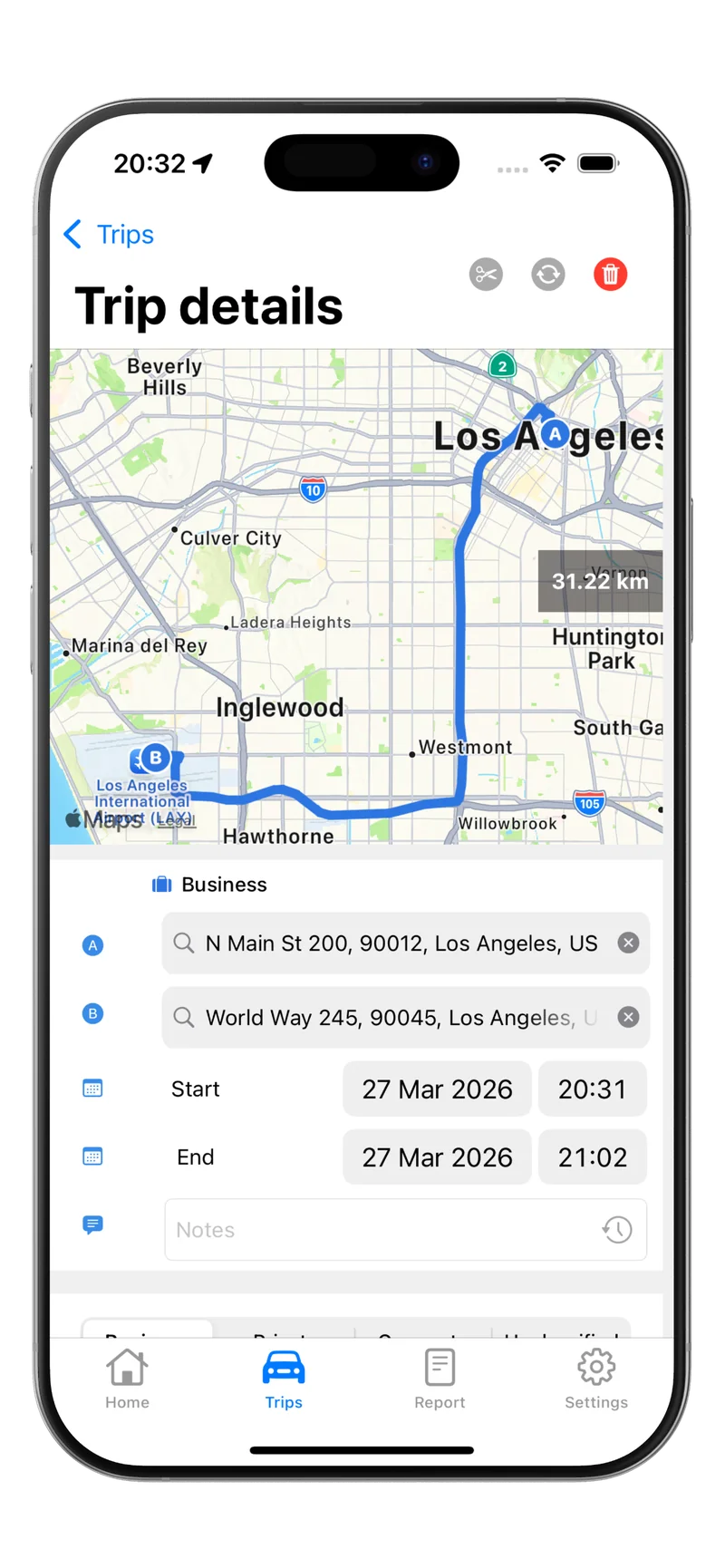
Tripbook automatically records every trip you take using GPS, running silently in the background on your iPhone. At the end of each day, open the app and swipe to classify each trip as business or personal. Business trips are tagged and included in your IRS-compliant reports. Personal trips and commutes are excluded.
When tax time arrives, export your log as a PDF, CSV, or XLS file. Every entry includes the date, distance, route, and classification. No guessing, no gaps, no stress.
Start tracking your business miles today
The difference between a commute and a business mile can be worth 70 cents. Over a full year of driving, properly classifying your trips can save you hundreds or thousands of dollars.
Download Tripbook free on the App Store and start building a mileage log that clearly separates business miles from commuting miles. Every trip matters.