As a self-employed consultant, your car is practically a mobile office. You drive to client sites, networking events, conferences, and co-working spaces. Every one of those business miles is worth 72.5 cents in tax deductions for 2026, and mileage tracking for consultants is the key to capturing every dollar.
A management consultant driving 18,000 business miles per year saves $13,050 on their tax return. An IT consultant visiting three client offices per week racks up deductions even faster. Yet many independent consultants leave thousands on the table by failing to track consistently.
What Counts as Deductible Mileage for Consultants
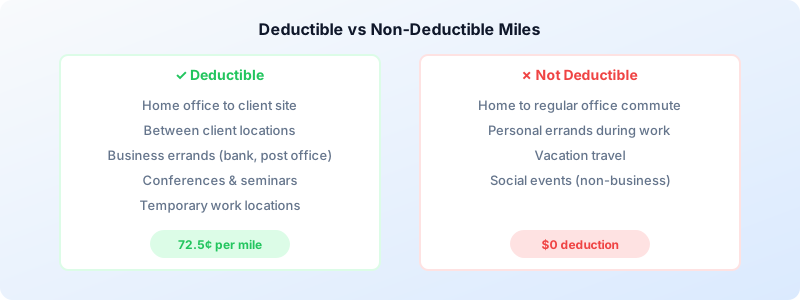
The IRS draws a clear line between business miles and commuting miles. As a consultant, your deductible trips include driving from your home office to a client site, traveling between client locations during the day, trips to the bank or office supply store for business errands, driving to professional development events and conferences, and travel to temporary work locations (projects lasting under one year).
Your daily commute from home to a regular office does not qualify. However, most consultants work from a home office, which changes the equation entirely. When your home is your principal place of business, every trip from home to a client becomes a deductible business mile.
This home office advantage is one of the biggest tax benefits consultants have. If you have not claimed a home office mileage deduction, you may be missing out on significant savings.
Standard Mileage Rate vs Actual Expenses
Consultants have two methods to deduct vehicle expenses on Schedule C.
Standard mileage rate. Multiply your business miles by the IRS rate (72.5 cents for 2026). This single rate covers gas, insurance, maintenance, depreciation, and all other vehicle costs. You can still deduct parking and tolls on top. This method is simpler and works well if you drive a fuel-efficient car.
Actual expense method. Track every vehicle-related cost including gas, oil changes, tires, insurance, registration, lease payments, and depreciation. Then calculate the business-use percentage based on miles. If you drove 20,000 total miles and 15,000 were for business, you deduct 75 percent of your actual costs.
For most consultants, the standard mileage rate produces a larger deduction unless you drive a high-cost vehicle. Read our standard mileage rate vs actual expenses comparison for a detailed breakdown.
Important rule: if you want to use the standard mileage rate, you must choose it in the first year you use the car for business. Switching to actual expenses later is allowed, but going the other direction is not.
How to Track Your Consulting Miles
The IRS requires contemporaneous records, meaning you need to log trips at or near the time they happen. A mileage log must include the date of the trip, starting location and destination, business purpose (such as “client strategy session with Acme Corp”), and miles driven.
Keeping a paper log is technically acceptable, but most consultants find it unsustainable. You are busy enough without scribbling odometer readings between meetings.
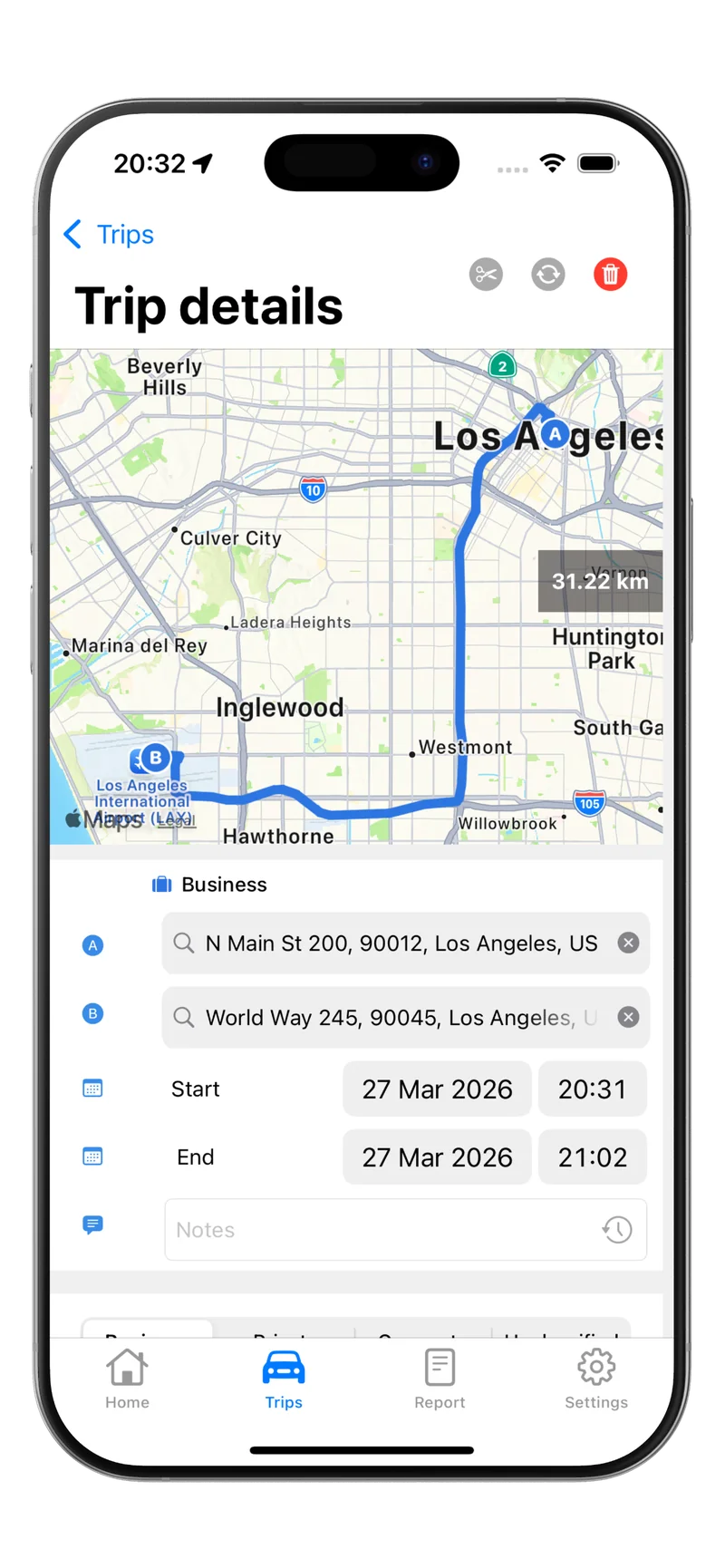
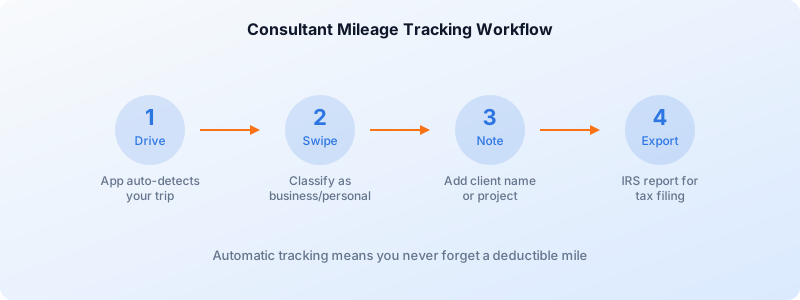
Tripbook automates the entire process. It uses GPS and motion detection to record trips in the background, so you never forget to log a drive. After each trip, a quick swipe classifies it as business or personal. At tax time, you export an IRS-compliant report and hand it to your accountant.
Billing Clients for Travel Mileage
Many consultants charge clients for travel in addition to their hourly or project rate. There are several common approaches.
Pass-through at the IRS rate. Bill the client 72.5 cents per mile for travel to their site. This is the most straightforward method and is easy for clients to understand.
Flat travel fee. Charge a fixed amount per visit (for example, $50 for trips over 30 miles). This simplifies invoicing but requires you to set the fee at a level that covers actual costs.
Bundled into your rate. Some consultants build travel costs into their hourly rate. This works when most clients are within a similar radius.
Regardless of how you bill clients, track your miles separately for tax purposes. The mileage deduction applies to your tax return even if the client reimburses you, as long as you report the reimbursement as income. For more on this, see our guide on how to charge mileage to customers.
Quarterly Tax Implications
As a self-employed consultant, you likely make quarterly estimated tax payments. Your mileage deduction directly reduces your quarterly tax liability.
Here is a practical example. Say you earn $120,000 in consulting revenue and drive 18,000 business miles. Your mileage deduction is $13,050 (18,000 times $0.725). That reduces your taxable self-employment income to $106,950. At a combined federal and self-employment tax rate of roughly 30 percent, that deduction saves you approximately $3,915 in taxes.
Update your mileage totals each quarter to calculate accurate estimated payments. Overpaying estimates ties up cash you could use in your business. Underpaying leads to penalties. Tracking miles in real time keeps your estimates accurate.
Common Mistakes Consultants Make
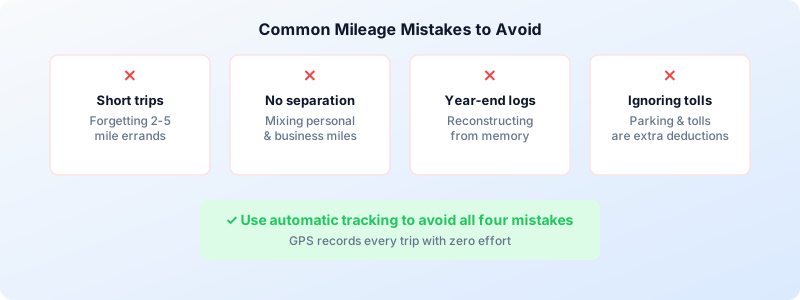
Forgetting short trips. A quick drive to the post office or office supply store still counts as a business mile. These 2 to 5 mile trips add up to hundreds of deductible miles over a year.
Not separating personal and business miles. The IRS can disallow your entire mileage deduction if you cannot prove which miles were for business. Use a tracking app that clearly separates the two categories.
Waiting until year-end to reconstruct a log. The IRS specifically requires contemporaneous records. A spreadsheet built from memory in April does not qualify and can be challenged in an audit.
Ignoring parking and tolls. These are deductible on top of the standard mileage rate. Track them alongside your miles.
Start Tracking Every Consulting Mile
The mileage deduction is one of the largest write-offs available to self-employed consultants. At 72.5 cents per mile, even 10,000 annual business miles puts $7,250 back in your pocket. The only requirement is accurate, timely records.
Download Tripbook and start capturing every client visit, errand, and business trip automatically.