Pest control technicians spend more time driving between jobs than almost any other trade. A typical route day might include six to ten service calls spread across a metro area, with detours to the supply house or office in between. Mileage tracking for pest control workers turns all that windshield time into a legitimate tax deduction worth thousands per year.
At the 2026 IRS standard mileage rate of 72.5 cents per mile, a pest control tech driving 22,000 business miles annually earns a deduction of $15,950. That is a significant reduction in taxable income whether you own the business, work as an independent contractor, or use a personal vehicle for a pest control company.
Which Miles Qualify as Business Mileage
The rules depend on your employment status, but the basic IRS principles are the same.
Deductible business miles include driving from your first job site to subsequent stops throughout the day, travel between service calls in different neighborhoods or cities, trips to pick up chemicals, equipment, or supplies, driving to training sessions or licensing renewal courses, and travel to the office for required meetings.
Non-deductible miles include your regular commute from home to the shop or first job site (with one major exception) and personal detours during the workday.
The exception: if you drive a company-assigned route vehicle home and your home is your dispatch point, the first drive from home to a job site may qualify as business mileage rather than commuting. This depends on your employer’s policy and whether your home functions as a base of operations.
Self-Employed vs W-2 Pest Control Workers
Your tax situation differs dramatically based on your employment classification.
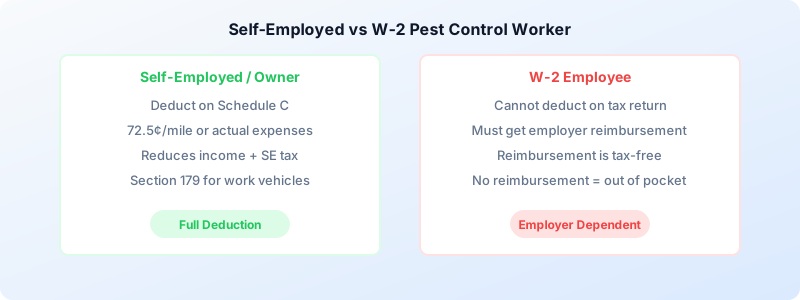
Self-employed pest control operators (business owners and independent contractors) deduct mileage on Schedule C of Form 1040. You choose between the standard mileage rate of 72.5 cents per mile or the actual expense method. The deduction reduces both your income tax and self-employment tax.
W-2 employees cannot deduct unreimbursed business mileage on their federal tax return. The elimination of this deduction was made permanent by the One Big Beautiful Bill Act in 2025. Your only option is employer reimbursement.
If your employer reimburses mileage, the payment is tax-free when made under an accountable plan at or below the IRS rate. Reimbursements above the IRS rate are taxable as income.
Tracking Miles on Multi-Stop Routes
Pest control routes are the perfect example of high-frequency, short-distance trips that add up quickly. Here is a real-world example.
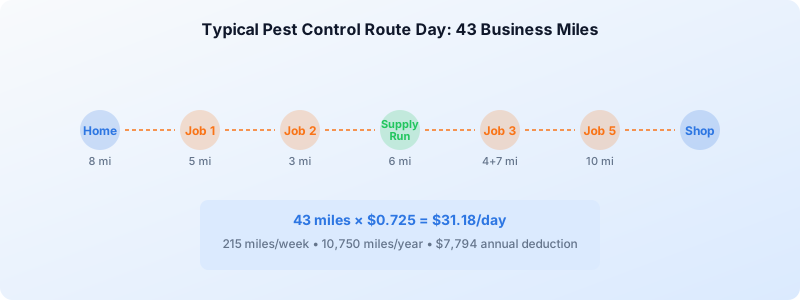
A typical day might look like this: home to first job (8 miles), first job to second job (5 miles), second job to supply pickup (3 miles), supply store to third job (6 miles), third job to fourth job (4 miles), fourth job to fifth job (7 miles), fifth job back to the shop (10 miles). Total business miles for the day: 43 miles, worth $31.18 in deductions.
Over five days, that is 215 miles. Over 50 working weeks, it is 10,750 miles and a $7,794 deduction. Add in longer drives for rural accounts or emergency calls and the total climbs higher.
The problem with multi-stop routes is that manually logging each segment is impractical. By the third service call, most techs have forgotten to write down the mileage from the first two stops.
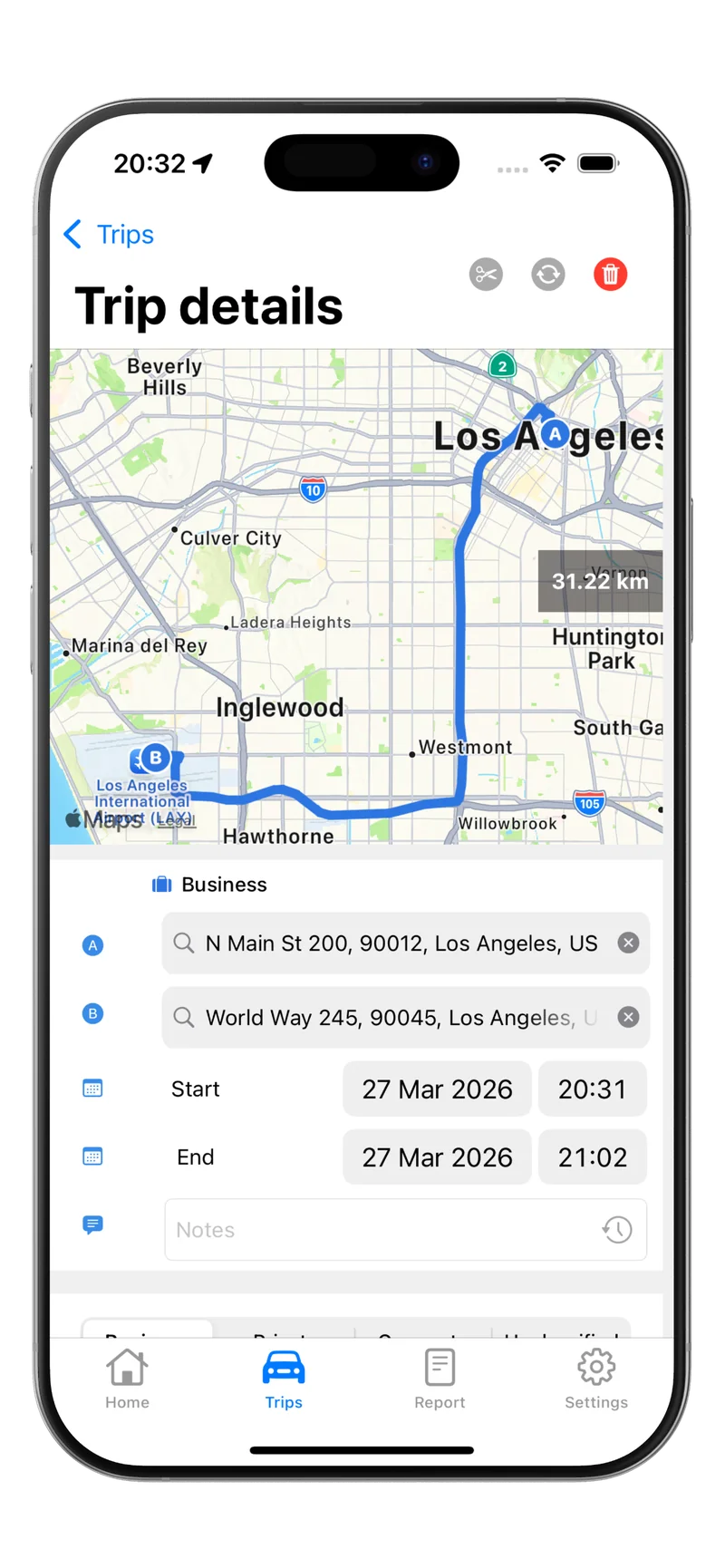
Tripbook solves this with automatic trip detection. The app records every drive segment using GPS and motion sensors. At the end of the day, you review your trips and swipe to classify each one as business or personal.
Deducting Your Work Vehicle
If you own the pest control business and use a dedicated work truck or van, you have additional deduction options beyond mileage.
Section 179 deduction. You can deduct the full purchase price of a qualifying work vehicle in the year you buy it, up to the IRS limit. For trucks and vans over 6,000 pounds gross vehicle weight, the limit is significantly higher than for passenger cars.
Standard mileage rate limitations. If you use the standard mileage rate, you cannot separately deduct vehicle costs like gas, maintenance, or insurance. Those are built into the per-mile rate. However, you can still deduct parking, tolls, and auto loan interest.
Actual expense method. If your work vehicle has high operating costs (diesel trucks, older vehicles needing frequent repairs), the actual expense method may produce a larger deduction. Track every receipt and calculate the business-use percentage based on your mileage log. Our vehicle expense deduction guide for the self-employed covers this in detail.
Equipment and Supply Runs Count Too
Pest control work involves frequent trips to pick up chemicals, parts, and safety equipment. These supply runs are fully deductible business miles.
Keep a note on each supply trip identifying what you picked up and for which job. This level of documentation strengthens your mileage log if the IRS ever asks questions.
Trips to the post office to mail invoices, to the bank for deposits, and to the accountant’s office also qualify as business mileage. These short errands are easy to forget but add 500 to 1,000 deductible miles per year for most pest control operators.
Avoiding Common Tracking Mistakes
Claiming your regular commute. If you drive from home to the shop every morning, that is personal commuting regardless of how far it is. Only miles from the shop (or home office) to job sites qualify.
Mixing personal and business miles. If you stop for groceries on the way to a service call, you need to separate the personal detour from the business route. Automatic GPS tracking makes this separation straightforward.
Failing to track during busy seasons. Spring and summer are peak pest control months. That is when you drive the most and when skipping the log hurts the most. Set up automatic tracking before the season starts.
Not keeping backup records. Digital mileage logs are excellent, but export a copy monthly and store it separately. A lost or broken phone should not wipe out your entire year of mileage records.
Take Control of Your Mileage Deduction
Pest control is a high-mileage profession, and every untracked mile is money you will never get back. Whether you own the business or work as an independent tech, consistent mileage tracking for pest control workers is one of the simplest ways to reduce your tax bill.
Download Tripbook and start capturing every service call, supply run, and route mile automatically.