If you use your car for work as a self-employed person, the vehicle expense deduction for self-employed filers is one of the most substantial tax breaks available to you. Done right, it can reduce your taxable income by tens of thousands of dollars a year. Done wrong — or not at all — you’re leaving real money on the table. This guide explains both methods, how to choose between them, and exactly what records you need to keep.
Two Methods, One Choice
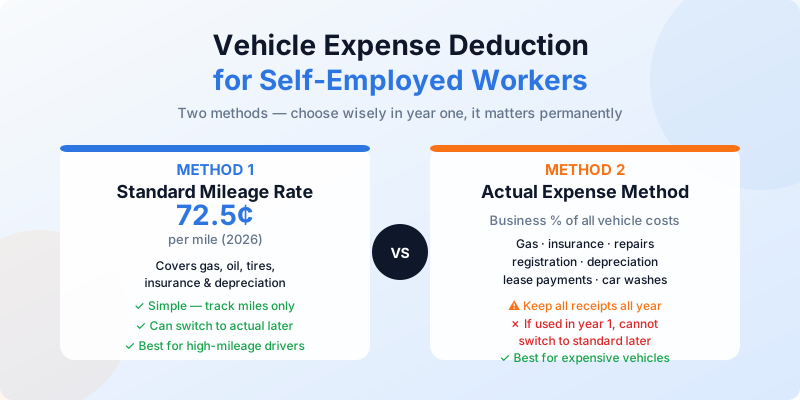
The IRS gives self-employed taxpayers two ways to deduct vehicle costs on Schedule C (Line 9: Car and Truck Expenses):
-
Standard mileage rate: You multiply your business miles by a fixed rate. For 2026, that rate is 72.5 cents per mile. The rate covers everything — gas, oil changes, tires, insurance, depreciation — all in one simple number.
-
Actual expense method: You add up every dollar you spent on your vehicle during the year, then multiply by your business-use percentage. Covered expenses include gas, insurance, repairs, registration fees, depreciation (or lease payments if you lease), car washes, and parking fees.
You pick one method per vehicle per year. And the choice you make in year one has permanent consequences — more on that in a moment.
Standard Mileage Rate: Simple and Often Superior
The standard mileage rate works by tracking one number: miles. Every business mile driven in 2026 earns you a 72.5-cent deduction, full stop. You don’t need fuel receipts, repair invoices, or insurance statements. A mileage log alone is sufficient.
At scale, the math is compelling:
| Annual Business Miles | Standard Rate Deduction (2026) |
|---|---|
| 10,000 | $7,250 |
| 15,000 | $10,875 |
| 20,000 | $14,500 |
| 30,000 | $21,750 |
The standard rate tends to win for high-mileage drivers because the rate is calculated to cover the full cost of operating an average vehicle, including depreciation. If you drive 25,000 business miles in an older car with low insurance costs, the 72.5-cent rate will likely exceed your actual per-mile costs.
One more advantage: if you start with the standard mileage method in your vehicle’s first year of business use, you can switch to the actual expense method in a future year. The flexibility runs one direction only.
Actual Expense Method: Powerful for the Right Vehicle
The actual expense method adds up every legitimate vehicle cost for the year:
- Gas and oil
- Insurance premiums
- Repairs and maintenance
- Tires
- Registration and licensing fees
- Depreciation (calculated under MACRS or Section 179)
- Lease payments (if leasing instead of owning)
- Car washes (for vehicles where cleanliness is a business requirement)
Once you have the total annual cost, you multiply it by your business-use percentage to get your deduction.
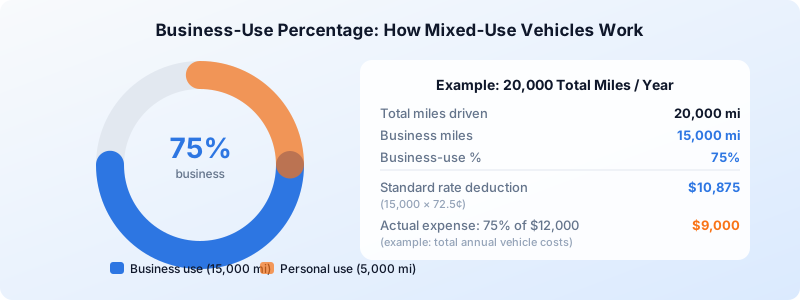
Business-use percentage = (business miles ÷ total miles) × 100
If you drove 20,000 miles total and 15,000 were for business, your business-use percentage is 75%. If your total vehicle costs for the year were $12,000, your deduction is $9,000.
Choosing the Right Method
The question most self-employed workers face is: which method produces the larger deduction? The honest answer is that you need to run both calculations for your specific situation. That said, some patterns hold reliably.
Standard mileage usually wins when:
- You drive high annual mileage (20,000+ miles for work)
- You drive an older vehicle with lower market value (less depreciation to claim)
- Your insurance costs are modest
- You want simplicity and flexibility to switch methods later
Actual expenses often win when:
- You have a new or expensive vehicle (higher depreciation = larger actual cost)
- You carry expensive commercial or rideshare insurance
- Your vehicle requires frequent repairs
- Your business-use percentage is very high (80%+)
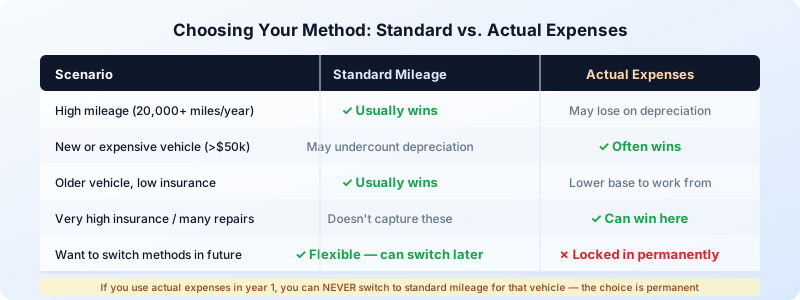
If you’re unsure, calculate both methods for your first full year and see which produces the larger number. Just remember: if actual expenses come out ahead and you use that method in year one, that decision is permanent for that vehicle.
Mixed-Use Vehicles: The Business-Use Percentage
Most self-employed people use the same vehicle for both business and personal driving. The IRS knows this and requires you to calculate your business-use percentage accurately. You don’t get to deduct 100% of your car costs unless you can demonstrate 100% business use — which is rare and difficult to support.
The calculation is simple: track your total miles driven for the year and your business miles separately. Every annual mileage deduction starts here, whether you’re using the standard rate or the actual expense method.
Records You Need for Each Method
For the standard mileage rate, your minimum requirement is a mileage log containing:
- Date of each trip
- Starting and ending addresses
- Business purpose
- Miles driven
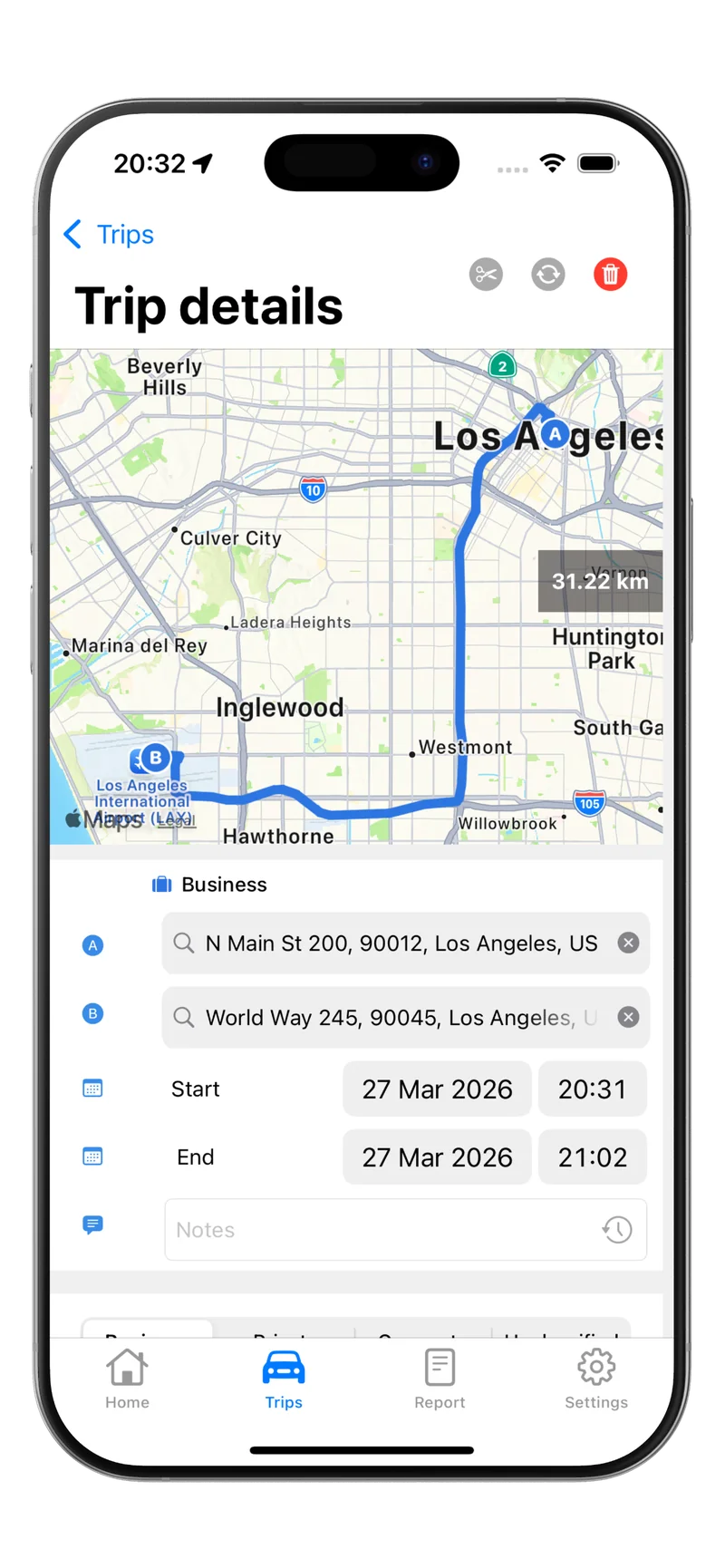
Contemporaneous logs — recorded at or near the time of each trip — are far more defensible than anything reconstructed later. Using a tracking app like Tripbook means every trip is GPS-verified and timestamped automatically, which addresses the IRS’s biggest concern about mileage logs: were these miles actually driven?
For the actual expense method, you need everything above plus:
- Receipts for every gas purchase
- Receipts or invoices for all repairs and maintenance
- Insurance premium statements
- Registration and licensing paperwork
- Depreciation worksheets (or lease agreement if leasing)
- Records of your total annual mileage (odometer readings at start and end of year)
The recordkeeping burden for actual expenses is substantially higher. You need to maintain a folder — physical or digital — of every vehicle-related receipt throughout the entire year. Missing a few months of gas receipts can meaningfully reduce your deduction.
Where to Claim It on Your Tax Return
Self-employed filers report vehicle expenses on Schedule C, Part II, Line 9 (Car and Truck Expenses). If you use the standard mileage rate, you’ll also complete Part IV of Schedule C, which asks for total miles, business miles, commuting miles, and other miles for the year. This is the IRS’s built-in check on mileage deductions.
If you use the actual expense method, you’ll still need total and business mileage figures for the business-use percentage calculation, and you may need to complete Form 4562 for depreciation.
For a broader look at what else you can deduct as a self-employed person, see our guide to the self-employed tax deductions list.
A Note on Home Office and Mileage
If you qualify for a home office deduction, the rules around commuting change. When your home is your principal place of business, travel from your home to a client location or job site is generally deductible — because you’re traveling from one business location to another, not commuting. This can substantially increase your deductible business miles if you work from home regularly.
The Bottom Line
The vehicle expense deduction for self-employed workers rewards thorough recordkeeping. Both methods — standard mileage and actual expenses — require an accurate mileage log. The standard rate is simpler and often more valuable for drivers putting significant miles on an average vehicle. The actual expense method can win for expensive or heavily used vehicles where real costs outrun the per-mile rate.
Whatever method you choose, your mileage log is non-negotiable. Download Tripbook on your iPhone to automatically track every business mile with GPS precision — and make sure you have the records to support your deduction at tax time.