
Mobile veterinarians drive thousands of miles each year traveling between farms, ranches, clinics, and emergency calls. Every one of those business miles represents a potential tax deduction, but only if you track them properly. Whether you run your own practice or work as an independent contractor, understanding how mileage deductions work can save you thousands of dollars each year.
Veterinary medicine is one of the most travel-intensive professions, particularly for large-animal vets and mobile small-animal practitioners who bring care directly to their clients.
Why Mileage Tracking Matters for Vets
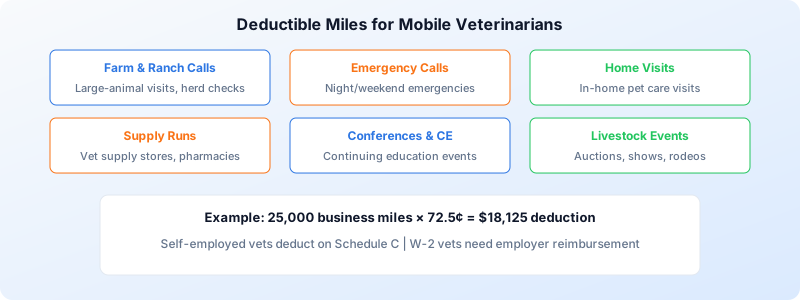
The IRS standard mileage rate for 2026 is 72.5 cents per mile. A mobile vet driving 25,000 business miles per year can claim a deduction of $18,125. That is a significant reduction in taxable income that directly lowers your federal tax bill and self-employment tax.
Without accurate records, you risk losing part or all of that deduction during an audit. The IRS requires contemporaneous mileage logs that document the date, destination, business purpose, and miles driven for each trip. Estimates and round numbers are red flags that invite scrutiny.
For detailed information on what the IRS expects, see our guide on IRS mileage log requirements.
Types of Deductible Miles for Veterinarians
Understanding which trips qualify as business miles is essential for accurate tracking. The rules vary depending on whether you are self-employed or a W-2 employee.
Self-Employed and Practice Owners
If you operate your own veterinary practice or work as an independent contractor, the following trips are deductible:
- Travel from your clinic or home office to client locations such as farms, ranches, and private residences
- Trips between client sites during the day
- Emergency calls at night or on weekends
- Travel to veterinary supply stores for business purchases
- Trips to conferences, continuing education seminars, and professional meetings
- Driving to the bank, post office, or accountant for business purposes
W-2 Employee Veterinarians
If you are employed by a veterinary hospital or clinic and receive a W-2, you generally cannot deduct mileage on your federal tax return. The Tax Cuts and Jobs Act suspended the unreimbursed employee expense deduction through 2025, and this provision has been extended. Your best option is to negotiate mileage reimbursement through your employer’s accountable plan.
Standard Mileage Rate vs Actual Expenses
Self-employed veterinarians can choose between two methods for deducting vehicle costs.
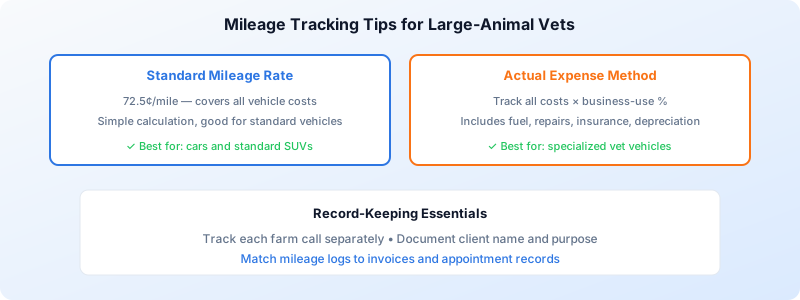
Standard mileage rate. Multiply your business miles by 72.5 cents. This covers all vehicle operating costs including fuel, oil, insurance, depreciation, and maintenance. It is the simpler method and works well for vets who drive a standard car or SUV.
Actual expense method. Track every vehicle expense including gas, insurance, repairs, tires, oil changes, registration, loan interest, and depreciation. Then multiply the total by your business-use percentage. If you drive 30,000 total miles and 25,000 are for business, your business-use percentage is 83 percent.
The actual expense method often produces a larger deduction for vets who drive specialized vehicles equipped with refrigeration units, medical supply storage, or other modifications. These additional costs are included in the actual expense calculation but not in the standard mileage rate.
For a detailed comparison of both methods, read our article on the standard mileage rate vs actual expenses.
Special Considerations for Large-Animal Vets
Large-animal and equine veterinarians often face unique mileage situations. Farm and ranch calls can involve long distances in rural areas, and it is common to visit multiple properties in a single day. Each segment of the trip should be tracked separately because the IRS may request details about individual stops.
If you carry heavy equipment in your vehicle such as portable X-ray machines, ultrasound units, or large medication inventories, you may also be able to deduct the cost of that equipment separately under Section 179 or through depreciation. The vehicle expense deduction covers the cost of operating the vehicle itself, not the specialized equipment inside it.
Travel to Livestock Auctions and Shows
Veterinarians who provide services at livestock auctions, horse shows, or rodeos can deduct the mileage driven to and from these events as long as the travel has a legitimate business purpose. Keep a record of the event name, location, date, and the business reason for attending.
Record-Keeping Best Practices
Consistent record-keeping is the difference between capturing every deductible mile and leaving money on the table. Here are the practices that work best for mobile vets.
Track every trip in real time. Do not wait until the end of the week or month to record your mileage. The IRS expects contemporaneous records, and memory fades quickly when you see dozens of clients per week.
Separate personal and business miles. If you use the same vehicle for personal errands and business calls, you must clearly distinguish between the two. Only business miles are deductible.
Document the business purpose. A log entry that says “drove 45 miles” is insufficient. Record the client name or farm, the reason for the visit, and the location. A proper entry might read: “Johnson Farm, Hwy 12 — pregnancy check on three mares — 45 miles round trip.”
Keep supporting records. Maintain appointment calendars, invoices, and client records that corroborate your mileage log. If you billed a client for a farm call on March 15, your mileage log should show a corresponding trip on that date.
Simplify Tracking with Tripbook
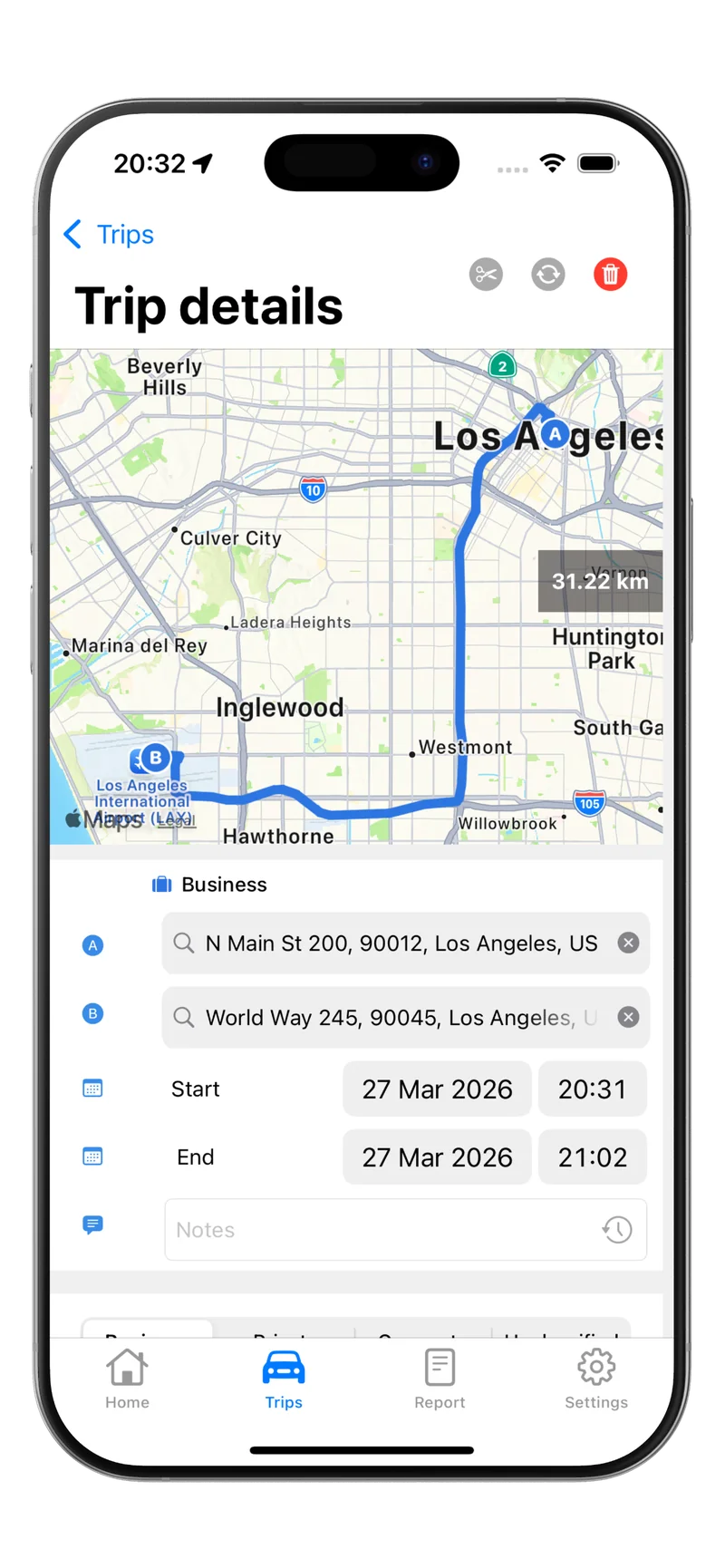
Managing mileage records across dozens of daily farm calls, clinic visits, and emergency trips is challenging with manual methods. Tripbook automatically tracks every trip using GPS, records the route and distance, and lets you categorize trips as business or personal with a single swipe. At tax time, you can generate a complete mileage report that meets IRS requirements, saving hours of record-keeping and ensuring you never miss a deductible mile.