
If you drive for Walmart Spark, mileage is your biggest tax deduction. Spark driver mileage tracking is entirely your responsibility because the Spark app does not provide an IRS-compliant log. The gap between what Walmart records and what you can legally deduct often amounts to thousands of dollars every year.
This guide explains which miles qualify, where the Spark app falls short, and how to keep records the IRS will accept.
How Spark drivers are taxed
Walmart classifies Spark drivers as independent contractors. You are not a Walmart employee. That means you file a Schedule C (Profit or Loss from Business) with your federal tax return and owe self-employment tax of 15.3% on your net profit, covering both Social Security and Medicare.
Starting in 2026, Walmart is only required to send you a 1099-NEC if you earned $2,000 or more during the tax year. This higher threshold was introduced by the One Big Beautiful Bill Act (OBBBA), which permanently raised the reporting floor from $600. However, the reporting threshold only affects whether Walmart must send you a form. You must report all Spark income regardless of the amount, and you must pay self-employment tax on any net earnings of $400 or more.
Most Spark drivers should set aside 25% to 30% of their gross earnings for federal income tax and self-employment tax combined. If you also owe state income tax, budget accordingly.
Which Spark driver miles are deductible?
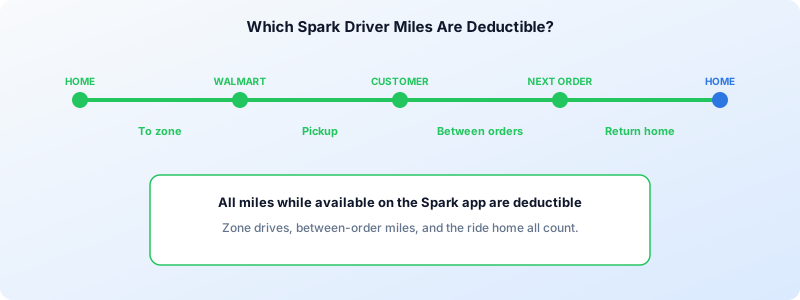
The IRS allows you to deduct any mile driven with a legitimate business purpose. For Spark delivery drivers, deductible miles include more trips than most people realize:
- Driving to your delivery zone to start accepting orders
- Traveling to the Walmart store to pick up an order
- Delivering to the customer at their address
- Driving between deliveries while waiting for the next offer
- Heading to a busy area to improve your chances of getting an order
- Returning home after your last delivery
The general rule: if you are available for deliveries on the Spark app and driving with business intent, those miles are deductible.
Home-to-zone driving: when does it count?
Your drive from home to the area where you deliver is only deductible if your home qualifies as your principal place of business. To meet this standard, you need a dedicated space at home that you use regularly and exclusively for business tasks like managing your delivery schedule, tracking expenses, and handling bookkeeping.
If your home qualifies, your first trip of the day from home to your delivery zone is a deductible business mile, and so is the drive back at the end of your shift. If your home does not qualify, those first and last trips are treated as personal commuting and cannot be deducted.
For most full-time Spark drivers who manage their delivery business from home, the home office exception applies. If you are unsure, consult a tax professional.
What the Spark app tracks vs what you need
Walmart reports your total earnings on Form 1099-NEC, but the Spark app does not generate a detailed mileage summary. It shows order-level navigation from the store to the customer, but it does not record:
- Miles driving to the store before pickup
- Miles between completed deliveries
- Miles traveling to hotspot areas
- Your trip home after the last delivery
- Odometer readings, dates, or business purpose notes
Without these details, you cannot claim a mileage deduction that holds up under IRS scrutiny. Relying on Spark’s limited data alone means you will miss 30% to 50% of your deductible miles.
How much the mileage deduction is worth
In 2026, the IRS standard mileage rate is 72.5 cents per mile. That rate covers fuel, insurance, depreciation, maintenance, and all other vehicle costs in a single per-mile figure.
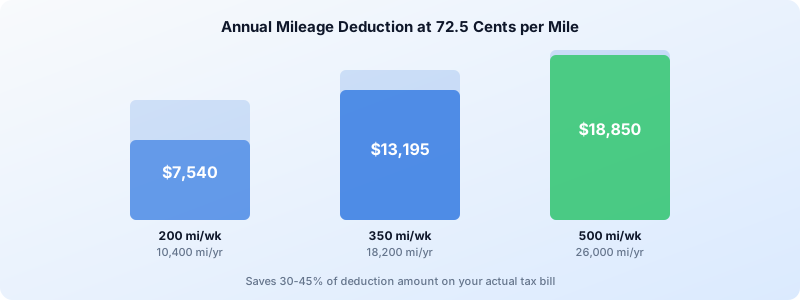
Here is what the deduction looks like at different driving levels:
| Weekly miles | Annual miles | Deduction at 72.5 cents/mile |
|---|---|---|
| 200 | 10,400 | $7,540 |
| 350 | 18,200 | $13,195 |
| 500 | 26,000 | $18,850 |
Because the deduction reduces both your income tax and your 15.3% self-employment tax, the actual cash savings range from roughly 30% to 45% of the deduction amount depending on your tax bracket. A driver logging 350 miles per week could save $4,000 to $6,000 on their annual tax bill.
The OBBBA made the TCJA individual tax provisions permanent, which means the standard mileage deduction for self-employed drivers is here to stay. There is no cap on the number of business miles you can deduct.
Standard mileage rate vs actual expenses
You have two options for claiming vehicle expenses on Schedule C:
Standard mileage rate (72.5 cents per mile in 2026): Multiply your total business miles by the rate. This method is simpler and usually gives the bigger deduction for most Spark drivers. You must choose this method in the first year you use a vehicle for business if you want the option in future years.
Actual expenses method: Track every vehicle-related cost (gas, insurance, repairs, tires, depreciation) and deduct the business-use percentage. This method can produce a larger deduction if your vehicle expenses are high, but it requires far more record-keeping.
Most Spark drivers are better off with the standard mileage rate because delivery work puts heavy mileage on the vehicle, and the per-mile rate often exceeds actual per-mile costs. For a deeper comparison, see our guide to delivery driver tax deductions.
How to build an IRS-compliant mileage log
The IRS requires five pieces of information for every business trip:
- Date of the trip
- Destination or route
- Miles driven (start and end odometer readings or GPS distance)
- Business purpose (for example, “Spark delivery from Walmart #4218 to customer”)
- Total miles for the year (business vs personal split)
Keep your log for at least three years from your filing date. If you report a loss on Schedule C, keep records for seven years.
A dedicated mileage tracking app is the most reliable method. Automatic GPS tracking captures every trip without manual entry, which eliminates the risk of forgetting drives or making estimation errors. As a Spark driver who may also deliver for other platforms, tracking across multiple gig economy apps in a single log simplifies your record-keeping significantly.
Quarterly estimated taxes
Because Walmart does not withhold taxes from your Spark earnings, you are responsible for making quarterly estimated tax payments to the IRS. The due dates are April 15, June 15, September 15, and January 15 of the following year.
Missing these deadlines triggers underpayment penalties. Use your mileage deduction when estimating quarterly profits so you do not overpay. Many drivers find it helpful to calculate their mileage deduction monthly and subtract it from their gross Spark income before estimating what they owe.
Other deductible expenses for Spark drivers
Beyond mileage, you can deduct additional business expenses on Schedule C:
- Phone and data plan (business-use percentage)
- Insulated delivery bags and cargo accessories
- Phone mount and charger used while driving
- Tolls and parking fees incurred during deliveries
- Car washes (business-use percentage)
You cannot deduct the cost of traffic tickets, clothing that is not a required uniform, or meals you buy for yourself during a shift. For a full breakdown of what qualifies, read our Uber Eats mileage tracking guide, which covers deductions that apply to all delivery platforms.
Start tracking every mile today
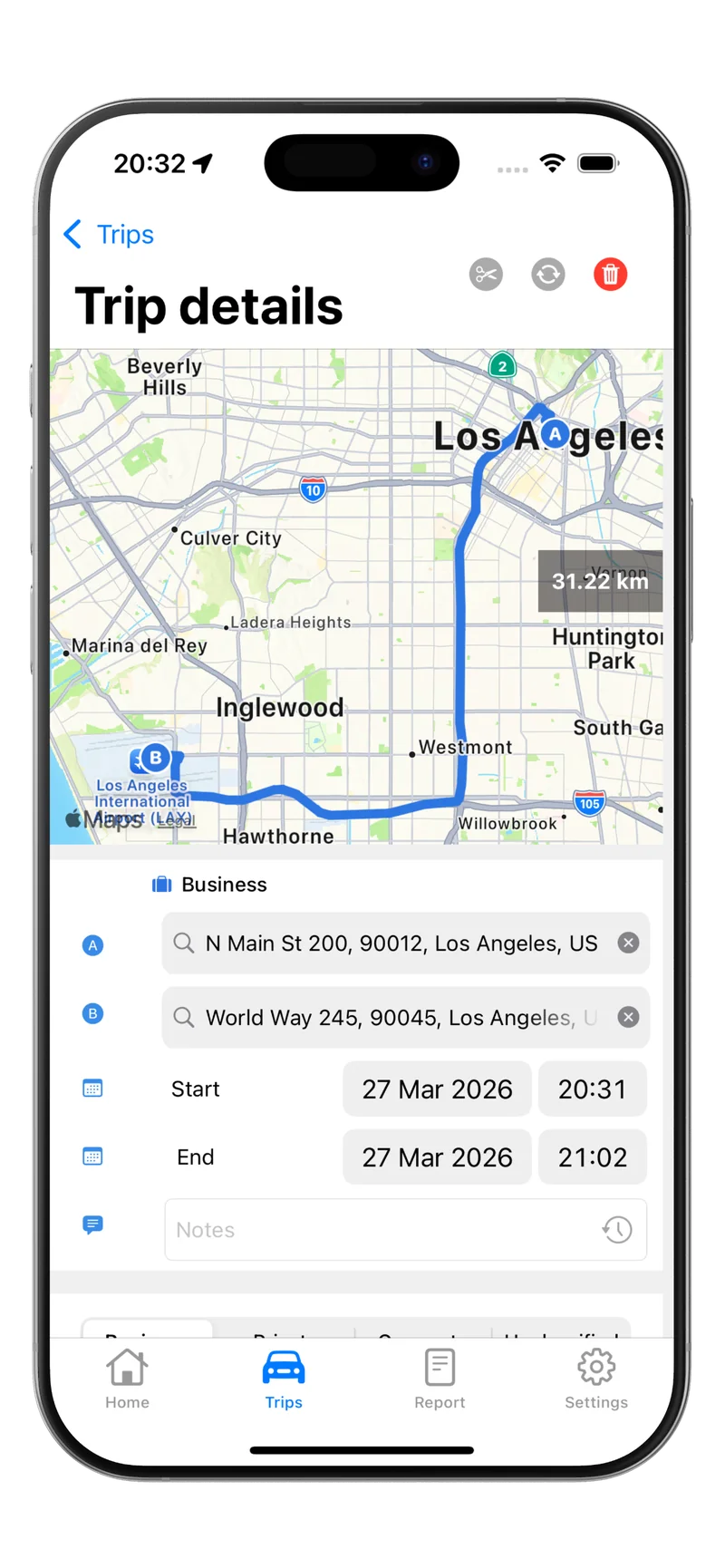
Every untracked mile is money left on the table. Spark driver mileage tracking does not have to be complicated. An automatic mileage tracker runs in the background while you deliver, logging every trip with GPS accuracy and organizing your records for tax time.
Download Tripbook to start capturing every deductible Spark mile automatically. It works alongside Spark and any other delivery apps you use, giving you a single IRS-ready log when you file your Schedule C.