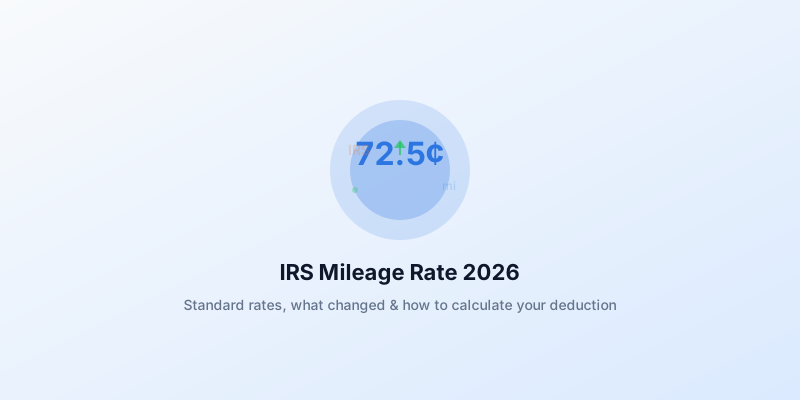
If you drive a hybrid or plug-in hybrid electric vehicle (PHEV) for business, you can claim a hybrid vehicle mileage deduction on your federal tax return. The IRS does not create separate mileage rates by fuel type. Hybrids, PHEVs, full EVs, and gas-powered cars all qualify for the same standard mileage rate of 72.5 cents per mile in 2026.
This guide covers how the deduction works, which method saves you more money, and what changed after the One Big Beautiful Bill Act (OBBBA) eliminated EV tax credits.
How the Hybrid Vehicle Mileage Deduction Works
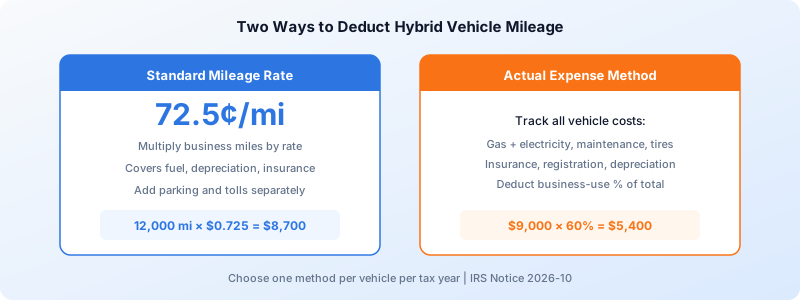
The IRS gives you two ways to deduct the business use of your hybrid vehicle: the standard mileage rate and the actual expense method. You pick one method per vehicle per tax year.
Standard Mileage Rate
Multiply your total business miles by 72.5 cents. That is your deduction. If you drive 12,000 business miles in your hybrid during 2026, your deduction is $8,700.
This rate already accounts for fuel, depreciation, insurance, maintenance, and tires. The only costs you can add on top are parking fees and tolls during business trips.
The standard mileage rate is simple and works well for most hybrid owners. Because hybrids have lower fuel costs than comparable gas-only vehicles, the flat per-mile rate often produces a larger deduction than your actual spending would justify.
Actual Expense Method
Under this method, you track every cost related to your vehicle and deduct the business-use percentage. Deductible expenses include:
- Fuel (gas and electricity for PHEVs)
- Oil changes and maintenance
- Tires
- Insurance premiums
- Registration fees
- Lease payments or depreciation
- Repairs
If your total vehicle expenses are $9,000 for the year and you use the car 60% for business, your deduction is $5,400. For a deep comparison of both approaches, see our guide on standard mileage rate vs. actual expenses.
Who Can Claim This Deduction
Not everyone qualifies. The Tax Cuts and Jobs Act (TCJA) of 2017 eliminated the unreimbursed employee expense deduction for W-2 employees, and the OBBBA made that change permanent. If you are a salaried employee, you cannot deduct business mileage on your federal return even if your employer does not reimburse you.
You can claim the hybrid vehicle mileage deduction if you are:
- Self-employed (sole proprietors, freelancers, independent contractors)
- A small business owner using a hybrid for business purposes
- An active-duty military member with qualifying moves
- A reservist or qualifying state/local government official
Self-employed taxpayers report the deduction on Schedule C. It reduces both your income tax and your self-employment tax.
Standard Mileage vs. Actual Expenses for Hybrids
Choosing the right method can mean a difference of thousands of dollars. Here is what to consider for hybrid vehicles specifically.
When Standard Mileage Wins
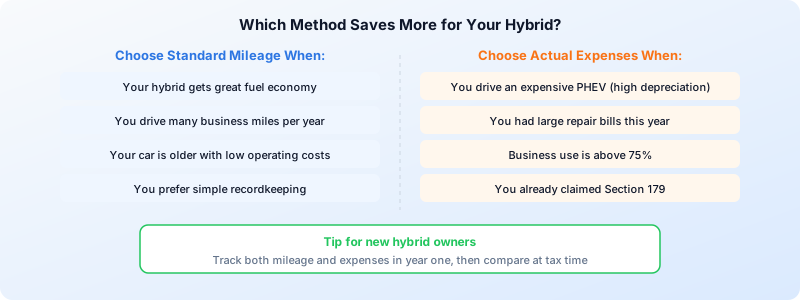
The standard mileage rate tends to produce a bigger deduction when:
- Your vehicle is fuel-efficient (most hybrids qualify here)
- You drive a high number of business miles
- Your vehicle is older and fully depreciated
- You want simple recordkeeping
Because hybrids consume less fuel per mile, your actual fuel costs are lower than what the IRS rate assumes. The 72.5-cent rate was calculated using average vehicle operating costs across all fuel types. If your hybrid costs 8 cents per mile in fuel while the average is 15 cents, you come out ahead with the standard rate.
When Actual Expenses Win
The actual expense method tends to save more when:
- You drive an expensive hybrid or PHEV with high depreciation
- You have significant repair bills in a given year
- Your business-use percentage is very high (above 75%)
- You claimed Section 179 depreciation (which locks you into actual expenses permanently)
The First-Year Rule
If you own the vehicle, you must elect the standard mileage rate in the first year you use it for business. If you choose actual expenses in year one, you can never switch to the standard rate for that vehicle. If you start with the standard rate, you can switch to actual expenses in a later year.
For leased vehicles, you must use the same method for the entire lease term.
What Changed After the OBBBA
The One Big Beautiful Bill Act, signed on July 4, 2025, made several changes that affect hybrid and PHEV owners.
EV Tax Credits Are Gone
The federal clean vehicle tax credit (Section 30D) that provided up to $7,500 for new EVs and PHEVs ended for vehicles acquired after September 30, 2025. The used EV credit (Section 25E) and the commercial clean vehicle credit (Section 45W) were also terminated on the same date. This change is permanent under the OBBBA.
If you purchased a PHEV before October 1, 2025, you may still qualify for the credit on your 2025 return. For full details on what happened to the credit, read our breakdown of the EV tax credit in 2026.
Mileage Deduction Is Unaffected
The OBBBA did not change the standard mileage rate or the actual expense method. These deductions remain fully available to qualifying taxpayers regardless of vehicle type. The 72.5-cent rate for 2026 was set by the IRS through Notice 2026-10, independent of any legislation.
New Car Loan Interest Deduction
The OBBBA introduced a new deduction of up to $10,000 per year for interest on loans used to purchase American-made vehicles. This applies to personal-use vehicles bought between January 1, 2025, and December 31, 2028. Income limits apply ($100,000 single / $200,000 married filing jointly). This is separate from, and does not replace, the business mileage deduction.
Recordkeeping Requirements
The IRS requires a contemporaneous log for every business trip. Whether you use the standard rate or actual expenses, your records must include:
- Date of each trip
- Destination and business purpose
- Miles driven (odometer readings or GPS tracking)
- Total miles for the year (to calculate business-use percentage if using actual expenses)
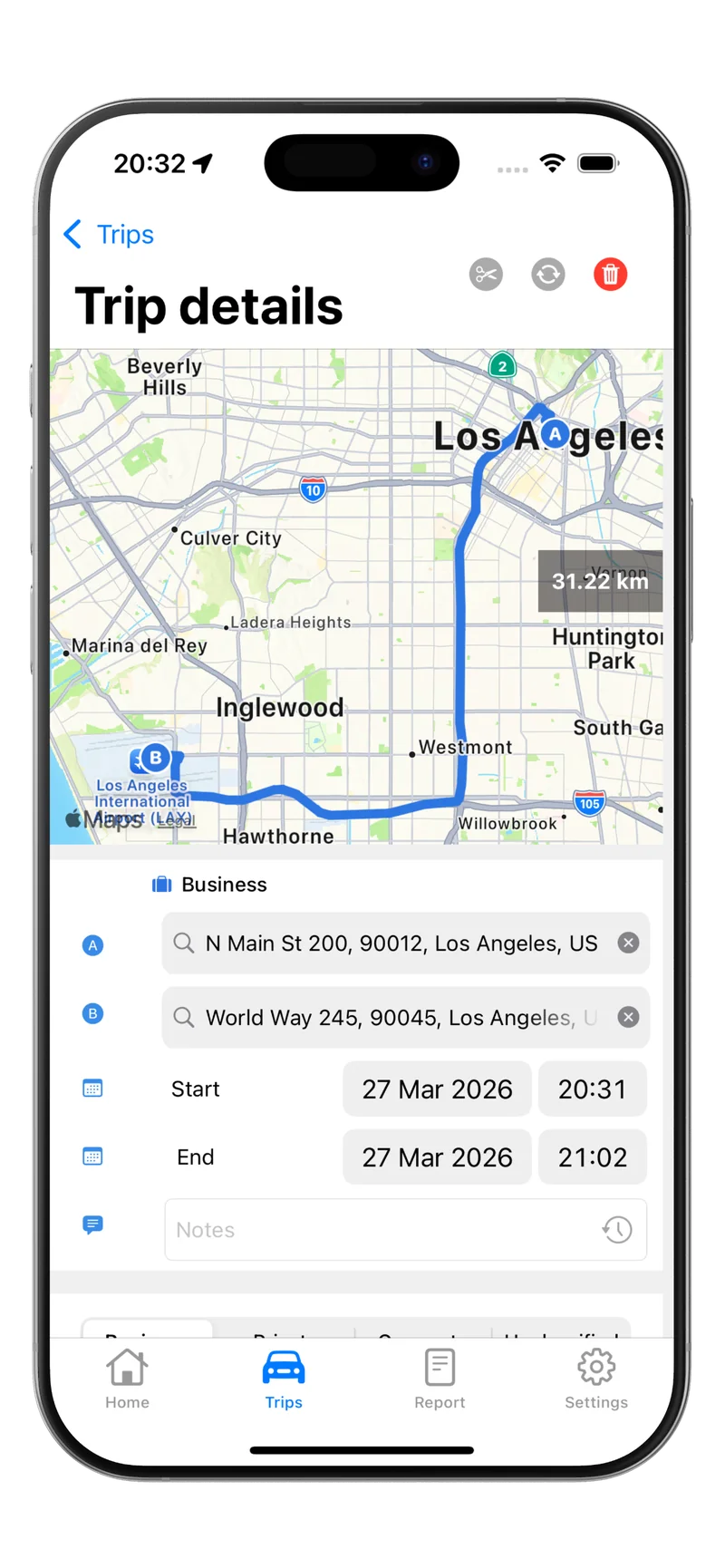
A mileage tracking app is the easiest way to maintain an IRS-compliant log. Download Tripbook to automatically record every business trip with GPS, categorize trips, and generate tax-ready reports.
Hybrid vs. Electric: Tax Treatment Differences
From a mileage deduction standpoint, there is no difference. Hybrids, PHEVs, and fully electric vehicles all use the same 72.5-cent standard mileage rate and follow the same actual expense rules.
The main distinction used to be the clean vehicle tax credit. PHEVs with a battery capacity of at least 7 kWh could qualify for the Section 30D credit. With that credit eliminated after September 30, 2025, the tax treatment of hybrids and EVs is now virtually identical for business use.
One practical difference remains: if you use the actual expense method for a PHEV, you can deduct both gasoline and electricity costs used for business driving. Make sure to track both fuel types. For more on how electric vehicles fit into business tax planning, see our guide on electric car tax deductions for business.
Quick Reference: Hybrid Vehicle Mileage Deduction 2026
| Detail | 2026 Rule |
|---|---|
| Standard mileage rate | 72.5 cents per mile |
| Applies to hybrids/PHEVs | Yes, same as all vehicle types |
| EV tax credit (Section 30D) | Ended Sept. 30, 2025 (OBBBA) |
| Who can claim | Self-employed, business owners, military |
| W-2 employees | Cannot claim (TCJA, made permanent by OBBBA) |
| First-year election | Must choose standard rate in year one to preserve option |
| Parking and tolls | Deductible separately under both methods |
Conclusion
The hybrid vehicle mileage deduction remains one of the most valuable tax benefits for self-employed drivers in 2026. At 72.5 cents per mile, the standard rate often outperforms actual expenses for fuel-efficient hybrids. The loss of the EV tax credit under the OBBBA makes accurate mileage tracking even more important since the per-mile deduction is now the primary federal tax benefit for hybrid business driving.
Start logging your trips today. Download Tripbook to track every business mile automatically and maximize your deduction at tax time.