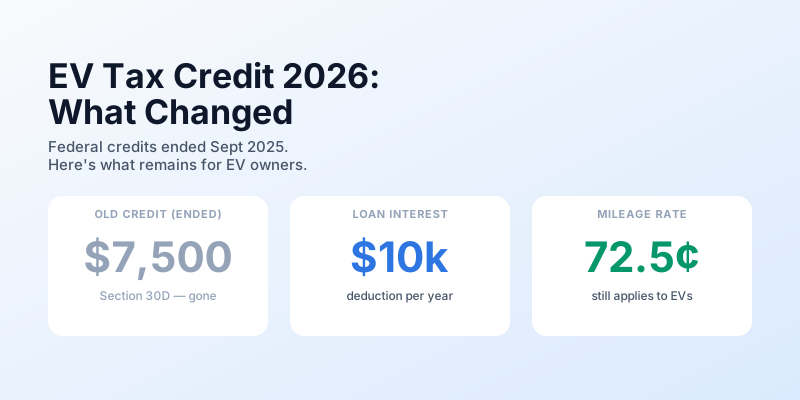
The EV tax credit 2026 landscape looks very different from what buyers expected even a year ago. The federal clean vehicle credits that once offered up to $7,500 on a new electric vehicle and $4,000 on a used one are no longer available for vehicles purchased after September 30, 2025. The One Big Beautiful Bill Act (OBBBA) repealed those credits and replaced them with a different incentive altogether.
If you are shopping for an electric vehicle, already own one, or use an EV for business, this guide covers what happened, what replaced the old credits, and the concrete steps you can take to reduce your tax bill in 2026.
What the Federal EV Tax Credit Used to Offer
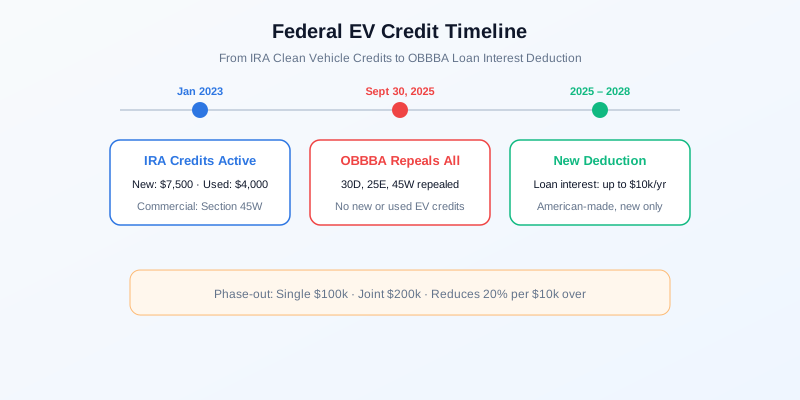
Before diving into the current rules, here is what the Inflation Reduction Act credits looked like when they were active:
New clean vehicle credit (Section 30D):
- Up to $7,500 for qualifying new EVs, plug-in hybrids, and fuel cell vehicles
- MSRP cap of $55,000 for cars and $80,000 for SUVs, vans, and trucks
- Income limits of $150,000 (single), $225,000 (head of household), or $300,000 (married filing jointly)
- Battery sourcing and North American assembly requirements
Used clean vehicle credit (Section 25E):
- Up to $4,000 or 30% of the sale price, whichever was less
- Purchase price cap of $25,000
- Lower income limits of $75,000 (single), $112,500 (head of household), $150,000 (joint)
Commercial clean vehicle credit (Section 45W):
- Available for business and leased vehicles with separate qualification rules
All three credits expired for vehicles acquired after September 30, 2025.
Why the EV Tax Credit Ended
The OBBBA, signed into law in 2025, repealed Sections 30D, 25E, and 45W of the Internal Revenue Code. The stated goal was to replace technology-specific purchase credits with a broader incentive tied to American manufacturing. Rather than giving buyers a one-time credit at the point of sale, Congress shifted to a deduction for car loan interest on American-made vehicles.
If you acquired your vehicle on or before September 30, 2025, you may still be eligible. The credit is claimed based on the date the vehicle was placed in service, and a binding written contract plus deposit made before the deadline can preserve eligibility even if you took delivery later.
What Replaced It: The Car Loan Interest Deduction
The OBBBA introduced a new above-the-line deduction for interest paid on auto loans for American-made vehicles. Here is how it works:
- Deduction amount: Up to $10,000 per year in qualifying car loan interest
- Eligible vehicles: New, American-made vehicles purchased after December 31, 2024
- Loan origination window: January 1, 2025, through December 31, 2028
- Income phase-out: Begins at $100,000 MAGI (single) or $200,000 (married filing jointly), reducing by 20% for every $10,000 above the threshold
- Not available for: Used vehicles, leases, or vehicles not manufactured in the United States
This deduction is not EV-specific. It applies to any qualifying American-made vehicle regardless of fuel type. If you finance an American-made EV, you qualify. If you finance an American-made gasoline truck, you also qualify.
The EV Charger Credit Is Still Available (For Now)
One federal incentive that survived the OBBBA is the Alternative Fuel Vehicle Refueling Property Credit under Section 30C. If you install a home EV charging station, you can claim 30% of hardware and installation costs, up to $1,000 for personal use.
This credit remains active through June 30, 2026, but eligibility is limited to installations in qualifying census tracts. Check IRS guidance or consult a tax professional to confirm your location qualifies.
How EV Owners Can Still Save in 2026
The end of the purchase credit does not mean the end of EV tax savings. Here are the strategies that remain available:
1. Claim the Standard Mileage Rate on Business Miles
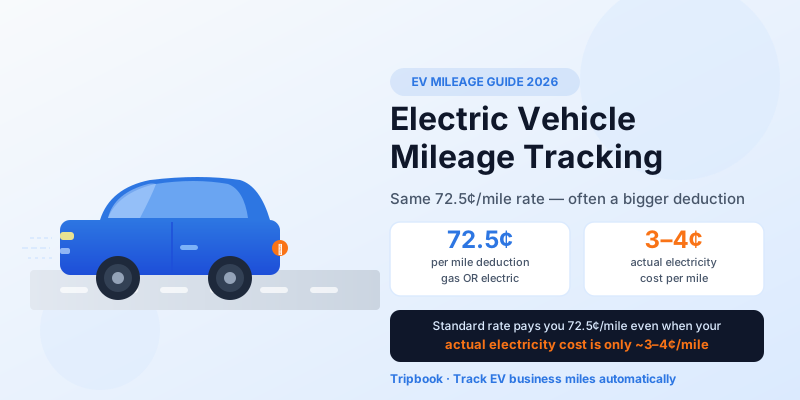
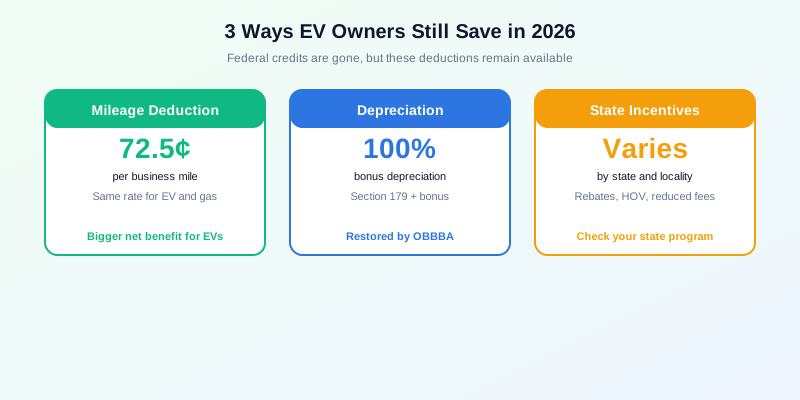
If you use your EV for business, the IRS standard mileage rate for 2026 is 72.5 cents per mile. This rate applies equally to electric and gasoline vehicles, and because EVs cost far less per mile to operate, the standard rate typically produces a larger deduction than tracking actual expenses.
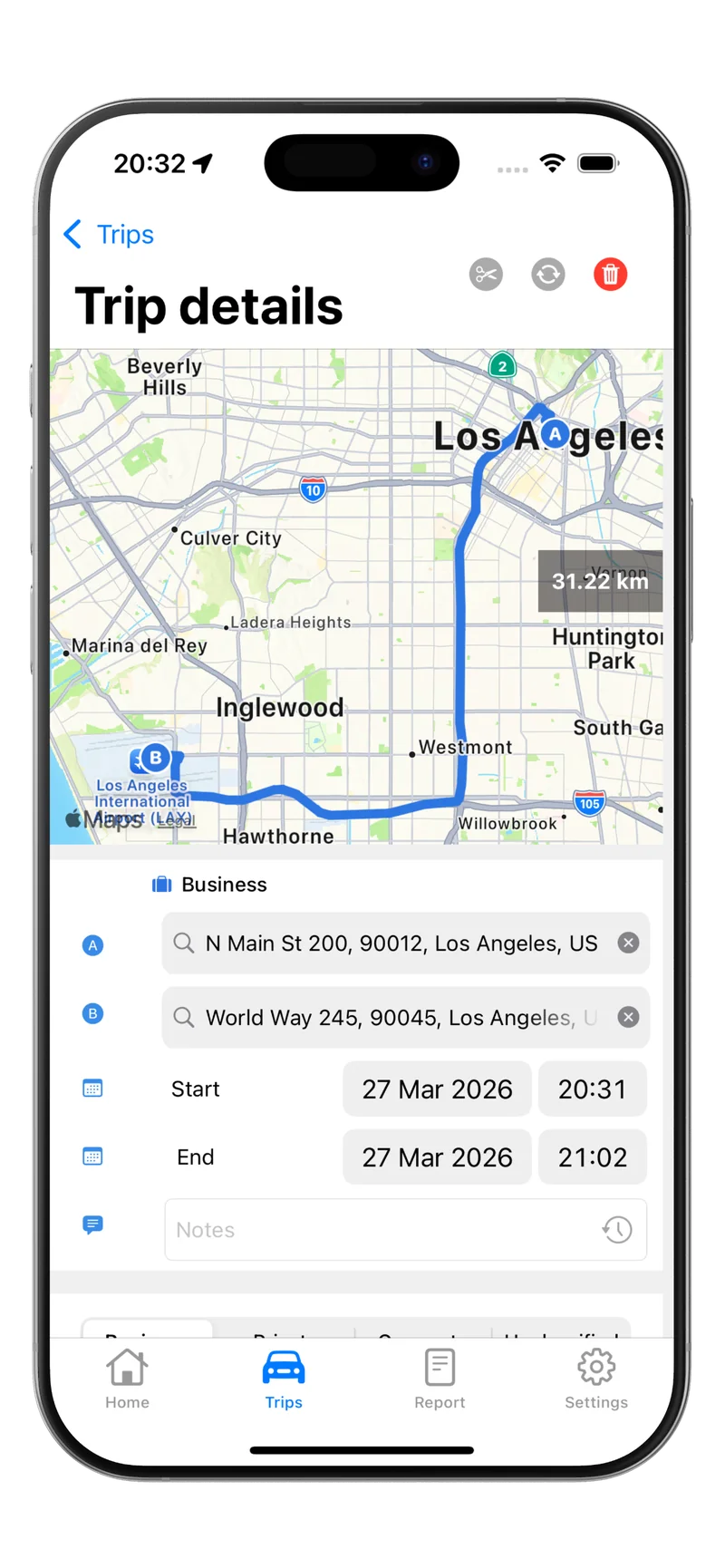
Track every business mile with an app like Tripbook to make sure nothing falls through the cracks. Accurate records are essential if you are ever audited. Learn more in our guide to electric vehicle mileage tracking.
2. Choose the Right Deduction Method
EV owners have the same two options as any business driver: the standard mileage rate or the actual expense method. For most EV drivers, the standard rate wins because electricity costs roughly 3 to 4 cents per mile compared to 10 to 15 cents for gasoline — the standard rate pays the same regardless. Our detailed comparison of the standard mileage rate vs actual expenses walks through the math.
3. Use Section 179 and Bonus Depreciation
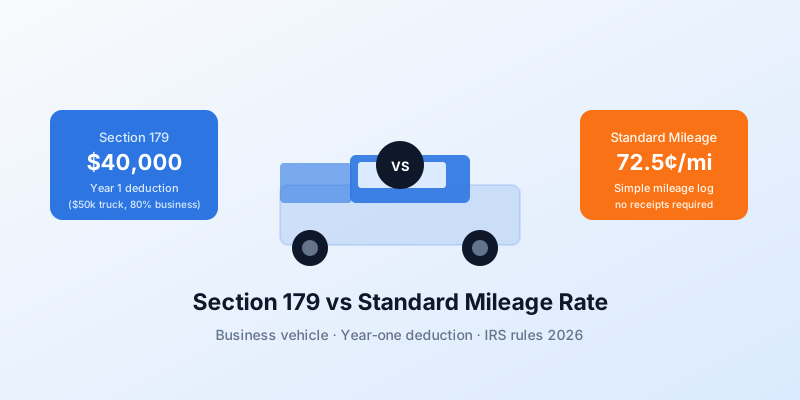
If you purchased your EV for business use, you may be able to write off a significant portion of the purchase price through Section 179 expensing and 100% bonus depreciation, which was restored by the OBBBA. The amount depends on your vehicle’s gross weight rating and business-use percentage. See our full guide on tax write-offs for a new car for weight-based limits and examples.
4. Check State and Local Incentives
Many states continue to offer their own EV incentives independent of the federal government. These can include purchase rebates, reduced registration fees, HOV lane access, and utility rate discounts for off-peak charging. Programs vary widely by state and change frequently, so check your state energy office or utility provider for current offerings.
5. Deduct Car Loan Interest Under the OBBBA
If you financed an American-made EV after December 31, 2024, and your income falls within the phase-out thresholds, you can deduct up to $10,000 in annual loan interest. This is an above-the-line deduction, meaning you do not need to itemize to claim it.
EV Tax Credit 2026: Bottom Line
The federal EV tax credit is gone for vehicles acquired after September 30, 2025. In its place, the OBBBA offers a car loan interest deduction that is not limited to electric vehicles and provides a smaller per-dollar benefit than the old credit.
For EV owners who use their vehicle for business, the biggest savings now come from the standard mileage rate at 72.5 cents per mile, Section 179 and bonus depreciation, and state-level incentives. Accurate mileage tracking is the foundation of all of these deductions.
Download Tripbook to automatically log every business mile and keep IRS-ready records — whether you drive electric or gasoline.