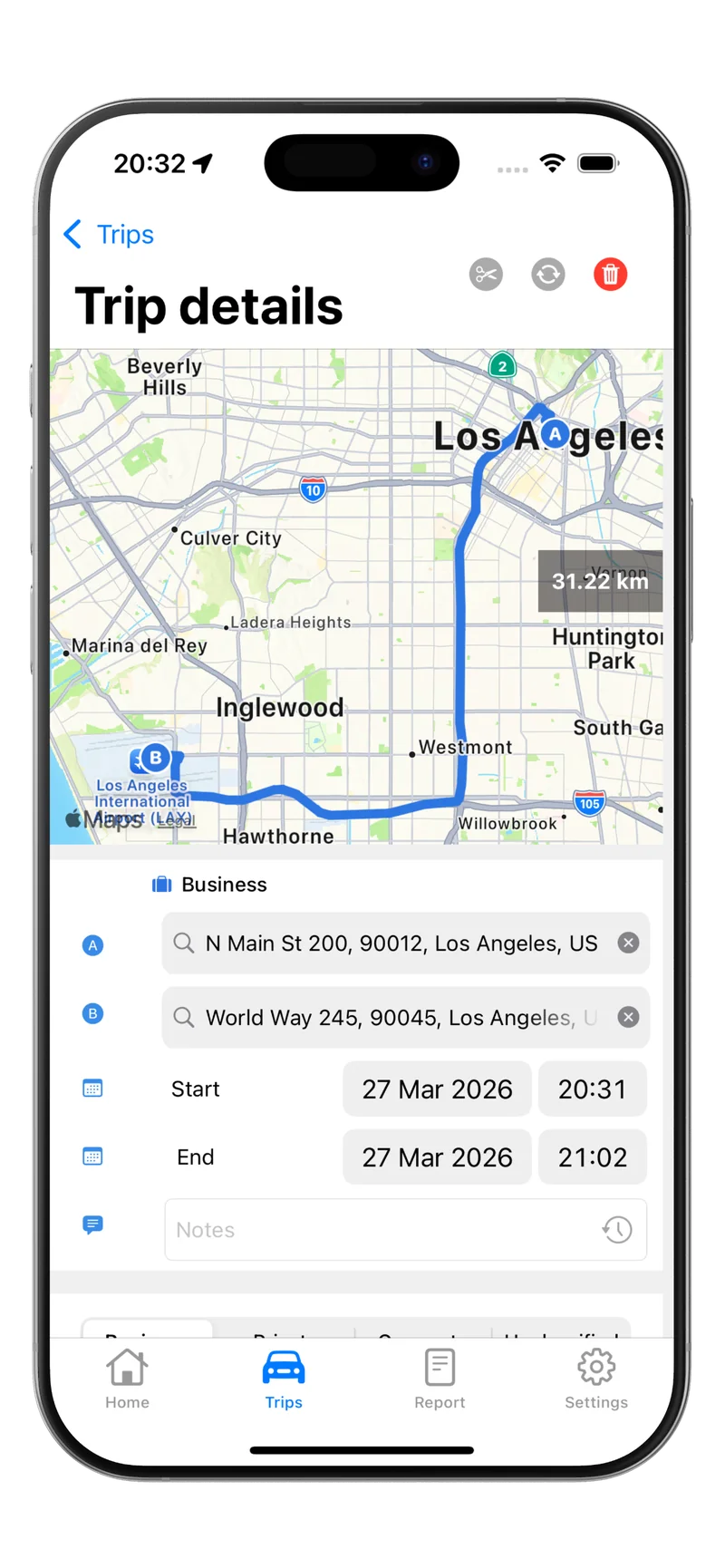

The mileage deduction for freelancers is one of the most valuable tax breaks available to self-employed workers in the United States. Whether you drive to client meetings, deliver goods, or travel between job sites, every qualifying business mile you log reduces both your income tax and your self-employment tax. For 2026, the IRS standard mileage rate is 72.5 cents per mile, meaning a freelancer who drives 12,000 business miles can write off $8,700 in a single tax year.
This guide walks through who qualifies, how to calculate the deduction using both IRS-approved methods, where to report it on your tax return, and what records you need to survive an audit.
Who Qualifies for the Mileage Deduction for Freelancers?
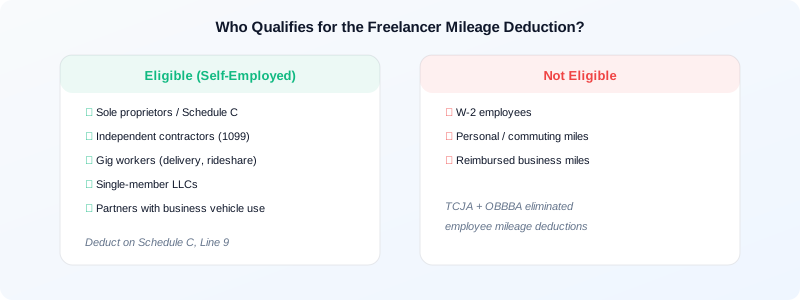
If you earn self-employment income and drive a vehicle for business purposes, you almost certainly qualify. The IRS allows the deduction for:
- Sole proprietors and single-member LLCs filing Schedule C
- Independent contractors who receive 1099-NEC forms
- Gig workers (rideshare, delivery, freelance services)
- Partners in partnerships who have unreimbursed business vehicle expenses
There is one major group that does not qualify: W-2 employees. The Tax Cuts and Jobs Act suspended the unreimbursed employee expense deduction through 2025, and the One Big Beautiful Bill Act made that change permanent. If you receive a W-2, you cannot deduct mileage on your federal return.
What Counts as a Business Mile?
Not every trip in your car is deductible. The IRS draws a clear line between business miles and personal or commuting miles:
- Deductible: Driving from your home office to a client site, traveling between two client locations, going to the office supply store for business materials, heading to the bank to deposit business checks.
- Not deductible: Your daily commute from home to a regular workplace, personal errands, driving to lunch (unless meeting a client for business).
A critical detail: if you have a qualifying home office, your home becomes your principal place of business. That means every trip from home to a client, supplier, or business location is a deductible business mile rather than a commute.
Two Ways to Calculate Your Deduction
The IRS offers two methods for computing your vehicle expense deduction. You should calculate both before choosing, because the right method depends on your vehicle costs and how many miles you drive.
Method 1: Standard Mileage Rate
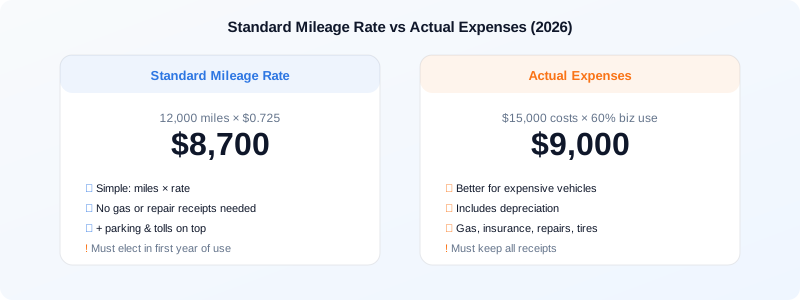
The standard mileage rate is the simpler option. You multiply your total business miles by the IRS rate for that year:
Business miles x $0.725 = Deduction
At 12,000 business miles, that equals $8,700. At 20,000 miles, you would deduct $14,500. You can also add parking fees and tolls on top of the standard rate deduction.
The main advantage is simplicity. You do not need to track gas receipts, oil changes, or insurance premiums. You only need an accurate mileage log.
There is one restriction: if you want to use the standard mileage rate, you must elect it in the first year you use that vehicle for business. You can switch to actual expenses in later years, but you cannot go the other direction (actual expenses first, standard rate later).
For a deeper comparison of both approaches, see our guide on standard mileage rate vs. actual expenses.
Method 2: Actual Expense Method
The actual expense method lets you deduct a percentage of all vehicle operating costs based on your business-use ratio. Deductible expenses include:
- Gas and oil
- Repairs and maintenance
- Insurance premiums
- Registration and license fees
- Lease payments or depreciation
- Tires, car washes, and other upkeep
First, calculate your business-use percentage by dividing your business miles by your total miles for the year. If you drove 20,000 total miles and 12,000 were for business, your business-use percentage is 60%. Then multiply your total vehicle expenses by that percentage.
Example: $15,000 in total vehicle costs x 60% = $9,000 deduction.
This method tends to produce a larger deduction when you drive an expensive vehicle with high operating costs. The trade-off is significantly more paperwork: you need to keep every receipt and track every expense category.
Reporting the Deduction on Schedule C
Freelancers report business mileage deductions on Schedule C (Form 1040), specifically on Line 9: Car and truck expenses. If you use the standard mileage rate, Line 9 is the only line you need.
If you use the actual expense method, you also enter depreciation on Line 13 and any lease payments on Line 20a.
Both methods require you to complete Part IV of Schedule C, where you report:
- The date you placed the vehicle in service
- Total miles driven during the year
- Business miles driven
- Commuting miles
- Other personal miles
- Whether you have written evidence to support your deduction
This deduction reduces your net self-employment income, which lowers both your income tax and your self-employment tax (15.3% for Social Security and Medicare). That double benefit makes accurate mileage tracking especially important for freelancers. Every $1,000 in mileage deductions saves you an additional $153 in SE tax on top of your income tax savings.
For a complete walkthrough of the form, read our Schedule C mileage deduction guide.
What Records the IRS Requires
The IRS requires contemporaneous records, meaning you must log trips at or near the time they happen. Reconstructed logs created at tax time are far more likely to be challenged in an audit. Each mileage log entry needs five elements:
- Date of the trip
- Destination (address or business name)
- Business purpose (client meeting, supply pickup, etc.)
- Starting odometer reading
- Ending odometer reading
You should also record your odometer reading on January 1 and December 31 of each tax year so you can calculate your total miles and business-use percentage.
The IRS accepts paper logs, spreadsheets, and digital records, as long as the information is complete and accurate. Keep your mileage log and any supporting receipts for at least three years from the date you file the return claiming the deduction.
Common Recordkeeping Mistakes
Freelancers frequently run into trouble by:
- Estimating miles instead of logging them at the time of each trip
- Failing to separate business miles from personal and commuting miles
- Not recording the business purpose for each trip
- Losing paper logs or failing to back up digital records
An IRS auditor will almost always ask for a mileage log if you claimed vehicle expenses on Schedule C. If you cannot produce one, the deduction can be partially or fully disallowed.
For more detail on what survives IRS scrutiny, see our guide on how to claim mileage on taxes when self-employed.
How to Maximize Your Mileage Deduction
Here are practical steps to capture every deductible mile:
- Establish a home office. If your home qualifies as your principal place of business, every trip from home to a business destination becomes deductible rather than a non-deductible commute.
- Log every trip immediately. The easiest way to do this is with an automatic mileage tracking app that records trips in the background using GPS.
- Combine errands strategically. A single trip that visits a client and picks up supplies counts as business mileage for the entire route.
- Calculate both methods. Run the numbers using the standard rate and actual expenses before filing. Choose whichever produces the larger deduction (keeping in mind the first-year election rule).
- Track parking and tolls separately. These are deductible on top of the standard mileage rate and are easy to overlook.
Start Tracking Your Miles Today
The mileage deduction for freelancers can save thousands of dollars each year, but only if you keep accurate, IRS-compliant records from day one. Waiting until tax season to reconstruct your log puts your deduction at risk.
Download Tripbook to automatically track every business mile with GPS, categorize trips, and generate reports that are ready for Schedule C. The sooner you start logging, the more you save.