HVAC technicians and plumbers drive more than almost any other trade. With multiple service calls per day, emergency after-hours trips, and runs to supply houses, the business miles add up fast. Mileage tracking for HVAC technicians and plumbers is not optional if you want to claim the tax deductions you have earned.
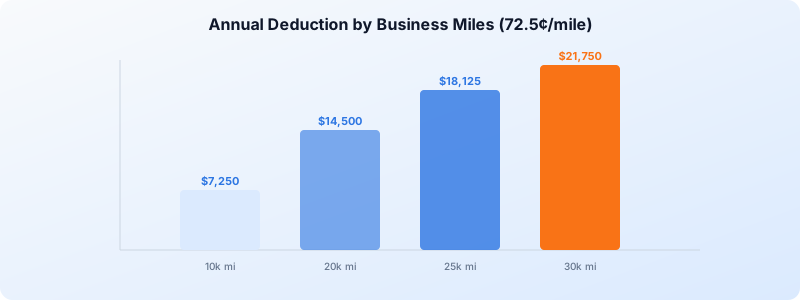
At the 2026 IRS standard mileage rate of 72.5 cents per mile, an HVAC tech or plumber driving 20,000 business miles per year earns a deduction worth $14,500. That is a significant reduction in taxable income, but only if you have the records to back it up.
Why Trade Professionals Drive So Many Business Miles
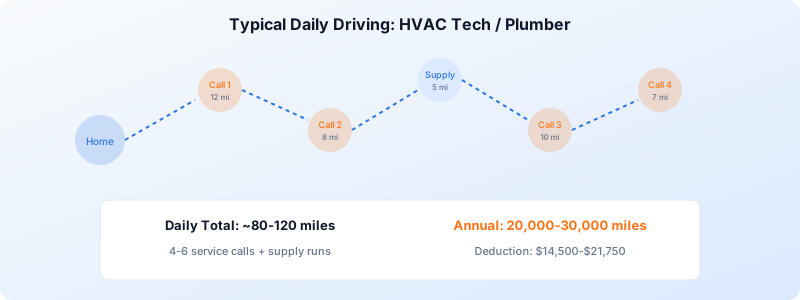
HVAC and plumbing work is inherently mobile. You travel to the customer, not the other way around. A typical day for an HVAC technician or plumber might include driving from home to the first service call, traveling between three to six customer locations throughout the day, making one or two trips to a supply house for parts, and driving to an emergency call after hours.
A busy HVAC tech in a metro area can easily drive 80 to 120 miles per day. Over a 250-day work year, that totals 20,000 to 30,000 business miles. At 72.5 cents per mile, the annual deduction ranges from $14,500 to $21,750.
Plumbers often cover similar distances, especially those handling residential service calls across a wide geographic area. Emergency plumbers who respond to after-hours calls can add thousands of additional business miles per year.
What Counts as a Deductible Business Mile
For HVAC technicians and plumbers, virtually every mile driven during the workday qualifies as a business mile. This includes driving from your home to the first customer if you have a qualifying home office, travel between customer locations, trips to supply houses and distributors, drives to the office or dispatch center if it is not your primary workplace, and travel to training sessions, licensing classes, or industry events.
The one exception is your regular commute. If you drive from home to a fixed company location as your first stop every day, that commute is personal and not deductible. However, if your first stop is a customer site, the drive from home to that customer is a business mile.
Many self-employed HVAC techs and plumbers operate from a home office, which means every trip from home to a work location qualifies as business travel.
Standard Mileage Rate vs Actual Expenses
HVAC and plumbing professionals have two options for deducting vehicle costs.
Standard mileage rate. Multiply your business miles by 72.5 cents (2026 rate). This covers gas, oil, maintenance, tires, insurance, registration, and depreciation. You can add parking and tolls on top. This method is simpler and works well for most trade professionals.
Actual expense method. Track every vehicle-related cost and multiply the total by your business-use percentage. This can yield a higher deduction if you drive a newer or more expensive vehicle, but requires keeping receipts for everything.
For most HVAC techs and plumbers, the standard mileage rate is the better choice because it requires less paperwork and still produces a substantial deduction. See our detailed comparison of the standard mileage rate vs actual expenses to determine which method suits your situation.
Tracking Challenges Specific to the Trades
Trade professionals face unique tracking challenges that office workers do not encounter.
Multiple short trips per day. Five to eight stops per day means five to eight trips to log. Manual tracking is impractical when you are carrying tools and rushing between calls.
Unplanned emergency calls. After-hours service calls happen without warning. If you are not tracking automatically, these deductible miles get missed.
Supply house runs. Quick detours to pick up parts are easy to forget, but they add up over a year. A plumber making three supply runs per week at five miles each racks up 780 additional business miles annually.
Mixed-use days. Some days include both business and personal driving. Accurate categorization is essential to claim only legitimate business miles.
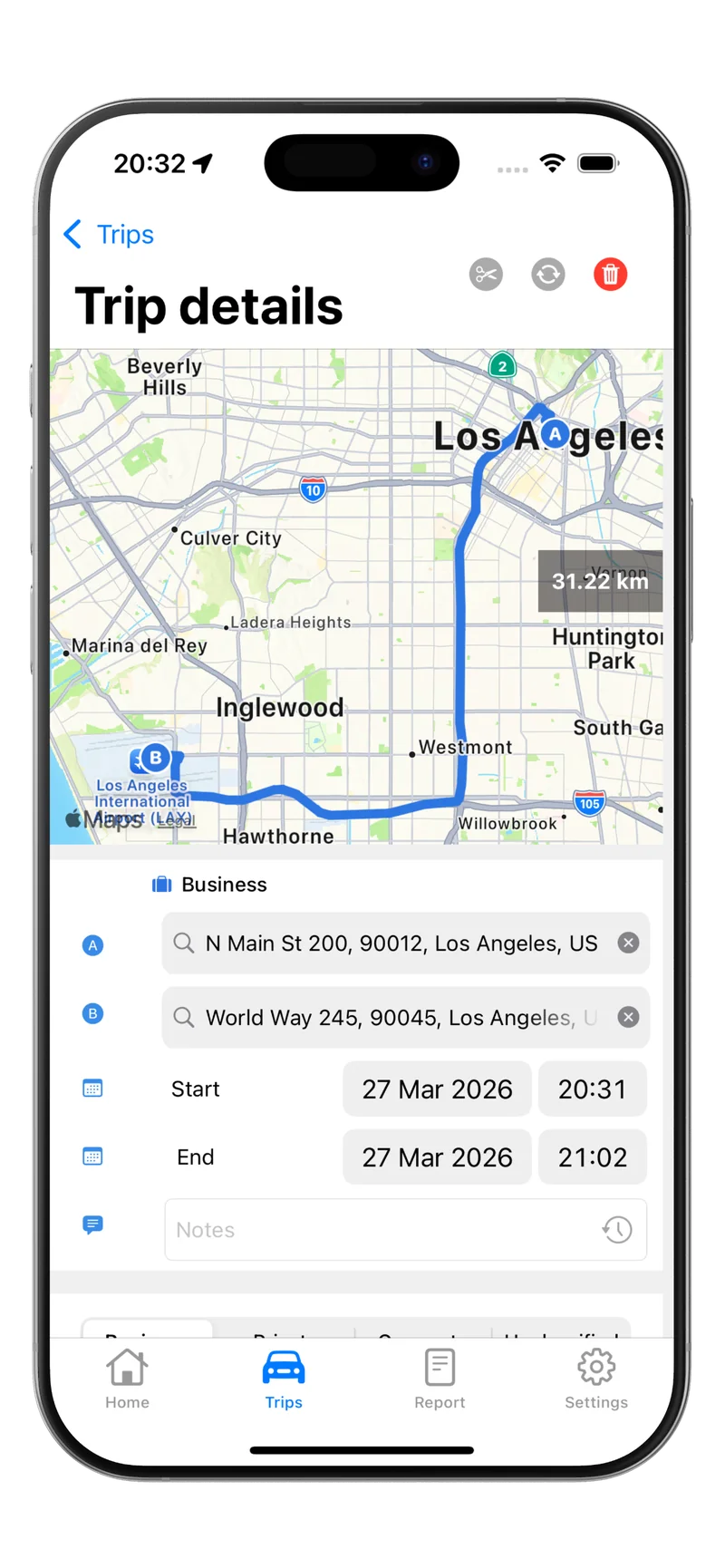
Tripbook solves these challenges with automatic GPS tracking that runs in the background. Every trip is captured without manual input, including emergency calls, supply runs, and travel between customer sites. You categorize trips with a swipe and export IRS-compliant reports at tax time.
Tax Deduction Strategies for HVAC and Plumbing Businesses
Beyond mileage, HVAC technicians and plumbers should consider these deductions as part of their overall tax strategy.
Tools and equipment purchased during the year are deductible. Specialized HVAC tools, pipe wrenches, soldering equipment, and diagnostic instruments all qualify. Work clothing and uniforms that are not suitable for everyday wear can be deducted. Safety boots, flame-resistant clothing, and company-branded uniforms qualify. Licensing and certification costs, including continuing education courses, are deductible business expenses.
For a comprehensive list of deductions available to self-employed trade professionals, see our guide on self-employed tax deductions.
What the IRS Expects From Your Mileage Log
The IRS requires five pieces of information for each business trip: the date of the trip, the destination or area driven, the business purpose, the total miles driven, and the odometer reading at the start and end of the year.
A trip entry for an HVAC technician might look like this: June 5, 2026, Johnson residence at 42 Oak Street, residential AC repair, 18.3 miles. Each trip needs this level of detail to survive an audit. For complete details on what the IRS requires, see our guide on IRS mileage log requirements.
Start Tracking Every Business Mile
Every mile you drive to a service call, supply house, or training session reduces your tax bill at 72.5 cents per mile. The only thing standing between you and thousands in deductions is a reliable tracking system.
Download Tripbook and automate your mileage tracking so you can focus on your trade instead of paperwork.