
Truck driver tax deductions for 2026 can save owner-operators thousands of dollars. Between per diem meal allowances, mileage deductions, and vehicle expenses, the tax code offers significant breaks for drivers who keep good records. The challenge is knowing which deductions apply to your situation and maintaining the documentation to claim them.
The distinction between employee truck drivers and self-employed owner-operators is critical. Your employment status determines which deductions you can claim and how you claim them.
Owner-Operators vs Employee Drivers: A Critical Difference
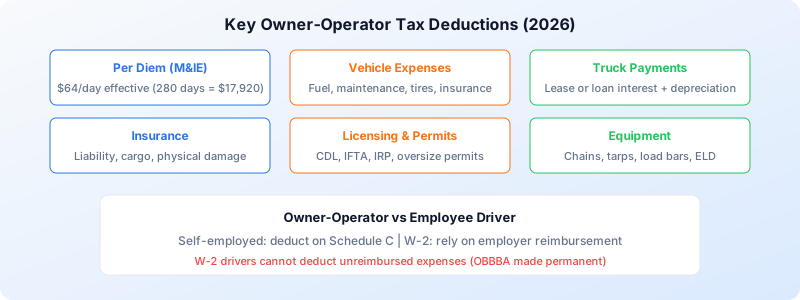
Self-employed owner-operators file Schedule C and can deduct all ordinary and necessary business expenses. This includes mileage or actual vehicle expenses, per diem for meals on the road, truck payments, insurance, maintenance, and every other cost of doing business.
Employee truck drivers (W-2) have far fewer options. The OBBBA permanently eliminated the miscellaneous itemized deduction for unreimbursed employee expenses. W-2 truck drivers cannot deduct mileage, per diem, or other unreimbursed business expenses on their federal return. However, employee drivers can still receive tax-free per diem payments from their carrier under an accountable plan.
If you are an employee driver, your best strategy is to negotiate per diem payments and other reimbursements with your carrier. For more on the W-2 deduction rules, see our guide on whether W-2 employees can deduct mileage.
Per Diem Rates for Truck Drivers in 2026
The per diem allowance is one of the most valuable truck driver tax deductions. It covers meals and incidental expenses (M&IE) when you are away from your tax home overnight.
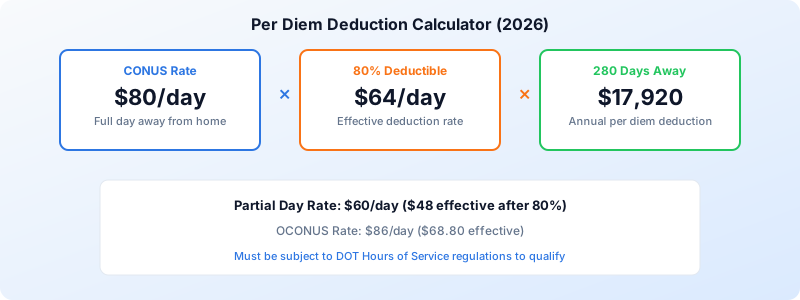
For 2026, the IRS special per diem rate for transportation workers subject to DOT Hours of Service regulations is $80 per full day within the continental United States (CONUS) and $86 per full day outside the continental United States (OCONUS). Partial days are reimbursed at $60 for CONUS travel.
The per diem is 80 percent deductible, meaning the effective deduction is $64 per full day for CONUS travel and $68.80 per full day for OCONUS travel.
An owner-operator away from home 280 days per year can claim a per diem deduction of approximately $17,920 ($64 effective rate times 280 days). That is a substantial reduction in taxable income.
To Qualify for Per Diem
You must meet four requirements to claim the per diem deduction. Your trip must take you far enough from your tax home that you cannot reasonably return the same day. You must be away long enough to require sleep or rest. The travel must be for legitimate business purposes. And you must be subject to DOT Hours of Service regulations.
Your tax home is generally the city or area where your main place of business is located, regardless of where your family lives. For most over-the-road drivers, the tax home is the dispatch location or the terminal where you are based.
Mileage and Vehicle Expense Deductions
Owner-operators can choose between the standard mileage rate and the actual expense method for deducting vehicle costs.
Standard mileage rate. At 72.5 cents per mile for 2026, an owner-operator driving 120,000 miles per year would earn a deduction of $87,000. However, this rate covers all vehicle costs, so you cannot also deduct truck payments, fuel, maintenance, or insurance separately.
Actual expense method. Track every cost associated with operating your truck: fuel, maintenance and repairs, tires, insurance, registration fees, truck lease or loan payments (interest portion), and depreciation. Multiply the total by your business-use percentage. For most OTR owner-operators, business use is 90 to 100 percent.
Most owner-operators find the actual expense method produces a larger deduction because of the high cost of operating a commercial truck. See our comparison of the standard mileage rate vs actual expenses for help deciding which method works for you.
Other Deductible Expenses for Owner-Operators
Beyond per diem and vehicle costs, owner-operators can deduct numerous business expenses. Truck insurance premiums including liability, cargo, and physical damage coverage are fully deductible. Communication expenses such as CB radios, GPS units, cell phone plans used for dispatching, and ELD devices qualify.
Licensing and permits including CDL renewal fees, IFTA decals, IRP registration, and oversize or overweight permits are deductible. Truck accessories and equipment like chains, tarps, load bars, and safety equipment count as business expenses. Association dues for trucking industry organizations and professional development costs are deductible. Parking fees at truck stops and rest areas during business travel qualify.
For a comprehensive overview of deductions available to self-employed workers, see our guide on self-employed tax deductions.
Quarterly Estimated Tax Payments
Self-employed owner-operators must make quarterly estimated tax payments if they expect to owe $1,000 or more in taxes for the year. The deadlines are April 15, June 15, September 15, and January 15 of the following year.
Accurate mileage and expense tracking throughout the year helps you calculate your estimated payments correctly. Underpaying estimated taxes results in penalties. Overpaying means you gave the IRS an interest-free loan.
Tripbook exports mileage reports by date range, making it easy to pull quarterly numbers for your estimated tax calculations.
Record-Keeping Requirements
The IRS expects detailed records for every deduction you claim. For per diem, maintain a log of every day you were away from your tax home, including dates, locations, and the business purpose of each trip.
For vehicle expenses under the actual expense method, keep receipts for every cost. For the standard mileage rate, maintain a mileage log with the date, destination, business purpose, and miles driven for each trip.
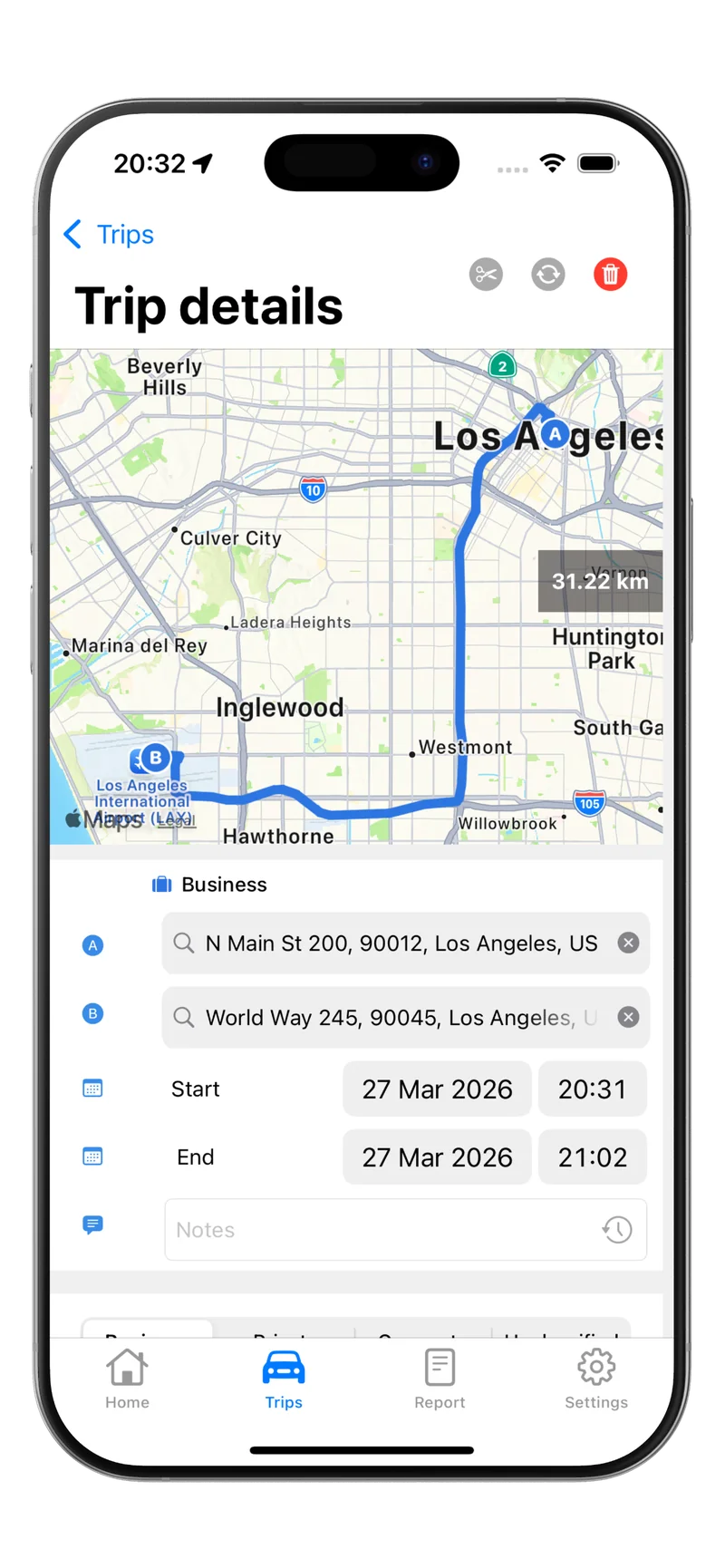
Tripbook automates trip logging with GPS tracking, capturing the dates, routes, and distances the IRS requires. This is especially valuable for truck drivers who cover long distances daily and cannot afford to manually log every trip.
Maximize Every Truck Driver Tax Deduction
Owner-operators have access to substantial tax deductions in 2026. Between per diem, vehicle expenses, and business costs, the potential savings run into tens of thousands of dollars. The only requirement is accurate, consistent record-keeping throughout the year.
Download Tripbook and automate your mileage tracking so you can claim every deduction you have earned.